• Latest News
  • In Depth
    • Features
    • Interviews
    • Opinion
  • Policy & Delivery
    • Sustainability
      • Climate Change
      • Economic Growth
      • Inequality
      • Covid & Vaccination Strategy
      • Infrastructure
      • View all Growth & Sustainable Development
    • Artificial Intelligence
    • Digital, Data & Technology
      • Digital Transformation
      • Digital Identity
      • Data
      • Digital Infrastructure
      • Cybersecurity & Crime
      • View all Digital, Data & Technology
    • Public Policy Design & Delivery
      • Policy Development
      • Project Management
      • Governance & Government Intervention
      • Public Services
      • View all Public Policy Design & Delivery
    • Finance & Procurement
      • Supply Chain
      • Public Finance
      • Government Finance & Accounting
      • Fintech
      • View all Procurement and Finance Collaboration
    • Security & Foreign Policy
      • Homeland Security
      • Foreign Policy
      • International Law & Diplomacy
      • View all Security & Foreign Policy
  • Management & Workforce
    • HR, Pay & Benefits
      • Workforce
      • Public Service Pay & Benefits
      • Public Service Pensions
      • View all HR, Pay & Benefits
    • Workplace Wellbeing
      • Mental Health at Work
      • Future of Work
      • View all Workplace Wellbeing
    • Diversity & Inclusion
    • Public Service Recruitment
      • Public Service Career & Professions
      • Talent Management & Retention
      • Career Development, Skills & Training
      • View all Public Service Recruitment
    • Public Service Leadership & Management
      • Leadership & Reform
      • Risk Management & Prevention
      • Transparency, Accountability & Collaboration
      • Government communications
      • View all Public Service Leadership & Management
    • Global Government Women’s Network
  • Research
  • Training
  • Events
    • Innovation
    • International Civil Service Conference
    • Government Service Delivery
    • Global AI Cities
    • Global Government Finance Lab
    • Public Service Data.AI
    • Digital Summit
    • AccelerateGOV
    • Global Government Leaders’ Forum
    • Global Government Summit
    • Global Government Finance Summit
  • Webinars & Podcasts
    • Webinars
    • Podcasts
      • Government Transformed
      • Leading Questions
Menu
Search
Change language
Home » Digital, Data & Technology » Digital Identity » UK Cabinet Office seeks feedback on data sharing legislation to develop digital ID

UK Cabinet Office seeks feedback on data sharing legislation to develop digital ID

By Jack Aldane on 16/01/2023 | Updated on 17/01/2023
  • Tweet
  • Email
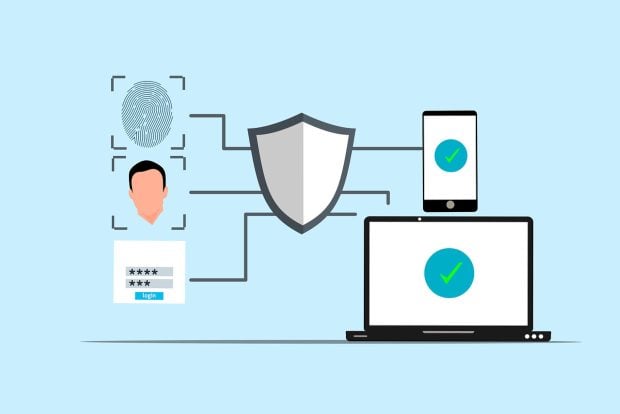
A person at their laptop with multiple devices

The UK Cabinet Office has launched a public consultation on data sharing powers between departments that could aid government’s plan to make citizens’ online user verification easier using digital identity.

The Government Digital Service (GDS) – part of the Cabinet Office – is currently working with departments to develop and implement the government’s One Login platform, which aims to enable citizens to access all public services using a single reusable digital ID. The platform succeeds the GOV.UK Verify system launched by GDS in 2011, which was wound down after repeated problems with the registration process, lower than anticipated user numbers, and the decision of key departments to develop their own ID verification systems rather than use Verify.

Tested on target users in August last year, the three-year £400m (US$488m) One Login project is designed to replace more than 190 existing sign-in options and 44 separate accounts.

The government has proposed an amendment to the UK’s 2017 Digital Economy Act in a bid to ensure safe data sharing between public authorities for identity verification purposes.

The consultation, which is set to close on 1 March, will take in views about how data sharing should work under the proposed legislation and whether the measures outlined by government would be effective.

The consultation document outlined the key benefits of proposed data sharing powers, including:

  • Easier and more consistent ways to “access and sign in to government services, reducing fragmentation and costs, and replacing clerical methods using documentary evidence”;
  • Better user experience for citizens accessing government services;
  • Greater inclusion of citizens who do not own “conventional identity documents, such as a passport”;
  • Simpler, faster access to the specific in-demand services, and;
  • Fewer cases of identity fraud and misuse.

Register now: Global Government Innovation 2023

Alex Burghart, parliamentary secretary for the Cabinet Office, wrote in the foreword to the consultation document that inclusion of underserved citizens was central to the exercise.

“The proposed data-sharing legislation will ensure that more people than ever before will be able to prove their identity online and access government services, so that anybody who wants to use online services is able to,” he said.

Burghart added that the government was committed to extracting the benefits of digital ID technologies without resorting to the use of ID cards.

Amending the Digital Economy Act

The people and authorities who would be allowed to share data for ID verification purposes include those listed in Schedule 4 of the Digital Economy Act, such as London borough councils, chief police officers and various secretaries of state. Amending the Act would add four more bodies to the list – the Cabinet Office, the Department for Transport, the Department for Food, Environment and Rural Affairs, and the Disclosure and Barring Service.

The consultation document said that identity verification services currently rely on “a variety of different data sharing powers” and that the draft regulations would provide “a single piece of legislation to improve access to services by citizens”.  

Read more: Aiding digital transformation in government through finance reform

Alongside the consultation, the government also published a summary of its impact assessment of the draft data sharing legislation. In its summary, it said that it had “identified a number of positive impacts [of the legislation] on the basis of disability, age and gender reassignment specifically”.

“We have further identified positive impacts on individuals from low socio-economic groups and individuals without access to a passport and/or driving licence,” it added.

The summary emphasised that groups of people that had been underserved by the Verify system, including young people and citizens with disabilities, would be able to draw on “a wide range of data sources to successfully prove their identity” using One Login.

HM Revenue & Customs (HMRC) confirmed in November last year that it would start transferring its services from Government Gateway – an IT system developed to register people for online government services and used primarily by people filing tax returns – to the One Login platform in summer 2023. However, this would depend on whether the new system could provide “an equivalent or better standard than the existing services”, according to HMRC chief technology and design officer Tom Skalycz.

The One Login project is one of six cross-government missions enshrined in the government’s digital transformation strategy, which was unveiled last year.

Read more: UK government outlines skills challenges in digital transformation plan

Global Government Forum is now on Apple News! Subscribe to our channel to get all GGF’s latest news and insight on your device.

Cabinet OfficeCentral Digital and Data OfficeDatadigital IDGovernment Digital ServiceOne LoginUK

About Jack Aldane

Jack is a British journalist, cartoonist and podcaster. He graduated from Heythrop College London in 2009 with a BA in philosophy, before living and working in China for three years as a freelance reporter. After training in financial journalism at City University from 2013 to 2014, Jack worked at Bloomberg and Thomson Reuters before moving into editing magazines on global trade and development finance. Shortly after editing opinion writing for UnHerd, he joined the independent think tank ResPublica, where he led a media campaign to change the health and safety requirements around asbestos in UK public buildings. As host and producer of The Booking Club podcast – a conversation series featuring prominent authors and commentators at their favourite restaurants – Jack continues to engage today’s most distinguished thinkers on the biggest problems pertaining to ideology and power in the 21st century. He joined Global Government Forum as its Senior Staff Writer and Community Co-ordinator in 2021.


Jack Aldane Jack Aldane

Related Posts

  • A screen on a laptop showing progress to digital transformation. Photo: Shutterstock
    OECD warns ‘institutional incoherence’ is undermining members’ digital ambitions
    OECD warns ‘institutional incoherence’ is undermining members’ digital ambitions
  • Future of the finance ministry: The digital transformation opportunity
    Future of the finance ministry: The digital transformation opportunity
  • The winning team of the 2026 Civil Service AI and Data Challenge
    Idea to help benefits caseworkers make better decisions scoops Civil Service AI & Data Challenge prize
    Idea to help benefits caseworkers make better decisions scoops Civil Service AI & Data Challenge prize
  • Darren Jones announcing creation of National School of Government and Public Services. Photo: Institute for Government
    Each UK government department gets dedicated delivery unit in latest civil service reform
    Each UK government department gets dedicated delivery unit in latest civil service reform

3 Comments

  1. Kay says:
    26/01/2023 at

    Utter rubbish, this money could be spent elsewhere, somewhere where it is actually needed.

    Reply
  2. Philip Boydell says:
    29/01/2023 at

    In the UK hundreds of thousands of people do not own a computer and consequently choose not to Log in to the Internet. How will there needs be met in the future? Removing 190 sign in options and 44 separate accounts by One Login will clearly facilitate fraud. The 400m GBP could be better spent. Remember the Post Office soft ware scandal?

    Reply
  3. Bob Trewin says:
    13/02/2023 at

    What is proposed is more than just an improved login. If you look at the consultation, the amount of data held against an individual will constitute a gross invasion of their privacy and will pave the way for CBDC and give the government as much control as the CCP has over its people.

    Reply

Leave a Reply

Cancel reply

Your email address will not be published. Required fields are marked *

Latest News

  • How governments are using mobile IDs to transform services for citizens

    As governments around the world look to deliver digitally-enabled services,...

    • Posted July 14, 2023
    • 1
  • UK government to use AI to improve global preparation for climate shocks

    New partnership share data and models to strengthen capacity and...

    • Posted June 23, 2026
    • 0
  • Breaking free from fossil fuels is urgent but hard – Colombia shows why

    Colombia’s outgoing president Gustavo Petro, a former guerrilla and the...

    • Posted June 22, 2026
    • 0
  • Building a Universal Digital Mailbox for Trusted Public Services

    Government communication is moving online, but fragmented channels can make...

    • Posted June 22, 2026
    • 0
  • OECD warns ‘institutional incoherence’ is undermining members’ digital ambitions

    Report identifies five challenges to digital transformation and a “common thread”...

    • Posted June 18, 2026
    • 0
  • Unlocking potential: how the Government of Canada is working to optimise its data assets

    Governments around the world are struggling to make the most...

    • Posted June 18, 2026
    • 0
  • Countries approve US$3.9bn funding package for environmental projects worldwide

    More than 180 countries have agreed the priorities for a...

    • Posted June 17, 2026
    • 0
  • Local government leaders embrace AI challenges and opportunities at Global AI Cities conference

    City and national government leaders have set out insights and...

    • Posted June 17, 2026
    • 0
AI Sustainability Payments & Financial Services

Partner content

How emerging tech is reshaping the public sector and empowering job seekers
Governments around the world are looking to use technology to become more efficient. This article explores how AI-driven transformations in public employment services can help future-proof workforce planning across public […]
Opportunity knocks: protecting identity to foster greater sharing of information across government  
In this webinar, a US government identity assurance specialist and a private sector identity expert discussed how to share information securely across government – and why, in a fast-changing tech […]
Digital-first government: Building the next frontier
What will the public services of the future look like? Will they anticipate life events before we even act? Will they guide people seamlessly through education, employment, and healthcare? Or […]
PULSE: Helping civil servants accelerate policy delivery
It is crucial that government policymaking is informed by the best possible data – and a competition by Global Government Forum and Mastercard is set to provide public servants with […]

Related events

From privacy to insight: How governments can use data responsibly to deliver better outcomes
The session will look at how government organisation can strengthen privacy by designing it into process, and will also cover: • How government organisations can develop and implement trustworthy AI frameworks. • How to improve quality and stewardship across the Government of Canada’s departments and agencies. • How to enabling cross-government collaboration with data while preserving public trust.
Turning Data & Digital into Better Public Service Outcomes
We discussed: • How to develop effective priorities for government, and how minister s and civil service leaders can work together to develop strong stewardship principles – and committing to backing each other publicly. • How government organisations can evolve ways of working so that partnership, shared accountability, and a stronger focus on citizen outcomes become the norm. • How ministers and senior officials setting shared priorities, agreeing clear outcome-focused success measures, and use data to inform progress.
Bridging policy and digital: Collaborating for better public outcomes 
Together we will discuss: • How digital and data teams in government can understand the frontline delivery challenges. • How policy development can understand what digital can – and can’t – do to improve delivery of services. • The potential for multidisciplinary teams to create shared understanding of requirements and delivery – and how they can be built and maintained for long-term delivery.
How to build transformation capability at every level of government
We will discuss: • The best approaches to develop the digital skills of civil servants. • How governments can develop a targeted programme for senior civil servants and ministers focused on strategic digital leadership, AI literacy and delivery culture. • How governments have developed flexibilities in pay and performance management to make working for government more attractive.

General

  • About Us
  • About Events
  • Content Advisory Board
  • Digital Publishing
  • Our Writers
  • Privacy Policy
  • Terms & Conditions
  • Research Terms and Conditions

Resources

  • Leading Questions Podcast
  • Research
  • White Papers
  • Women Leaders Index
  • Gov App
  • Responsive Government Survey
  • Global Government Fintech

Popular Public Bodies

    UK

  • HMRC
  • Government Digital Service
  • HM Treasury
  • Cabinet Office
  • USA & Canada

  • OPM
  • Asia Pacific

  • Australia Public Service
  • World

  • OCED
  • WTO

Global Government Forum Events

  • Free Webinars
  • Digital Summit
  • Finance Summit
  • Global Government Summit
  • Leaders Forum
  • Innovation
  • Putting Citizens First

Follow us

© 2026 GlobalGovernmentForum.com