Australian Public Service publishes AI roadmap
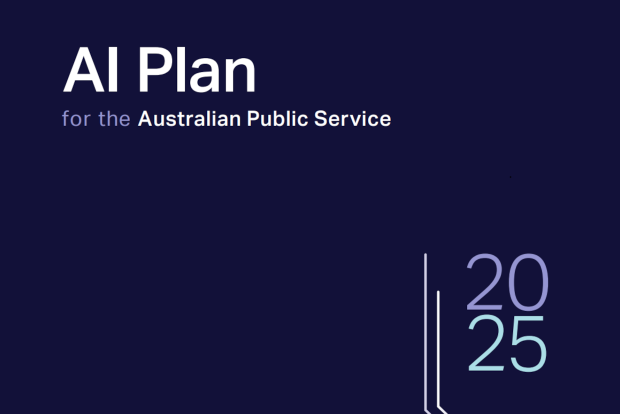
The Australian Public Service (APS) has set out in a new plan how it intends to maximise artificial intelligence to deliver better services for citizens.
The government said the roadmap, entitled AI Plan for the Australian Public Service, would “improve the AI maturity of the public sector” with the aim of producing “faster, more consistent government services, enhanced policy advice and a more capable workforce”.
“Only by uplifting AI maturity can we expect this technology to deliver meaningful productivity gains,” the plan said.
The plan said the APS would take what it described as “an adaptive and collaborative approach” that allows flexibility to “realise future opportunities” as AI technology and policy progresses.
The plan is built on the three pillars of trust, tools and people with consideration of transparency, ethics and governance, infrastructure, and capability building and engagement.
Katy Gallagher, Australia’s minister for finance and minister the public service, said in the foreword of the plan that every public servant could expect “training and access to generative AI tools” in a government that “keeps pace with community expectations as well as international peers”.
She stressed that “keeping trust with the Australian people” would be “critical to successful adoption of [AI]”.
Read more: Australia sets out standards for government AI alongside new collaboration tool
Training, appointment of chief AI officers, and cross-sector collaboration
As part of the plan, every public servant will get access to generative AI tools and receive “foundational training” and guidance on using them responsibly and ethically, as well as the support of chief AI officers – who will be appointed for each agency from a pool of senior executives – to promote adoption.
Among the tools mentioned in the plan is GovAI, a platform launched by the Australian government in July to foster collaborative use of AI across departments.
There will also be an emphasis on creating opportunities for public servants to “collaborate, build on and reuse” the work of their peers.
Cross-sector collaboration between government, industry, academia and community forms part of the plan to underpin an adaptive approach to AI adoption. Hackathons and participation in AI CoLab, which explores practical artificial intelligence for the public good, will be among initiatives to drive this agenda.
Read more: New Zealand government forges path to responsible AI with new framework
Timeline for implementation
The timeline for implementation of the plan covers July of this year to July 2026. While foundational learning, staff consultation and engagement, and a range of policy and guidance updates are underway, other key initiatives such as the creation of an AI Review Committee – which falls under the trust pillar of the plan – the roll out of GovAI Chat, and the selection of chief AI officers will be realised in the coming months.
The plan said GovAI Chat would leverage government data to provide public servants with responses that are “fast, current, and auditable through familiar and secure interfaces”.
“Where smaller agencies may lack the scale and resourcing to adopt native AI tools, this will support staff across all agencies to safely and effectively experiment with AI tools and integrate them within their workflows,” it said.
Trials of GovAI Chat are expected to begin in April next year.
Read more: Australian government workers save an hour a day in large generative AI trial
Related policy and guidance
The plan’s accompanying Statement of Intent explains how the government will leverage existing legal and policy protections for Australians as it adopts AI and other drivers of digital transformation.
These protections include the APS’s Values and Code of Conduct, which the government said provides “base level expectations of public servants across all their work, regardless of what technology they use to help deliver it”.
Others include the Protective Security Policy Framework, which outlines the obligations government bodies are required to meet to “protect their people, information and resources”, and legal protections around citizens’ privacy that regulate government’s use and treatment of personal information as set out in the Privacy Act of 1988.
The plan highlights that AI tools “should ultimately serve the public and should be used safely and responsibly by the public service” in line with the Digital Transformation Agency’s Policy for the responsible use of AI in government and the Department of Industry, Science and Resources’ AI Ethics Principles.
These ethics principles set out that AI should benefit individuals, society and the environment; respect human rights, diversity, and the autonomy of individuals; should not involve or result in unfair discrimination; and should respect and uphold privacy rights and data protection.
They stress that AI systems should “reliably operate in accordance with their intended purpose”, and that they should be operated with “transparency and responsible disclosure so people can understand when they are being significantly impacted by AI”.
Read more: UK prime minister reveals plan for AI to ‘turbocharge every single element’ of government
Predicted productivity gains
The government said the new plan “is a step towards” the vision outlined in its broader Data and Digital Government Strategy, builds on the APS Reform agenda, and aligns with a national plan for AI being developed by the Department of Industry, Science and Resources.
The plan cites a report from the Australian Productivity Commission released in August this year, which urged the government to set clear rules governing its use of AI for the benefit of citizens and wider use of AI across the Australian economy.
The commission predicted that AI adoption could unlock labour productivity gains of around 4.3% (around AUS$116bn in GDP) across the economy over the next decade.
According to Merom, AI adoption could lift public sector gross value added by 13%, delivering AUS$19bn in annual value by 2030.
Read more: Australia urged to set ‘rules of the game’ to harness the productivity potential of AI

About Jack Aldane
Jack is a British journalist, cartoonist and podcaster. He graduated from Heythrop College London in 2009 with a BA in philosophy, before living and working in China for three years as a freelance reporter. After training in financial journalism at City University from 2013 to 2014, Jack worked at Bloomberg and Thomson Reuters before moving into editing magazines on global trade and development finance. Shortly after editing opinion writing for UnHerd, he joined the independent think tank ResPublica, where he led a media campaign to change the health and safety requirements around asbestos in UK public buildings. As host and producer of The Booking Club podcast – a conversation series featuring prominent authors and commentators at their favourite restaurants – Jack continues to engage today’s most distinguished thinkers on the biggest problems pertaining to ideology and power in the 21st century. He joined Global Government Forum as its Senior Staff Writer and Community Co-ordinator in 2021.


Related Posts