Canada Budget sets out plans to modernise government and create ‘leaner public service’
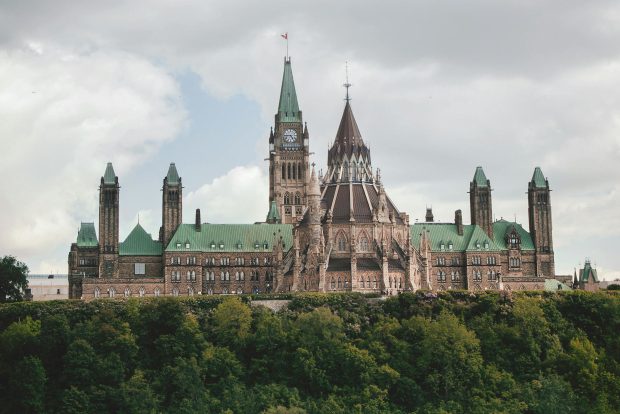
The Government of Canada has set out plans to reduce the size of the public service while also taking action to make public services “faster, simpler, and easier to access” in a landmark Budget.
In the statement to the Canadian House of Commons, finance minister François-Philippe Champagne set out what he said was the government’s response to “a series of fundamental shifts at a speed, scale, and scope not seen since the fall of the Berlin Wall”.
The challenges represent a generational shift to higher levels of uncertainty, Champagne said, but while “the challenges are great, the opportunities for Canada are even greater”.
The Budget is therefore “generational in its ambition” and sets out the “bold and swift action” that is needed to build what he called “Canada strong”.
Office of Digital Transformation to catalyse more effective government
Setting out the Budget, Champagne confirmed plans to create a new Office of Digital Transformation with a mission to lead the adoption of AI and other new technologies across government.
In particular, the government will focus on deploying “made-in-Canada sovereign AI tools” for the public service to drive efficiencies and opportunity for domestic innovators.
Champagne said that the digital transformation office would lead the creation of “a more effective government […] that can deliver smarter, faster, and more effectively for Canadians”.
He said the government would also create “a modern, agile, and efficient public service”, with a focus on driving CN$60bn in savings over the next five years.
The size of the federal public service had grown faster than the Canadian population as a whole, and there was a need to “get the size of our public service back to a sustainable level that is in keeping with best practices”, he said.
The Budget documents set out that savings will be achieved by “restructuring operations and consolidating internal services and rightsizing programmes to realise efficiencies”.
There will also be a reduction in the size of the public service using “workforce adjustment and attrition”. The Budget documents said the government understands such processes can be difficult and is therefore committed to “minimising hardship for federal employees, while also protecting diversity in the public service workforce and ensuring a strong, younger generation of public servants”.
The document added: “This is a transformational time for the public service to revisit how we work, how we can improve services to Canadians, and how we can build for the future. A leaner public service is a more empowered and productive public service.”
This year’s AccelerateGOV conference, co-hosted by the Government of Canada, will take place on December 9th, sharing insights from governments around the world on how to deliver better, more efficient and resilient digitally enabled public services with public servants from Canada and beyond.
This event is an opportunity to learn from government innovators, and will explore real-world transformation use cases in an increasingly complex and fast-changing world.
Find out more about the event and register to attend here
Budget plans for balanced budgets
The reduction in the size of the public service forms part of plans to balance day-to-day government operating spending with revenues by 2028-29, which Champagne said would “shift the Budget toward investments that grow the economy”.
“We will maintain a declining deficit-to-GDP ratio, ensuring discipline today, while investing in our collective future.”
The Budget also included plans to boost national security, with a pledge to invest CN$30bn in defence over five years.
Some of this investment will go to the Defence Investment Agency, a new special operating agency within Public Services and Procurement Canada, which has a mission to streamline high-priority procurements and work with Canadian industry to create jobs, strengthen the country’s defence industrial base, and drive innovation.
A new defence industrial strategy will be developed to grow the country’s defence sector, and increase the capacity and competitiveness of Canada’s domestic defence suppliers.
Champagne also set out details of action on climate change, which he called “not only a moral obligation – it is an economic necessity”.
He said that government was introducing a comprehensive suite of clean economy investment tax credits, and that the country’s new climate competitiveness strategy would strengthen Canadian leadership in a low-carbon economy.

About Richard Johnstone