More than 50 members of Czech government gender equality council threaten to resign over proposed move from prime minister’s office
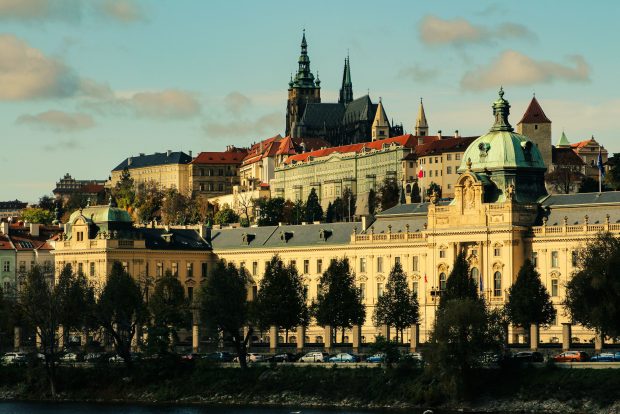
Experts on the Czech Government Council for Gender Equality have threatened to resign if the government goes ahead with its proposal to move the council’s agenda from the Office of the Government to the justice ministry.
Markéta Kos Mottlová, vice-chair of the Czech Women’s Lobby and member of the council, told the press on 27 May that 53 people from the council, its committees and its working groups had submitted conditional resignations to prime minister Andrej Babiš and would leave by the end of June if the government did not change its position.
Those threatening to resign are from civil society organisations who provide their expertise to the council on a voluntary basis and are not paid for their work.
The Government Council for Gender Equality is an advisory body focused on promoting gender balance in politics and decision-making; preventing violence against women; supporting equality for women in work and family life; tackling inequalities faced by Romani women; and improving obstetrics and midwifery care; and provides advice on the Institutional Framework for Gender Equality.
The council members argue that the agenda for gender equality is a cross-cutting issue that requires supra-ministerial coordination from the Office of the Government – the central administrative body supporting the prime minister and Cabinet – and will not receive the attention it deserves if it is moved to the justice ministry.
Kos Mottlová – who is also a coordinator for Fórum 50 %, a non-governmental organisation that promotes equal representation of women and men in politics and public life – told Czech news outlet iRozhlas: “We feel that this step is breaking up and weakening the agenda and that it will not bring an effective solution”.
Find out more about and join the Global Government Women’s Network
No consultation, say council members
According to news outlet Romea.cz, participants at a meeting last week about the proposed move noted that government representatives had said the decision to move the council was based on “an analysis”.
Vanda Černohorská, the chair of the Committee for the Institutional Framework for Gender Equality, which is part of the council, said council members had not seen any such analysis or been consulted about the proposed move.
“We believe that the plan should be based on data which are relevant, but we have great doubts as to whether that is the case,” Černohorská said, adding that if the government did not provide the analysis, they would request it through official channels.
The government initially said on 18 May that the gender equality agenda would be transferred to the Labor and Social Affairs Ministry but announced a week later that it would be transferred to the justice ministry instead, and that the move would be completed on 1 July.
Černohorská voiced concern that the government’s change of plan and the speed at which it intends to transfer the council’s agenda means that it has not been properly prepared.
Other machinery of government changes
It was also confirmed by justice minister, Jeroným Tejc, that his ministry is set to take on 12 employees from the Department for Gender Equality, which the Government Council for Gender Equality supports.
“I want to emphasise that nothing will happen to hinder the administration of their responsibilities,” he said, adding that operations would be simpler and more efficient under the care of the justice ministry.
The government’s decision to move the Council for Gender Equality agenda from the Office of the Government and to split officials from the Department of Gender Equality is one of several machinery of government changes to have been announced in recent weeks.
The officials and professional support staff to the agendas of addiction policy, collaboration with civil society, human rights, mental health, the protection of minorities, the rights of persons living with disabilities, and Roma affairs are also expected to be transferred from the Office of the Government to various other ministries.
The government claims the new arrangement will bring about more effective and efficient functioning of the work on these agendas.
Having made the announcement of these changes, Babiš stated following a Cabinet meeting on 25 May that after a week of consultations with labour unions and state secretaries, the government had revisited the issue and that while some of the councils’ officials would be moved to other ministries, the councils themselves would continue to be overseen by the Office of the Government.
“The councils won’t go anywhere. What we’re moving are the officials,” Babiš said.
He added: “I’ll continue to chair these councils as prime minister and they will include representatives from various ministries; naturally, their supra-ministerial nature will remain.”
Read more: Global response to gender-based violence falling ‘dramatically short’, say women leaders
Risk of ‘breaking the agenda into pieces’
Kos Mottlová said she is not convinced that this will be the case.
The “cross-cutting character [of these agendas] is not ensured by the prime minister attending the councils’ sessions”, but by the officials who are “dedicated to the agenda on a daily basis”.
Dividing these teams among the different ministries means “breaking the agenda into pieces”, she said.
Monika Šimůnkov, former government human rights commissioner, has also criticised the government’s proposals and said that the PM had not informed members of any of the advisory bodies across these agendas of the proposals through official channels.
She said members of the addiction policy and human rights councils had submitted a number of proposals to the government last week and that while they had received no acknowledgment or reply, public speeches by ministers suggested that their proposals has been rejected.
“We were only able to deduce from their answers at press conferences what their response to our proposals was. I find that quite undignified towards all members of the government’s advisory bodies,” she said.
She said that council members are coordinating their next steps.
Read more: European Economic and Social Committee reaffirms commitment to gender equality

About Mia Hunt
Mia has been editor of globalgovernmentforum.com since 2019. She has 15 years’ experience as a journalist and editor and specialises in writing for civil and public servants worldwide, including covering sustainability policy and related issues. She has led the Global Government Women’s Network since it launched in 2023. Previously, she covered commercial property having been market reports and supplements editor at Property Week and deputy editor at Retail Destination. She graduated from Kingston University London with a first-class honours degree in journalism and was part of the team that produced The River newspaper, which won Publication of the Year at the Guardian Student Media Awards in 2010.