Pragmatic AI: Cutting through the noise to make artificial intelligence work in government



Developments in artificial intelligence will have a revolutionary effect on the work of governments, with public services working to deploy the technology both in the delivery of frontline services and streamlining the bureaucracy of government.
This webinar will share insights on show governments are moving beyond the hype of AI to work out how to use AI in a way that fits with existing processes, and can help public servants become more efficient.
This development of so-called ‘pragmatic AI’ is happening at different levels in governments around the world, and this webinar provided insight on how AI can be deployed on processes and back office functions.
Join this session to find out:
- Where – and how – AI can be used in government to streamline administrative and back office services in areas like procurement, payments, payroll, and reporting.
- How pragmatic AI integration can reduce task completion times and enhance data accuracy within existing government processes, and amplify the efforts of public servants.
- How organisations should account for the development of AI in their medium-term planning, and how they can work to keep their technology up to date.
Panel
Robert Owens, Chief Financial Officer, Office of the Inspector General, Department of Health and Human Services (DHHS), United States
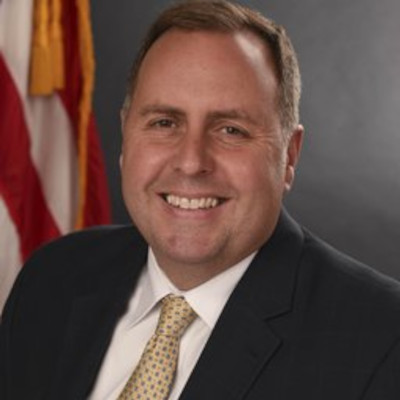
Robert (Rob) Owens joined the Health and Human Services (HHS) Office of Inspector General (OIG) in February 2011 as an Assistant Inspector General (AIG) for Management and Policy (OMP) and the Chief Information Officer (CIO). In February 2015 he became the Deputy Inspector General (DIG) for OMP and OIG’s Chief Financial Officer (CFO). He is responsible for the mission support functions that support OIG’s national workforce such as Acquisitions, Advanced Data Analytics, Budget, Facilities, Human Resources, and Information Technology. The following executives report to the OMP DIG: the Deputy Chief Financial Officer (DCFO), Chief Information Officer (CIO), and Chief Data Officer (CDO). Prior to working for HHS OIG, Mr. Owens served in several senior management positions at the Department of Justice (DOJ) responsible for critical information technology projects.
Jonathan Macdonald, Director, Responsible Data and AI, Office of the Chief Information Officer, Treasury Board of Canada Secretariat

Jonathan is an executive in the Responsible Data and AI team at the Office of the Chief Information Officer at Treasury Board of Canada Secretariat (TBS) leading the GC policy and strategy files for AI. Recently, he led the development and launch of the AI Strategy for the Canadian Federal Public Service. Prior to this work he was responsible for setting government policy direction in the space of privacy and data ethics. At TBS, he has championed data ethics through key pan-government digital projects and led the development of new digital-focused privacy tools. Prior to working at TBS, he worked at Fisheries and Oceans Canada where he began his public service career and gradually took on various leadership roles in the IM/IT space.
Antti Heino, Principal AI Advisor, SAS

Antti Heino is an analytics and AI expert at SAS, working with organizations across Northern Europe to unlock the full potential of data-driven innovation. With more than a decade of experience, he has guided leading companies and public institutions through their AI journeys—helping them move from experimental pilots to scalable, production-ready solutions. Antti brings deep cross-industry insights into the challenges organizations face and practical strategies to overcome them. He is also a thought leader, sharing expertise through keynotes, blogs, articles, and videos.
Webinar chair: Siobhan Benita, Moderator, Global Government Forum
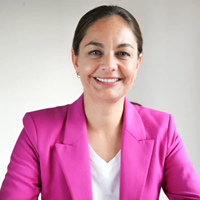
Siobhan was a senior civil servant in the UK with more than 15 years’ Whitehall experience. She worked in many of major delivery departments, including Transport, Environment, Health and Local Government. She also had senior roles at the heart of government in the Cabinet Office and HM Treasury, including supporting the then Cabinet Secretary, Lord O’Donnell, to lead work on civil service reform and strategy. Siobhan left to run as an independent candidate in the Mayor of London election. She subsequently joined her alma mater, Warwick University, as Chief Strategy Officer of Warwick in London and Co-Director of the Warwick Policy Lab.