‘I like the opportunity to make a difference’: Five minutes with Susan Acland-Hood, UK Department for Education permanent secretary

In this sister series to our ‘Five minutes with’ interviews, we share insights from the civil and public service leaders who will speak at our Innovation conference. Taking place in London on 25 and 26 March, attendees will hear about how their peers are developing new approaches to policymaking and service delivery.
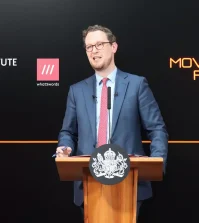
In this interview, Susan Acland-Hood, the permanent secretary at the UK Department for Education – who will speak at Innovation 2025 in the session Service delivery reimagined – tells GGF about why she decided to become a civil servant, the ‘Back to the Future’ risk of predicting the future, and the family magic of ‘crafternoons’.
Click here to find out more and register for Innovation 2025
What drew you to a career in the civil service?
I was always incredibly interested in politics and current affairs, and I knew I wanted to do something that made a difference.
But actually, I can really pinpoint the moment I decided to join the civil service. I was doing a placement in a law firm. I was interested in law and was exploring that, and during university, I did a summer placement in the law firm, and I really enjoyed it.
One of the things they asked me to do was to write a summary for their clients of a particular issue, and I wrote the summary of how things were in the law and then I did a bit at the end, which was about the way I thought it could do with being changed to make it even better.
The guy I was working for said the summary was really good, which was nice, but he then tore off that last page and said, “We don’t do this bit about how you’re going to make it better. We just wanted something for our clients about the state of the law as it is today”.
And I thought, “oh, that’s the bit I enjoyed writing the most”. So I – literally in that moment – thought, “I want to look for somewhere I can work, where I can use [my] analytical skills and that understanding, but also I can think about how you might change and improve things”. And the civil service is a place where I’ve had an incredibly fortunate career and had the opportunity to work on things that really mattered to me and to try and make things a little bit better every day. Whether I manage that every day, I don’t know, but I’ve tried every day, and it’s been the most incredible privilege to work in the civil service.
What advice would you give to someone starting out in the civil service?
Well, my first piece of advice would be: get out there and embrace all of the opportunities there are, both formal learning and development – of which we’ve got lots in the civil service; not very surprisingly, as the permanent secretary of the Department for Education, I’m a huge advocate of learning and thinking about how you can grow – but also for those informal opportunities to sit beside someone who’s brilliant and who’s done it before, to work shadow, to go and spend some time in Parliament, to spend lots of time out in the sector you face. For folks in my department, that’s lots of time in colleges or in schools or in early years settings, thinking about who the biggest experts in the world are on the issue that you work on, and taking advantage of the ability to reach out to them, to talk to them and to listen.
So there’s just something for me about not setting any limit on yourself, and really getting out there to learn and to understand and to make that the foundation of the work that you do.
What do you like most about working in the civil service?
It’s really hard to figure out what I like most about it. I think it does come back to that sense of purpose, the opportunity to make a difference.
I used to think of what I call the ‘3am test’ – if you wake up at three o’clock in the morning and you think, ‘what’s the point in my life?’ – and one of the most astonishing things about working in the civil service is it gives you a really clear answer to that question. That as part of a democratic government, you have the opportunity to give great advice and to make things happen that can improve people’s lives.
How might the civil service be different in 25 years’ time?
Oh, these are always really hard questions. There’s always a bit of a risk of the ‘Back to the Future’ flying skateboard view of the world. I think we will be using more technology in more different ways in the civil service in 25 years’ time.
I hope it will carry on getting more diverse and seeing more voices represented in the civil service, but also I think there’s something about holding on to what you want to see that’s the same in the civil service in 25 years’ time. I think there are some principles and values that have sat at the heart of what being a civil servant is for hundreds of years – back to Northcote-Trevelyan, but also in the hearts of people who’ve done similar jobs way before that – that are about that sense of public service, the civil service values, and I hope and expect that those will still sit right at the heart of how the civil service works in 25 years’ time.
Which country’s civil service are you inspired by, and why?
So thinking about who we’re inspired by is really difficult, and I think it’s really important that we learn lots of different things from different people.
We spent a lot of time as we tried to develop and improve the education system, thinking about where the systems in the world were that had got the best results for children and how they’d done that, and what we could learn and build from them. At the moment, we’re thinking a lot about the use of technology in education, and I draw out some of the conversations we’ve had with Estonia, which is generally a very digital government, about how they have thought about that across the system, but also countries like Singapore [and] I’ve been really impressed with the way that they’ve thought about the development of AI in education.
They’ve got AI tools they’ve started integrating into their student learning system, which includes an adaptive learning system which gives auto-generated feedback for timely intervention to students, and a co-pilot which looks at automated lesson planning and data analysis for teachers.
What I’ve really been impressed by is that they’re not just incorporating as much AI as possible. They’ve really thought about how their AI use can prioritise safety for children and integrate really good pedagogy. Sometimes you might put technology in education which makes learning easier, but you have to be very careful it doesn’t make it easier in the short term, but gives you less well embedded skills and capabilities in the long term. Because in lots of ways our brains are like a muscle. They need hard work in order to build and grow – and the Singaporeans have been really thoughtful about that… how do we integrate those tools in a way that is genuinely helping to build capability and strength and have that kind of enduring positive impact.
Are there any projects or innovations in the UK that might be valuable to your peers overseas?
There are lots of things we’re doing that I think I’m really proud of, and I hope we can share. So again, thinking about tech – we are doing a lot of work around generative AI in education and some of those we think are genuinely world leading. We are really thinking about how we embed what we understand about good quality learning and good quality pedagogy, and we’re also really trying to embed evaluation and learning and understanding what is happening as we put technology in place.
When generative AI first appeared, we asked teachers to tell us what they thought through a call for evidence, including how they were starting to use it. One thing that came back through that call for evidence was [the need to] understand safety and the impact on learning, and so we spent quite a lot of time working really hard on that.
We found that although there were quite a lot of very high level international guidelines about AI and education, there wasn’t anything that really set out what safety meant in that context. So we worked with academics and civil society organisations and tech companies to really articulate that. We’ve also announced recently, in January 2025, that leading global tech firms are jointly committed to making AI tools for education safer by design, and that includes companies like Google, Microsoft, Adobe and Amazon Web Services, who’ve helped develop that really clear set of expectations that AI tools should meet to be considered safe for classroom use and those really world-first safety expectations. We know sometimes talking about safety and AI can sound a bit cautious, but actually we know that really good quality understanding of safety, that kind of good regulation, can help us to create an environment in which people feel more confident and more capable to use AI and develop it again.
If you weren’t a civil servant, what would you be?
There is a slightly weird, different career path. I applied to the Unilever graduate scheme and got on to it about the same time as I applied to the Fast Stream in the civil service. So maybe I would be working in Unilever, which is a really interesting and extensive company, or a bit more fancifully, I quite like a lot of craft, I quite like making things, so maybe I’d have gone down a completely different path and done something like that.
What is your favourite thing to do at the weekend?
I really enjoy spending time with my family. I’ve got two daughters. They’re hilarious and even though they’re teenagers, they’re quite nice to be with. And one of the things we do as a family, this is going to sound a little bit kitsch, but we call it ‘crafternoon’: everybody sits in the kitchen, we might listen to something together, or pick different songs one after the other, and do arts or crafts or cook. And it’s quite homey and quite nice, and we enjoy that.
What is your favourite book?
I find it almost impossible to answer the question, ‘what’s your favourite book?’ because I love reading. It’s a sort of gateway to worlds of magic and wonder, as well as to being able to kind of learn and understand pretty much anything you can think of.
And so my favourite book depends completely on the day of the week and how I’m feeling and what I want to get out of it. I quite often get asked this question as part of World Book Day, because I work in the Department for Education, and I quite often talk about a series of books I read as a child, but I still sometimes go back to, by an author called Diana Wynne Jones. They’ve got magic in them, so they’re a bit sort of fantasy, but the people in them are incredibly real and they’re quite flawed and imperfect people who learn about themselves and grow in the course of each of the books. So if you haven’t come across those, I strongly recommend them. I’d start with one that’s called Charmed Life.
Click here to find out more and register for Innovation 2025

About Richard Johnstone

Related Posts