NAO identifies ‘weaknesses in getting basics right’ in UK government annual accounts

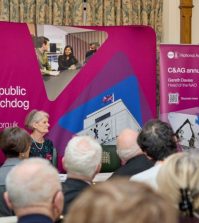
The National Audit Office has highlighted that some UK central government departments are suffering from “weaknesses in getting the basics of financial data and reporting right” in a first-of-its-kind report collating and presenting insights into their annual book-keeping.
The NAO, which is independent of the government and the civil service, exists to scrutinise public spending for Parliament, assessing about 400 annual reports and accounts (ARAs) each year.
Its Audit Insights: Lessons and Findings from the National Audit Office’s Financial Audits in 2024-25 report has been compiled to “highlight opportunities to strengthen financial management and reporting in government and, in turn, help improve productivity and resilience in public service delivery”.
The NAO’s independent audit work on the ARAs of 17 major government departments and numerous other organisations identified commonly recurring issues in three areas: data and reporting quality; IT controls and implementing IT change; and asset management.
There is “more to do to secure timely and robust reporting”, according to the NAO.
Join us at Innovation 2026
Innovation is a unique exhibition and conference that brings together government leaders from across the globe responsible for the transformation and acceleration of their public sector organisations and services.
Held on 24 and 25 March 2026 at Excel in London, the event is co-hosted by the UK Government, UK Civil Service and the Cabinet Office. It covers innovation across a range of topics, including data, digital transformation, workforce, culture, sustainability, and much more. This year for the first time, as well as the central government agenda, Innovation will include a dedicated programme for the defence, security, cyber and resilience industries, and the health sector.
Find out more about Innovation 2026 and register to attend here
ARAs timeliness target
“Improving financial management and reporting in government is at the heart of the NAO’s strategy and our financial audit work is central to this,” NAO comptroller and auditor-general Gareth Davies notes in the report’s foreword. “Each year my teams audit the accounts of approximately 400 central government organisations and £1.1 trillion [about US$1.49 trillion] of taxpayer money.”
The 44-page document highlights that the NAO had made 138 recommendations – of which 27 were deemed “high priority” – to management of 17 major departments from its 2024-25 audit work by 31 December 2025; and that NAO financial audits “led to more than £375m [US$513m] in positive financial impact for audited bodies in 2024”.
In 2018-19, about 76% of bodies published their audited accounts before the summer Parliamentary recess, plummeting to about 42% in 2019-20 during the COVID-19 pandemic. 64% of ARAs were published before the most recent summer recess in 2024-25, the document (which is dated 26 January 2026) notes.
There is pressure on more departments to move faster. The NAO has set 2025-26 targets that all major government departments – other than those facing exceptional circumstances – publish ARAs before the summer recess; 70% of all audited bodies publish ARAs before the summer recess; and all audited bodies publish ARAs before 31 October 2026.
“There are many reasons why an audit of a government body may not conclude before the summer Parliamentary recess,” the report notes. “In recent years, delays have been caused by machinery of government changes, cyber-attacks, local audit backlogs and issues identified by audits that could not be resolved quickly. Returning to pre-pandemic publication timetables has also been challenging because of increasing financial reporting and auditing requirements.”
Reporting before the summer Parliamentary recess “helps to free up finance teams to focus on other important activities in the autumn”, the NAO states.
Visit the public financial management topic section of our sister title Global Government Finance
Weaknesses and priorities
On the theme of data reporting and quality, as well as “weaknesses in the basics’, the NAO recommends increased “focus on core principles of fit-for-purpose processes and controls and retaining sufficient information to ensure data are recorded correctly first-time, to reduce inconsistency and error”.
On the theme of IT, the watchdog notes that “weaknesses in IT controls for financial systems increase the risk of undetected fraud, unauthorised changes and operational inefficiencies”.
“Focus on opportunities from automation, and strong IT controls to enhance data quality and reduce inefficient manual processes”, the report states, going on to provide more detailed findings and recommendations.
On asset management, the NAO identifies a theme of “weaknesses in understanding asset records and how assets are valued”.
“Focus on improving asset records, and processes and controls, to have a clearer view of the condition and value of assets and plan with more certainty,” the report states.
Join Global Government Finance on LinkedIn
Climate disclosures: ‘variable quality’
The report identifies “losses and special payments” (non-routine financial transactions not envisioned by Parliament) and the Task Force on Climate-Related Financial Disclosures (TCFD) as two aspects of annual reports that “may provide opportunities for improvements in financial management and reporting in government”.
Losses and special payments constitute a reporting requirement unique to the government that “may, in some cases, highlight areas where financial management could be improved”, the report states.
TCFD-aligned reporting, which is being introduced in a phased approach over three years, is aimed at enhancing transparency and accountability on climate-related issues.
“Our analysis of 2024-25 ARAs found the disclosures of our audited bodies to be of variable quality, which is to be expected during the early years of implementation,” the NAO notes.
It recommends areas for departments to focus on including: increasing transparency around whether climate is a principal risk, how compliant departments are with the TCFD recommendations, and what work they still have to do; making sure disclosures are consistent with other parts of the ARA; and “avoiding boilerplate language copied from the guidance”.
The overall report contains case studies including: HM Revenue & Customs (HMRC) research and development (R&D) tax relief error and fraud reduction; Ministry of Justice (MoJ) TCFD-aligned disclosures; and College of Policing accounting system replacement.
The NAO says it is working with the Government Finance Function, which is a community of more than 9,000 professionals, as well as HM Treasury and audited bodies themselves to improve things.
Sign up for our sister title Global Government Finance’s newsletter

About Ian Hall
Ian is Global Government Finance editor. He has formerly held roles including UK director of Euractiv (2011-2018), editor of Public Affairs News (2007-2011) and news editor of PR Week (2000-2007). He was shortlisted for ‘Editor of the Year’ at the British Society of Magazine Editors (BSME) Awards in 2010. He began his career in the Balkans at English-language weekly the Sofia Echo (Bulgaria: 1998-1999).