The infrastructure of action: how to build the systems and platforms for modern digital government
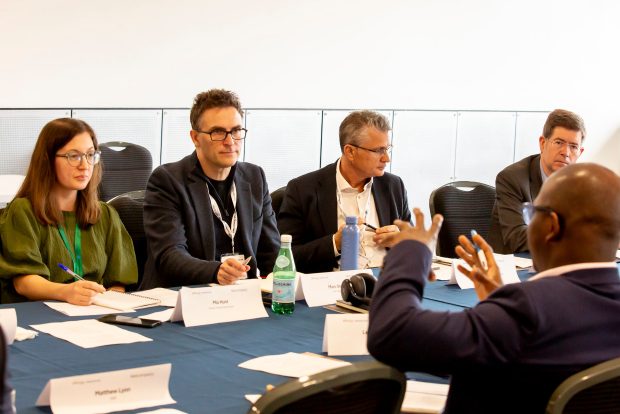
The UK government’s Roadmap for Modern Digital Government is ambitious, and as senior government leaders discussed at a roundtable supported by Netcompany at Global Government Forum’s Innovation 2026 conference, issues around fragmentation, culture, incentives and funding will need to be addressed if it is to be achieved
In January, the UK Government Digital Service (GDS) launched the Roadmap for Modern Digital Government. Described as an “action plan”, it sets out the key products, platforms and transformation initiatives planned across government and the wider public sector for the next four years.
But, as senior technology leaders across a number of government organisations debated during a roundtable supported by IT consultancy Netcompany, issues around fragmentation, culture, incentives and funding will need to be tackled if the “one government” approach is to be achieved.
Participants agreed that whilst the UK government has made good strides in digitising public services, they remain siloed, mirroring organisations that are each responsible for their own separate briefs. Without a strategy and proven mechanisms for joining them up, changing public sector services to be built around citizen needs and implementing new policies at the pace required will remain a structural challenge.
Put starkly, one participant said: “Government doesn’t exist. There’s a series of organisational sub-units that all report to different people, with different reasons to exist, doing different things in a different way, all over the place.”
The structure of government means each component has different incentives, making cross-government modernisation difficult. And as one leader noted, this also means there is a lack of preparation for the change programme itself.
“If you’re doing innovation properly, it is change – that’s not sequential. But to change properly, you need to understand the incentives of everyone up and down the chain, from the permanent secretary to the director general to the person on the ground doing the delivery,” they said. “If you don’t, you’ll meet resistance.”
Common platforms configured to individual needs
The conversation moved on to a focus on shared services.
As one participant explained, departments tend to want different things from the technologies and services they use, leading to common platforms being configured to individual needs. While a degree of customisation is often sensible, there is a “tipping point” where a shared service is no longer really shared.
The desire from different departments for different things is also reinforced by current funding models, which participants agreed are a barrier to modern digital government.
“Everyone says ‘yes, I’m going to sign up to that roadmap’, but they still end up saying ‘but my budget’s over here and I’m going to spend it on what I want’… and it’s usually the person with the purse strings who decides what a platform or system looks like,” one participant explained.
A centralised and properly ring-fenced budget, another leader said, would act as an incentive, and could dictate that a service must be shared and how people should work together to achieve it.
Putting the business case to Treasury
Other suggestions included leaders getting together, deciding jointly what they wanted, developing a convincing business case and putting it to Treasury. One said if this were done right, Treasury would “struggle to say no”. Another approach mooted was to get together and inform Treasury how to change the funding model to deliver what is needed.
An overhaul of a government’s funding model has been achieved in Denmark. As one participant explained, it realised 10-15 years ago that it couldn’t afford to keep going with so many separate platforms. The chancellor at the time effectively made all funding flow through them to stop leaders going off and doing different things with their own separate budgets.
The country’s Digital Post system, a single platform that allows two-way communication between all public authorities, citizens and businesses, has been successfully deployed since. “There are certain tools and platforms that can drive a huge benefit fairly quickly for both citizens and government if there’s the right strategy around it,” one participant said.
Adoption of the Digital Post service has proven so successful that PostNord, the state-owned Danish postal service, ended its 400-year-old universal letter delivery service in January 2026.
One approach to proliferating shared services such as this could be to incentivise departments to build tools and platforms that go on to be used by other organisations, through the promise of increased funding, for example, one leader suggested.
Agree shared outcomes and the technology ‘will fall into place’
Ultimately, another said, driving modern digital government and executing the platforms and systems needed to make it happen would require shared outcomes.
“[The UK is] going to run out of money if we do not change. The technology, the tools, the platforms, it all exists… it’s about how we create an end-to-end process and shared outcomes. Unless we have common incentives from top to bottom – Cabinet Office, Treasury, all the departments, local government, public sector, everywhere – then it doesn’t matter how good the technology is or how good the strategy is, the opportunity to deliver a step change will be missed.
“We need strong leadership and we need to bring everyone together. I think if you get that bit right, then all the tools and the technology will fall into place after that.”
‘The infrastructure of action: how to build the systems and platforms for modern digital government’ roundtable, supported by Netcompany, was held at Global Government Forum’s Innovation 2026 conference on 24 March.

About Mia Hunt
Mia has been editor of globalgovernmentforum.com since 2019. She has 15 years’ experience as a journalist and editor and specialises in writing for civil and public servants worldwide, including covering sustainability policy and related issues. She has led the Global Government Women’s Network since it launched in 2023. Previously, she covered commercial property having been market reports and supplements editor at Property Week and deputy editor at Retail Destination. She graduated from Kingston University London with a first-class honours degree in journalism and was part of the team that produced The River newspaper, which won Publication of the Year at the Guardian Student Media Awards in 2010.