Thousands of US federal employees moved to new employment terms
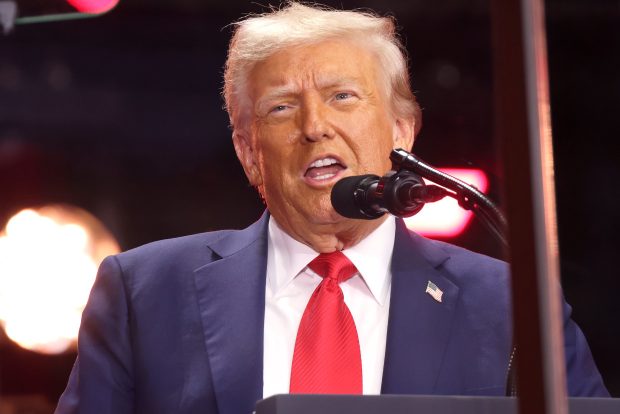
The White House says the transfer of employees to Schedule Policy/Career, previously known as Schedule F, will improve accountability
US president Donald Trump has signed an executive order converting 8,000 senior policy officials to a new employment category that will strip them of civil service protections and make it easier to remove them from their posts for misconduct or poor performance.
The administration said that moving officials in “policy-influencing positions” to Schedule Policy/Career – an employment category initially brought in in 2020 when it was known as Schedule F – would help to improve accountability.
The executive order, signed on 3 June, said those in “confidential, policy-determining, policy-making, and policy-advocating [positions] play particularly important roles” in helping the president to “faithfully execute the laws and advance the priorities for which he was elected” and, as such, ensuring that such employees can be removed for misconduct or poor performance “is essential to protecting democratic self-government”.
Those transferred to Schedule Policy/Career – which the order noted comprises career positions that are filled based on merit and not political affiliation – “are exempted from the adverse action procedures that make removals for poor performance or misconduct so difficult”.
This means the affected officials will become ‘at-will’ employees and could be removed from their posts without due process.
Employees placed into the new category will no longer be able to challenge adverse personnel actions before the Merit Systems Protection Board, and if they file whistleblower complaints, these will be investigated by their own agency rather than the Office of Special Counsel.
The Trump administration noted that the order “also advances merit in the federal civil service by directing executive departments and agencies to appropriately recognise and reward Schedule Policy/Career employees for outstanding work”.
Agencies were expected to make conforming changes to the affected employees’ personnel records by 10 June.
The federal positions affected
The administration had previously estimated that 50,000 employees would be moved to Schedule Policy/Career. According to Government Executive, a spokesperson at the Office of Personnel Management (OPM) said Trump chose to instead focus on “the most senior level career policy officials”.
A fact sheet accompanying the executive order said that 97% of the reclassified positions are GS-15 or senior level positions representing the highest-ranking career positions outside of the Senior Executive Service.
Such roles include directors, deputy directors, chiefs of staff, senior advisors and policy analysts, employees with significant involvement in drafting regulations and guidance, public affairs and legislative affairs leaders, and employees with significant involvement in determining who gets federal grants, the fact sheet stated.
Read more: Trump administration moves to reform top federal officials’ performance reviews
‘Personal policy disagreements’
The fact sheet said that existing personnel rules make removing federal employees “exceedingly difficult” and that “removals and subsequent appeals often take a year or more to process”.
The order itself cited research that found that only around two-fifths of federal supervisors believe they could remove staff who engage in serious misconduct, a quarter believe they could remove serious underperformers, and that two-thirds of senior federal executives report that their agencies rarely or never reassign or dismiss underperforming managers.
The fact sheet said the order would help the administration to “operationalise the policies that voters elected [it] to pursue”.
It cited a poll – which it does not source – that found that the majority of senior federal officials would “ignore a lawful order from president Trump that they considered bad policy”, and that some had “refused to assist” on certain policy matters during Trump’s first term because of their “personal policy disagreements”.
The fact sheet emphasised that those transferred to Schedule Policy/Career would remain career positions, that the non-partisan hiring processes, competitive status and other aspects of these roles would not change, and that removal decisions would be made “without respect to political affiliation”.
OPM director, Scott Kupor, said: “You can have any political views, but if you allow those views to basically interfere with your willingness to actually carry out lawful orders and policy directives with the administration, then [the executive order] provides a mechanism for people in those agencies to be able to be removed effectively at-will.”
History of Schedule F and concerns about politicisation of the federal workforce
The reform was originally proposed by Trump in 2020, during his first term, but he was unable to move any workers to what was then known as ‘Schedule F’ before president Joe Biden took office and rescinded the directive.
Upon returning to office in January last year, Trump reinstated the rule, stating that the change was needed to improve the “democratic responsiveness” of government, and his administration began dismantling Biden-era protections for civil servants.
In April 2025, OPM’s proposed regulations on Schedule Policy/Career received over 40,000 public comments, with about 94% of commenters opposed to the regulation. Many federal unions, employee organisations, good government groups and individual federal employees raised concerns that the employment category would politicise the federal workforce, damage the non-partisan nature of the career civil service and undermine democracy.
“This is a blatant attempt to corrupt the federal government by eliminating employees’ due process rights so they can be fired for political reasons,” said Everett Kelley, national president of the American Federation of Government Employees. “The practical implications of this action are clear. Workers who once felt comfortable reporting waste, fraud, abuse and mismanagement at their place of employment because they were protected from retaliation will now be afraid for their jobs if they speak out.”
Skye Perryman, president and CEO of the non-profit Democracy Forward, said: “For generations, our country has relied on a professional, nonpartisan civil service. The Trump-Vance administration’s attempts to dismantle civil service protections would make it easier to purge experienced public servants. When government experts can be fired without cause, it’s not just federal workers who are harmed – it’s the people across the country who rely on these essential services every day.”
The policy is the subject of multiple lawsuits by federal employee unions, who have accused the administration of violating the Constitution, the 1978 Civil Service Reform Act and the Administrative Procedures Act.
According to Government Executive, good government groups – non-partisan organisations that work to improve management at all levels of government – have warned that at-will employment of public employees at state level have produced mixed results in terms of productivity, while increasing reports of political and personal favouritism in the workplace.
In July last year, Trump created another new employment category called Schedule G, which allows federal government departments and agencies to hire political, policy-orientated employees.
Trump delivering promise to ‘drain the swamp’, says White House
The fast sheet accompanying the latest executive order claims that President Trump is delivering on his promise to “drain the swamp… dismantle the deep state and reclaim our government from Washington ineptitude and corruption”.
It cites ‘reduction in force’ initiatives such as the deferred resignation programme, launched by the OPM in January 2025, which allowed staff to decide whether they wanted to leave government and receive eight months’ salary as a severance package; and the move to reform federal employee performance appraisals.
An administration official said that no further positions beyond the 8,000 are expected to be converted to Schedule Policy/Career in the immediate future but that more positions could be added later at the president’s discretion.
Read more: US rolling out new standards to make it easier to get government jobs without a degree

About Mia Hunt
Mia has been editor of globalgovernmentforum.com since 2019. She has 15 years’ experience as a journalist and editor and specialises in writing for civil and public servants worldwide, including covering sustainability policy and related issues. She has led the Global Government Women’s Network since it launched in 2023. Previously, she covered commercial property having been market reports and supplements editor at Property Week and deputy editor at Retail Destination. She graduated from Kingston University London with a first-class honours degree in journalism and was part of the team that produced The River newspaper, which won Publication of the Year at the Guardian Student Media Awards in 2010.