US agencies announce US$15.3m for long-term climate and extreme weather forecasting service
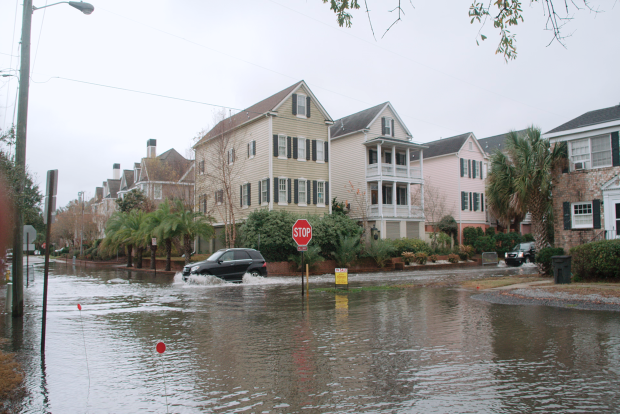
The US Department of Commerce and the National Oceanic and Atmospheric Administration (NOAA) have announced US$15.3m in funding to provide climate information services for long-term forecasts of extreme weather events.
The money will come from the Inflation Reduction Act, a piece of legislation enacted in 2022 that provides subsidies and tax credits to spur investment in green technologies.
“This investment…will develop services to help communities better prepare for the impacts of extreme weather and climate disasters brought on by climate change – ensuring that families and communities across the country stay safe as we continue to mitigate the rising challenges from the climate crisis,” said Gina Raimondo, US secretary of commerce.
NOAA said the work responds to increased demand from the public and private sector for long-term extreme weather climate information, noting that people need reliable information to support decisions around infrastructure development, energy systems deployment and financial investments “that may have consequences 30–50 years into the future”.
“Despite the availability of numerous sources of relevant information, there can be uncertainty about what is the most appropriate information,” a statement said.
“NOAA, with its diverse scientific expertise and long-standing leadership in product and service delivery, is well-equipped to support these information needs and help build the nation’s climate resilience.”
Tracking change
The services will provide “multi-decadal climate projections” on rainfall, temperature extremes, drought and coastal flooding. This information aims to help users understand these risks and how they are expected to change in the future. Researchers will use NOAA’s existing resources and new cloud-based computing platforms to co-develop and disseminate climate projections to users.
Researchers will also work with groups focused on western water resources, heat waves, coastal flood risk, wildfire risk and extreme wind events to develop customised climate information. The American Society of Civil Engineers has been named an initial partner with whom NOAA will develop this function.
“The climate services that will be produced by this research are crucial for community resilience across the country,” said Jainey K. Bavishi, assistant secretary of commerce for oceans and atmosphere and deputy NOAA administrator.
Heat strategy
Meanwhile, the NOAA is also one of several agencies to have co-led the US government’s first National Heat Strategy.
According to data gathered by the Centers for Disease Control and Prevention (CDC), 1,220 people are killed by extreme heat events in the US every year.
With heat officially the country’s leading weather-related killer, the aim of the strategy is to coordinate federal agency work on heat planning, response and resilience. Together with the CDC, the Health and Human Services Office of Climate Change and Health Equity, and the Federal Emergency Management Agency, NOAA has set out the strategy’s guiding principles.
The guidelines highlight four key goals: improving communication, outreach and education about heat; advancing scientific understanding of heat and its impacts; establishing more solutions to support heat resilience, such as early warning systems; and further improving inter-agency co-ordination and partnerships.
Xavier Becerra, Health and Human Services secretary, said: “The federal government is taking steps to build a heat-resilient future for our entire country, from helping families get air conditioners to protecting farmworkers from heat events and unsafe air.
“Every action we take, and every dollar invested in prevention, preparation, and heat health resilience is a vital step towards ensuring a healthier and safer future for all.”

About Jack Aldane
Jack is a British journalist, cartoonist and podcaster. He graduated from Heythrop College London in 2009 with a BA in philosophy, before living and working in China for three years as a freelance reporter. After training in financial journalism at City University from 2013 to 2014, Jack worked at Bloomberg and Thomson Reuters before moving into editing magazines on global trade and development finance. Shortly after editing opinion writing for UnHerd, he joined the independent think tank ResPublica, where he led a media campaign to change the health and safety requirements around asbestos in UK public buildings. As host and producer of The Booking Club podcast – a conversation series featuring prominent authors and commentators at their favourite restaurants – Jack continues to engage today’s most distinguished thinkers on the biggest problems pertaining to ideology and power in the 21st century. He joined Global Government Forum as its Senior Staff Writer and Community Co-ordinator in 2021.