Women’s share of labour income ‘barely shifts’ in 35 years, finds World Inequality Report
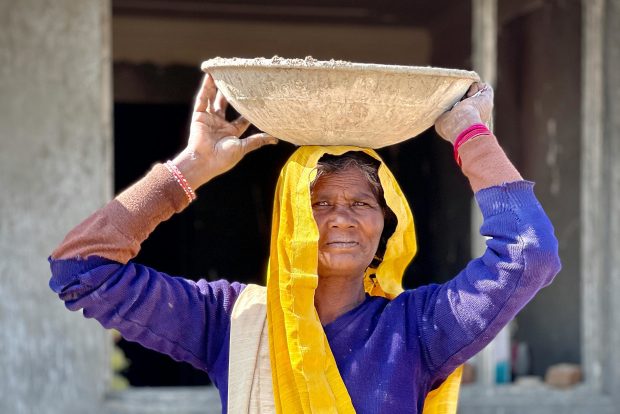
“Gender inequality remains a defining feature of the global economy”, according to the latest World Inequality Report, which finds that women receive just over a quarter of total labour income.
The report – which is produced by international economic and social research centre the World Inequality Lab and funded by the UN Development Programme and European Union – highlights that this figure, 28.2%, has improved by only 0.4 percentage points in the 35 years since 1990.
“Among the most persistent and pervasive divides is the gap between men and women,” it says, noting that women “continue to work more and earn less than men”.
Drill down by region, and women’s share of total labour income ranges from just 16% in the Middle East and North Africa to around 40% across Europe, North America, Russia and Central Asia.
When it comes to paid employment, structural barriers that prevent women from entering and remaining in the jobs market include access to affordable childcare, transport and family leave policies.
Join: Find out more and become a member of the Global Government Women’s Network
The burden of unpaid labour
Unpaid domestic labour is a focus of the gender inequality chapter of the report.
It finds that once domestic and care work is taken into account, women work an average of 53 hours per week compared to an average 43 hours for men, and that their work “is consistently valued less”. Excluding unpaid work, women earn 61% of men’s hourly income, a figure that falls to just 32% when unpaid labour is factored in.
Across the world, women devote more hours to household responsibilities and domestic care work representing a substantial portion of total labour time and contributing directly to social welfare. But these hours “are rarely compensated or formally recognised” and are “rendered invisible” in national accounts, the report notes.
The implications are that time spent on unpaid work constrains the hours available for paid work, training, or career advancement, which “together with fewer paid jobs available for women, gender discrimination, and cultural norms” increases gender inequality.
It also reinforces the wage gap, with women earning less for the paid portion of their labour.
“Disproportionate responsibilities restrict women’s career opportunities, limit political participation, and slow wealth accumulation. Gender inequality is therefore not only a question of fairness but also a structural inefficiency: economies that undervalue half of their population’s labour undermine their own capacity for growth and resilience,” the report emphasises.
Read more: Additional $420bn a year needed to achieve gender equality, UN says
Long road to gender parity
The report finds that today, women are more educated, more active in the labour market – despite being employed less than men in all regions of the world – and more present in leadership positions, “yet their economic standing continues to lag behind men’s”.
It adds that their consistently earning less than men “has long-term effects on savings, pensions, and wealth accumulation, increasing inequality”.
While education has narrowed some gaps, with women achieving near parity in high-school enrolment globally, schooling alone has not eliminated inequalities.
“The lesson is clear,” the report says, “gender parity is by no means a guaranteed result of narrowing gender inequality. For genuine gender parity to be achieved requires sustained institutional change, supportive policies, and recognition of the invisible labour that women continue to perform disproportionately to men”.
Progress in narrowing the gaps between men’s and women’s earnings, and between the average number of hours men and women work, “has been slow”, the report notes, and “even where gains have been made in education or employment participation, they have not translated into equal pay or equal access to opportunities”.
‘One of the most entrenched and significant problems of our time’
Jocelyn Chu, a programme director at UN Women, said that “gender inequality is one of the most entrenched and significant problems of our time” but that it isn’t surprising given the “backsliding of democratic institutions and threats to women’s rights”.
While some progress has been made, including in women’s labour rights and legislation relating to equal pay, there is a long way to go before meaningful improvements are made. “The patriarchy runs deep,” Chu told the Guardian. “It is embedded in institutions and economic systems. It spans from the household to government, to international organisations.”
Read more: Asian Development Bank calls on governments to harness AI for gender equality

About Mia Hunt
Mia has been editor of globalgovernmentforum.com since 2019. She has 15 years’ experience as a journalist and editor and specialises in writing for civil and public servants worldwide, including covering sustainability policy and related issues. She has led the Global Government Women’s Network since it launched in 2023. Previously, she covered commercial property having been market reports and supplements editor at Property Week and deputy editor at Retail Destination. She graduated from Kingston University London with a first-class honours degree in journalism and was part of the team that produced The River newspaper, which won Publication of the Year at the Guardian Student Media Awards in 2010.



Related Posts