Ahead of the UK Budget, report highlights the price of civil service pay cuts

New Institute for Fiscal Studies (IFS) analysis finds that pay cuts for UK senior civil servants are hitting recruitment and retention – but experts warn that public sector salaries face fierce competition for resources in the forthcoming Budget.
“Most public services are performing worse in 2024 than in 2010, with immediate action needed in some areas to prevent full-scale collapse,” said Mark Franks, director of UK charitable research agency the Nuffield Foundation.
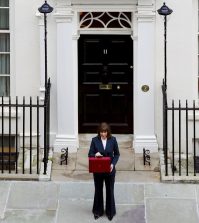
Citing findings from thinktank the Institute for Government’s Performance Tracker, Franks was speaking last week at the launch of the Institute for Fiscal Studies’ ‘Green Budget’. The analysis foreshadows UK chancellor Rachel Reeves’ long-awaited 30 October Budget, examining the fiscal dilemmas facing the new government as it sets out its spending plans for the next three years.
The Green Budget, which is funded by the Nuffield Foundation and in partnership with US bank Citi, comprises a series of “chapters which take a deeper dive into particular issues which demonstrate the integral links between the economy, the public finances and people’s wellbeing”, Franks explained. “The chapter on public sector pay is a good example of this. That debate is often framed as the cost to the Exchequer set against the needs of the workforce, but ultimately public sector pay matters because it affects the quality of the public services we all use.”
The costs of cuts
Since January 2019, that chapter explains, private sector pay has grown by 6% in real terms – but salaries for public sector staff have risen just 1%, and remain lower than they were in 2010. The problem is particularly acute for more senior public servants, explained IFS director Paul Johnson. Since 2010, “the senior civil service, doctors, judges, senior teachers have had really big cuts in their pay”, he said. “Less well-paid public servants, who were in particular protected through the early 2010s, have done significantly less badly.” Senior civil servants (SCS) have seen their pay fall by 12-16% in real terms since 2013, the report finds, with the highest ranking experiencing the biggest cuts.
As Franks noted, those pay cuts have an impact on the quality of public services. “The senior civil service has extraordinary levels of turnover, and very great difficulty recruiting,” commented Johnson. A quarter of the SCS cadre left their jobs in 2022-23, the report says, with many exiting the civil service entirely. More than two-thirds of those who took part in exit interviews cited pay as a motive for their move. The proportion of losses graded as ‘regrettable’ – meaning that they’d been seen as high-performing or high-potential individuals – stands at 72%, its highest ever level. And recruiters are struggling to replace lost staff: the proportion of posts unfilled after a hiring process has been rising steadily, while the share of applicants considered good or outstanding has been falling.
The report’s “unpopular message”, said Johnson, is that “we need to pay some of the better-paid public sector workers better”. As the text points out, “given the very small number of people involved, even substantial pay rises for these groups would be rounding errors compared with the public sector pay bill as a whole”. This is a political problem, it adds, not a financial one: pay rises would require a government “willing to pay some people more who are well paid when compared with the wider population, but not when compared with what many of them could earn elsewhere”.
Webinar: How Whitehall Works: How Labour is changing the way government works to focus on mission delivery
Resourcing remuneration
Pensions reform could help, argued Johnson. Civil servants benefit from employer’s contributions worth 29% of their salary, but “a lot of public sector workers would clearly prefer more money now relative to the high pensions that they have”. Some public staff may have a higher income in retirement than during their working lives, he added, “which doesn’t make a great deal of sense”.
However, any rise in civil servants’ overall remuneration packages would require more money from HM Treasury – and with Rachel Reeves hemmed in by spending requirements, competition for resources is fierce.
In 2023 her predecessor as chancellor, Conservative Jeremy Hunt, set a Budget envisaging post-election spending cuts that the head of the Office for Budget Responsibility, Richard Hughes, described as “worse than fiction”.
So the new chancellor was always going to have to raise taxes or borrowing, and as IFS research economist Mark Warner explained, the amounts of money she needs to raise are huge.
Governments almost always accept the pay rises recommended by public sector pay boards – and after a period of steep inflation, these were likely to be substantial. But Hunt’s plans only permitted a 2% rise in 2024-25. Having approved the 4.75-6% salary hikes recommended by the boards, said Warner, the new chancellor must find an additional £9.4bn by 2028-29. What’s more, if she wants to avoid real-terms cuts to departmental spending, she’ll need an extra £16bn. And to fund any growth in capital investment – a centrepiece of her economic plans – Reeves will have to allocate at least £10bn.
In total, “avoiding real-terms cuts to unprotected public services and overall capital spending would require, we estimate, a £40bn top-up by 2028-29, and even that would not mean that spending grows particularly fast by historical standards”, Warner concluded. On top of that, added IFS senior research economist Ben Zaranko, “the government has major implicit promises to increase NHS pay in order to increase the number of NHS staff by 60%, as per the Long Term Workforce Plan”. That plan “involves tens of billions of additional spending over the next decade or so”, added Johnson. “It was arguably the biggest fiscal event of my lifetime.”
Read more: UK Cabinet Office chief flags missions on civil service pay, digital tools and training
Unlocking investment
Having pledged to retain the Tories’ fiscal rule and forswear rises in income tax, national insurance or VAT – which generate two-thirds of tax revenues – Reeves has few ways of raising these massive sums. Recent briefings have suggested that she may instead tinker with how the public finances are calculated, giving herself more leeway to borrow without breaking the fiscal rule – under which forecasts must show public debt falling in five years’ time.
The chancellor has made investment a centrepiece of her policy platform, telling the Labour conference that “it is time the Treasury moved on from just counting the costs of investment in our economy to recognising the benefits too. Growth is the challenge and investment is the solution.” However, asked by Global Government Forum how markets might react if Reeves tweaks her rule to invest – for example – an extra £40bn in capital and skills over the coming years, Ben Nabarro, UK chief economist at Citi, warned that “we should be a little bit more cautious about going down this path”.
“There is concern in the market about the potential for a large further debt-funded drive for investment,” he said. Citizens and commentators may view borrowing more positively if the money is channelled into capital investments rather than current expenses, said Nabarro, “but debt markets don’t really think like that. They just see more debt.”
What’s more, he warned, a big injection of new spending into the economy might push inflation up again – thwarting the Bank of England’s attempts to bring down interest rates. Meanwhile, Nabarro explained, the Bank is unwinding investments made in recent years to prop up the UK economy under its programme of ‘quantitative easing’. As a consequence, “UK debt issuance is very, very high compared to where it’s been in recent years,” raising questions over the market’s appetite for new UK debt. Unlike the EU and USA, he explained, the UK “has to attract foreign buyers into the market each year, and that makes it potentially more risky if you were to really push large investment projects through very quickly”.
Greater public investment is required, Nabarro concluded, but “more of that’s going to have to be funded through public and private consumption rather than through debt alone”. Or as Johnson put it: “If we want more public sector investment, then we may have to have either more tax, or less spending on current stuff.”
The analysis strongly argues that a long period of real-terms pay cuts for senior UK officials has steadily weakened the civil service – and thus its ability to deliver on the Labour Party’s ambitions. However, given the limited room to increase the government’s income and the wide array of urgent demands on its outgoings, the forthcoming Budget looks unlikely to provide much in the way of relief for the UK’s hard-pressed civil servants.

About Matt Ross
Matt is Global Government Forum's Contributing Editor, providing direction and support on topics, products and audience interests across GGF’s editorial, events and research operations. He has been a journalist and editor since 1995, beginning in motoring and travel journalism – and combining the two in a 30-month, 30-country 4x4 expedition funded by magazine photo-journalism. Between 2002 and 2008 he was Features Editor of Haymarket news magazine Regeneration & Renewal, covering urban regeneration, economic growth and community development; and from 2008 to 2014 he was the Editor of UK magazine and website Civil Service World, then Editorial Director for Public Sector – both at political publishing house Dods. He has also worked as Director of Communications at think tank the Institute for Government.



Related Posts