Deal reached at COP30 – but omissions steal the show

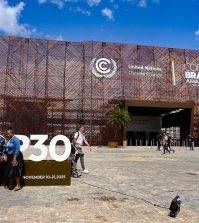
COP30 in Belém, Brazil, has closed with an agreement to increase adaptation funding for developing countries – but with no mention of fossil fuels in the deal.
The world’s biggest annual climate summit, held by the UN, closed one day later than planned on 22 November with a compromise deal that followed 13 days of tense negotiation.
The deal includes mobilising US$1.3 trillion annually to drive climate action and efforts to triple funding for developing countries to adapt to climate impacts by 2035. It also includes a plan to operationalise the loss and damage fund agreed at COP28, which aims to compensate vulnerable countries for climate-induced losses.
Two new initiatives were launched at COP30 to help countries deliver on their nationally-determined contributions (NDCs): the voluntary Global Implementation Accelerator, and the presidency-led Belém Mission to 1.5°C.
However, many countries left the summit disappointed that the agreed deal doesn’t include a push for countries to strengthen their NDCs where deemed inadequate – which dozens of countries had demanded – or any mention of a plan to phase out fossil fuels.
Though the latter hadn’t been on the COP30 agenda, the development of a roadmap to phase out fossil fuels had the support of Brazil’s president Luiz Inácio Lula da Silva, more than 80 of the 193 nations at the summit, and a coalition of major business groups together representing more than 100,000 companies.
“We know some of you had greater ambitions for some of the issues at hand,” COP30 president André Corrêa do Lago acknowledged.
UN secretary general Antonio Guterres said: “I cannot pretend that COP30 has delivered everything that is needed. The gap between where we are and what science demands remains dangerously wide.”
Read more: Disagreements over transition from fossil fuels and climate finance continue as COP30 nears close
Countries at loggerheads in run-up to deal
In the final run-up to the COP30 deal being reached, Colombia, Panama and Uruguay had made multiple objections.
They and the European Union had pushed strongly for language on a transition away from fossil fuels to be included, noting that fossil fuels are by far the biggest contributor of planet-warming emissions.
“A consensus imposed under climate denialism is a failed agreement,” Colombia’s negotiator said.
But the Arab Group of nations including top oil exporter Saudi Arabia said they would not support such text in the final deal, leading to overnight talks. The EU agreed in the final hours not to block it.
Though the EU made clear it did not agree with the conclusion, Wopke Hoekstra, the EU’s climate commissioner said: “We should support [the deal] because at least it is going in the right direction.”
Correa do Lago said that the COP30 presidency would issue a side text on fossil fuels, keeping it out of the main accord because of the lack of consensus.
Deal demonstrates commitment to collective action, says UN
Though there was bitter disappointment over the deal in some quarters, the agreement was celebrated by the UN and others as showing commitment to collective action – or ‘Mutirão’, the theme of this year’s conference.
As well increased finance for climate action and the scaling up of adaptation funding, the Tropical Forests Forever Fund was launched at COP30 separately to the negotiated agreements. The $5.5 billion fund includes 53 participating countries and 20% of resources will go directly to Indigenous people and local communities, according the UN.
The Declaration on Information Integrity on Climate Change was also launched on the fringes of the summit. It establishes shared international commitments to address climate disinformation and promote accurate, evidence-based information on climate change.
Calls for reform
There had been particular pressure on this year’s COP as global warming approaches 1.5°C, and more and more leaders lend their voice to the argument that the Paris Agreement is not delivering what it set out to and that the UN does not have the mechanisms needed to drive the required change.
The absence of the US – the world’s second biggest greenhouse gas emitter after China – from this year’s talks had been a major complicating factor.
Agreements on two major climate treaties – on green shipping and plastics pollution – failed earlier this year after opposition from the US, Saudi Arabia, Russia and others.
Concerns about the COP30 process is growing with some countries calling for reform so that a handful of nations cannot effectively veto deals at future summits.
Read more: COP30 president calls for ‘global NDC’ to spur collective action on climate change

About Mia Hunt
Mia has been editor of globalgovernmentforum.com since 2019. She has 15 years’ experience as a journalist and editor and specialises in writing for civil and public servants worldwide, including covering sustainability policy and related issues. She has led the Global Government Women’s Network since it launched in 2023. Previously, she covered commercial property having been market reports and supplements editor at Property Week and deputy editor at Retail Destination. She graduated from Kingston University London with a first-class honours degree in journalism and was part of the team that produced The River newspaper, which won Publication of the Year at the Guardian Student Media Awards in 2010.