Plastic pollution treaty fails as countries remain divided
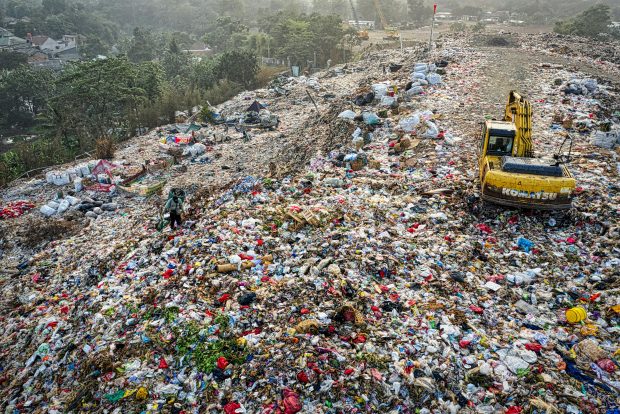
International efforts to limit plastic pollution failed last week after 11 days of tense talks.
The UN had convened delegates from more than 180 countries to its headquarters in Geneva, Switzerland, in a bid to negotiate the world’s first plastic pollution treaty.
The latest talks – the sixth round since 2022 – were supposed to end on 14 August but ran into overtime after countries failed to agree on issues such as whether and how to regulate plastic products, whether measures should be legally binding, and financial support mechanisms to implement the treaty.
Delegates including government ministers, environmentalists, indigenous leaders and business executives could not agree on the basic parameters set out in two drafts of the accord presented during the summit.
More than 100 countries had called for a global, legally binding cap on plastic production and the phasing out of toxic chemicals used to make it, but powerful petro-chemical producing nations who see plastics as vital to their economies – including the US, Saudi Arabia and Russia – opposed the plans.
They said that plastics play a vital role in society, such as in medical instruments, and argued that the accord should focus instead on waste management and reuse.
One draft of the treaty presented on 13 August which stripped out measures relating to reducing plastic production and use of related chemicals was panned by the EU and several dozen “high ambition” countries including France, the UK, Canada, Kenya, Panama and Peru. They said it pandered to petrostates’ lobbying and was too weak to tackle plastic pollution effectively.
Countries did not reach consensus on a second draft released in the early hours of 15 August which reintroduced more ambitious measures, with petrostates saying it gave more weight to the views of other nations.
In a symbolic gesture, Luis Vayas Valdivieso, the Ecuadorian diplomat and chair of the negotiating committee, adjourned the talks with the bang of a gravel made of recycled plastic bottle tops from a landfill site in Nairobi, Kenya.
The committee said negotiations would continue at a later date but there are no immediate plans to resume.
The process had intitally been intended to conclude in South Korea last December, but delegates reconvened this month after those negotiations collapsed.
Read more: Countries have a legal obligation to tackle climate change, International Court of Justice rules
Disappointment – and disagreement over need for consensus
While representatives of various organisations and countries such as Norway, Australia and Tuvalu expressed their disappointment that a treaty had not been agreed, others said progress had been made and expressed hope for future talks, according to the Associated Press.
“Of course, we cannot hide [that] it is tragic, and it is deeply disappointing to see some countries that are trying to block an agreement,” Danish environment minister Magnus Heunicke told reporters last week.
Though he added that the second draft of the treaty was “far more ambitious than the first draft”, which “shows us that it is possible to build the bridges”.
UK environment minister Emma Hardy also said she was “hugely disappointed”, and that the UK had worked “tirelessly” to push for an agreement. As well as calling for binding obligations on reducing production and consumption, it and others in the “high ambition coalition” want to see the introduction of measures related to product design, environmentally sound management of plastic waste, and clean-up of pollution.
“Plastic pollution is a global crisis that no country can solve alone, and the UK is committed to working with others at home and abroad to protect the environment and pave the way to a circular economy,” Hardy said.
While China is the world’s biggest consumer and producer of plastic, it has brought in its own restrictions on the production, sale and use of single-use plastics in a bid to stem its national pollution crisis, and is seen as a constructive voice in international talks on the issue.
Its delegation said the fight against plastic pollution is a marathon and that the latest collapse was a temporary setback and a starting point to forge consensus.
Other nations such as India, Saudi Arabia, Iran, Kuwait and Vietnam said that consensus is vital to an effective treaty, while some have proposed changing the rules of the process so decisions may be made by a vote if necessary.
“We are going in circles. We cannot continue to do the same thing and expect a different result,” Graham Forbes, head of the Greenpeace delegation in Geneva, said.
Read more: EU and China pledge to strengthen climate cooperation
Indonesia steps up
Indonesia’s environment minister Hanif Faisol Nurofiq said in a statement on Monday that “with or without the treaty, Indonesia will continue to take concrete, planned, and measured steps to end plastic pollution”.
He noted that the commitment aligns with the government’s target of achieving 100% waste management by 2029 and its ambition to become a global leader in ending plastic pollution, according to national news agency Antara.
“Only with unity, cooperation, and shared responsibility can we realise an effective and inclusive treaty,” Nurofiq said.
Every year, the world makes more than 400 million tons of new plastic – the majority of it with fossil fuels – and the OECD estimates that could grow by about 70% by 2040 without policy changes.
At present, less than 1% of plastic is recycled globally. The rest ends up incinerated, in landfill, or in the world’s oceans and rivers.
As well as damaging the environment and biodiversity, there are also health implications. Microplastics have been found in the air, drinking water and in people’s brains, and scientific research has linked exposure to toxic chemicals in plastics to obesity, heart disease, cancer, asthma and reproductive problems.
Read more: COP30 president calls for ‘global NDC’ to spur collective action on climate change

About Mia Hunt
Mia has been editor of globalgovernmentforum.com since 2019. She has 15 years’ experience as a journalist and editor and specialises in writing for civil and public servants worldwide, including covering sustainability policy and related issues. She has led the Global Government Women’s Network since it launched in 2023. Previously, she covered commercial property having been market reports and supplements editor at Property Week and deputy editor at Retail Destination. She graduated from Kingston University London with a first-class honours degree in journalism and was part of the team that produced The River newspaper, which won Publication of the Year at the Guardian Student Media Awards in 2010.



Related Posts