Rewiring the state: Unlocking government transformation


The UK government has set the directive for a “complete rewiring of the British state to deliver bold and ambitious long-term reform”. It says that a “digital revolution” will underpin the move to a more “agile, effective and active state”, focused on delivering its missions: growing the economy, an NHS fit for the future, safer streets, opportunity for all, and making Britain a clean energy superpower. It is also essential to simplifying how citizens interact with government to access more joined-up services.
A new Global Government Forum study – which was led by Lord Gus O’Donnell and based on in-depth interviews with 12 UK permanent secretaries – pinpoints the barriers and enablers to transformation in government, with a particular emphasis on the role of digital technologies and data, and identifies four priority areas as key opportunities to accelerate change.
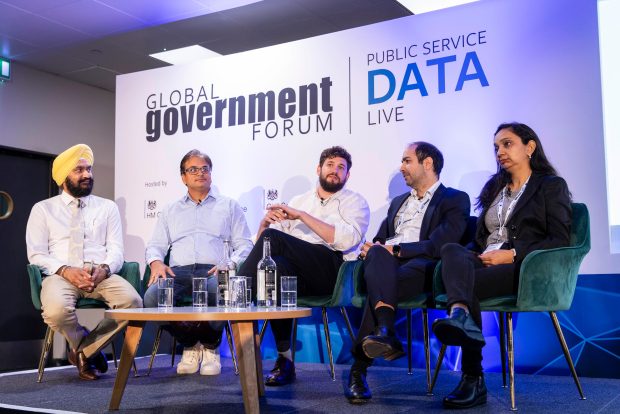
During this event, which could be attended online or in person in central London, you heard directly from Lord O’Donnell and the report authors and knowledge partners Cognizant and Amazon Web Services on how to turn the findings into positive change.
Panel
Lord Gus O’Donnell, former Cabinet Secretary and Head of the Civil Service, United Kingdom

Gus O’Donnell served Prime Ministers Tony Blair, Gordon Brown and David Cameron as Cabinet Secretary and Head of Civil Service from 2005 to 2011. He stood down from this position at the end of 2011 and was appointed to the House of Lords in January 2012. He played a leading role in the preparations for the 2010 election, which eventually resulted in the formation of the UK’s first coalition government since the Second World War. He was awarded the CB, KCB and GCB for his services to government.
Prior to his role as Cabinet Secretary, Lord O’Donnell served as Permanent Secretary of the UK Treasury from 2002 -2005 and as Press Secretary to Prime Minister John Major from 1990-1994 .
From 1997-98, he was the UK Executive Director on the boards of the International Monetary Fund and the World Bank.
Lord O’Donnell spent most of his career with HM Treasury. In 1999 he was appointed Managing Director of Macroeconomic Policy and International Finance and was responsible for fiscal policy, international development, and European Union Economic and Monetary Union. During this period, he oversaw the production of the ‘five tests’ analysis for whether the UK should join the Euro.
He studied Economics at Warwick University and then Nuffield College, Oxford, before lecturing in political economy at the University of Glasgow. He has honorary doctorates from Warwick and Glasgow Universities.
Yatin Mahandru, Vice President, Head of Public Sector and Health, Cognizant UK & Ireland

Yatin is a thought leader and advisor with 40 years of experience in the public and private sectors supporting the delivery of complex, large-scale transformational programmes in the UK and globally. A member of the UK leadership team, in his role, Yatin sets and executes the growth strategy with a focus on how and where advances in technology can be beneficial to citizen services while delivering through empowered teams. He is certified coach, mediator and board-level advisor with an interest in developing future leaders and supporting boards in developing inclusive growth strategies.
Faye Holt, Director, UK Public Sector, Amazon Web Services

As Director of Pan-UK Public Sector at Amazon Web Services (AWS), Faye leads strategic initiatives across the United Kingdom’s public sector landscape. A seasoned technology executive with over nine years at AWS, she oversees programmes and initiatives that cover all aspects of UK Government. Her organisation includes AWS Partners and Specialists, including those leading on AI developments. Faye maintains AWS’s strategic relationship with the Cabinet Office and serves as the executive sponsor for AWS UK’s Social Value initiative.
Event chair: Siobhan Benita, Executive Advisor, Global Government Forum

Siobhan Benita was a senior civil servant with over 15 years’ Whitehall experience. She worked in many of the major delivery departments, including Transport, Environment, Health and Local Government. She also had senior roles at the heart of Government in the Cabinet Office and HM Treasury, including supporting the then Cabinet Secretary, Lord O’Donnell to lead work on Civil Service reform and strategy. Siobhan left the Civil Service to run as an independent candidate in the Mayor of London election. She subsequently joined her alma mater, Warwick University as Chief Strategy Officer of Warwick in London and Co-Director of the Warwick Policy Lab.