The harms of not using data in health: Five minutes with Rory Collins, chief executive, UK Biobank
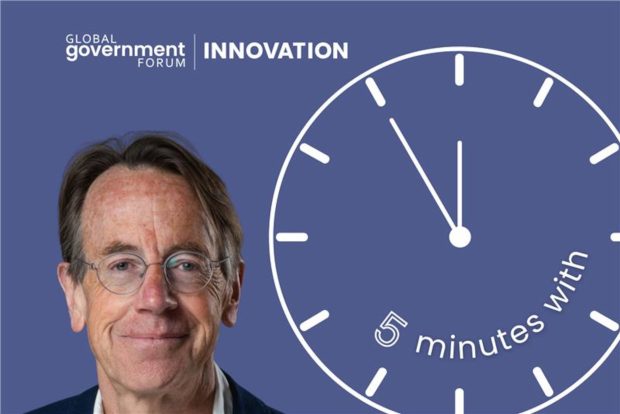
In this series of ‘Five minutes with’ interviews, we share insights from the civil service and public sector leaders who will speak at our Innovation 2026 conference. Taking place in London on 24 and 25 March, attendees will hear leaders from around the world speak on a range of topics related to driving the transformation of public sector organisations.
Alongside the central government agenda, this year’s conference will bring together leaders from across the NHS and wider public sector to discuss how to achieve the UK government’s 10 Year Health Plan.
In this interview, Rory Collins, principal investigator and chief executive of UK Biobank – who will speak at Innovation in the session Harnessing health data for better outcomes – tells GGF about the vital importance of unlocking health data to improve disease prevention, early detection and treatment.
What are you most looking forward to learning and sharing at this year’s Innovation?
That there really is both a strategy and the determination to remove the institutional obstacles, and the risk-averse default, to use health data to support health-related research and to establish a learning health care system in order to deliver on the government’s 10 Year Health Plan.
Delivering an NHS fit for the future is a core government priority, with digital transformation playing a central role in this. Where do you see the greatest opportunities for impact over the next five years?
The Health Data Research Service (HDRS) and its leadership have the resources to deliver a transformation in the use of health-related data not just to enable health research but to implement better population-level preventive strategies and to ensure nationally-consistent high-quality treatment. However, it requires the NHS and the government to be more concerned than at present with the harms caused by obstacles to the use of health data to deliver on this promise.
What are the most critical actions needed now – nationally and locally – to turn digital ambition into reality across health and social care?
Legislation that makes the NHS centrally the data controller – perhaps through HDRS – not just for secondary care data, but also for primary care data which are currently not appropriately looked after (with, for example, identifiable GP data for 40 million people in the UK managed by an American health insurance company, without proper oversight by the individual GP data controllers).
Can you give examples of how UK Biobank is using digital and data tools and the benefits this is delivering?
For many years, we had been obtaining coded discharge data from individual hospitals for the central identification and invitation of potentially eligible patients into clinical trials. We worked with NHS Digital to develop a centralised approach to accessing such data and sending invitations on behalf of collaborating clinicians. This is DigiTrials, which has now been used by both academic and commercial researchers to expedite participant recruitment into trials.
What are your priorities for the year ahead? And what insights would you like from colleagues and peers at Innovation to help you achieve them?
How might it be possible to make the necessary changes in legislation, and to change the risk-averse mindset of those who manage NHS data from one that is excessively concerned about the potential harms of enabling data use to one that is more concerned about the harms of not using data to improve disease prevention, early detection and treatment?
Click here to find out more and register for Innovation 2026. And click here to view the dedicated health agenda.

About GGF reporter

Related Posts