‘The impact on patient experience will be profound’: Five minutes with Matt Philpott, executive director of technology, NHS England
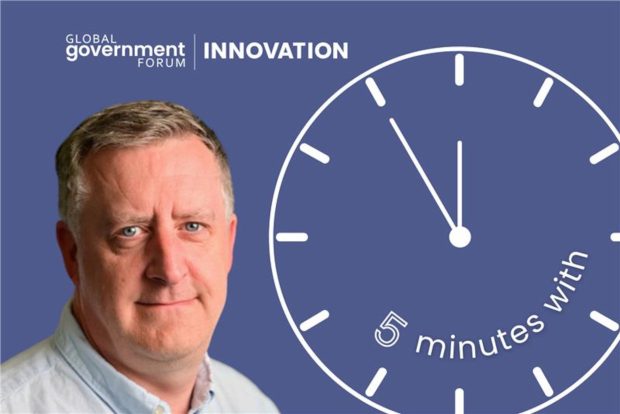
In this series of ‘Five minutes with’ interviews, we share insights from the civil service and public sector leaders who will speak at our Innovation 2026 conference. Taking place in London on 24 and 25 March, attendees will hear leaders from around the world speak on a range of topics related to driving the transformation of public sector organisations.
Alongside the central government agenda, this year’s conference will bring together leaders from across the NHS and wider public sector to discuss how to achieve the UK government’s 10 Year Health Plan.
In this interview, Matt Philpott, executive director of technology in the transformation directorate of NHS England – who will speak at Innovation in the session Reducing digital fragmentation in healthcare – tells GGF about his desire to collectively build a more coherent, scalable digital ecosystem, and about how “what matters is what sticks”.
What are you most looking forward to learning and sharing at this year’s Innovation?
I’m really looking forward to seeing examples of practical innovation that genuinely moves the dial for patients, clinicians, and operational teams. We talk a lot about transformation, but what matters is what sticks – what becomes part of the fabric of care.
I’m especially keen to learn how local systems are using digital tools to solve real‑world pressures: access, flow, demand management, workforce, and productivity. And I’m excited to share how we’re modernising our national technology landscape – moving to cloud‑first, improving our data architecture, and simplifying the way services connect and scale.
Most importantly, I want this event to accelerate the “learning system” across the NHS: finding what works, amplifying it quickly, and removing barriers so innovation can spread with pace.
Delivering an NHS fit for the future is a core government priority. Where do you see the greatest opportunities for impact over the next five years?
The biggest opportunities lie in automation, interoperability, and intelligent use of data:
- Automation at scale to remove administrative burden and release workforce capacity, especially in frontline settings.
- A step‑change in interoperability, moving from point‑to‑point integration to genuinely reusable platforms and APIs that reduce cost and duplication.
- Modernised infrastructure, retiring legacy systems that slow us down and replacing them with cloud‑based, resilient, secure services.
- Data used as an operational asset, not just a reporting tool. Real‑time operational data can transform patient flow, elective recovery, triage, and risk stratification.
- Empowering citizens through personalised digital services – preventing demand, not just managing it.
If we get the foundations right, the impact on productivity and patient experience will be profound.
What are the most critical actions needed now – nationally and locally – to turn digital ambition into reality?
Three actions stand out:
- Get the basics right everywhere. That means core digital infrastructure, reliable networks, modern devices, and secure systems in every care setting – including social care. Transformation isn’t possible without this foundation.
- Create headroom for change. Clinical and operational colleagues know what problems need solving, but they’re under enormous pressure. We need improvement support, funding models, and incentives that give them space to adopt new tech, not just buy it.
- Align national direction with local delivery. We must focus on fewer, clearer standards; more reusable platforms; and sharper prioritisation. National teams should remove friction, reduce complexity, and make it easier for integrated care systems and providers to implement change quickly and safely.
Can you give examples of how you are using digital and data tools in your organisation and the benefits this is delivering?
Across NHS England and the wider system, we’re delivering transformation in a few key areas:
- Digitising end‑to‑end pathways. For example, using data and digital tools to streamline outpatient journeys, reduce failure demand, and support earlier diagnosis.
- Automation and AI for operational improvement. Deploying technologies such as ambient voice technology, providing automation to remove repetitive tasks which is releasing staff time and improving service reliability.
- Strengthening our technology architecture. Help local providers move key services onto modern cloud platforms is improving resilience, security, and scalability, while reducing long‑term cost.
- Better use of data for decision‑making. Enhancing the integration of operational and clinical data so systems have the insights they need to manage flow, target resources, and reduce variation.
Across all of this, the benefit is the same: safer, more efficient services that allow staff to spend more time on direct patient care.
What are your priorities for the year ahead? And what insights would you like from colleagues and peers to help you achieve them?
My priorities focus on enabling the NHS to modernise with pace and confidence:
- Stabilising and modernising core national technology services, so the system has reliable building blocks to innovate from.
- Improving interoperability and data flow across the NHS.
- Simplifying our technology governance, reducing bureaucracy, and making it easier for good ideas to move quickly.
- Accelerating automation and AI deployment, with a focus on operational productivity.
- Strengthening cyber resilience, especially as we transition away from legacy estate.
From colleagues and peers, I’m keen to learn where digital tools are making the biggest difference for staff and patients; what barriers are slowing down implementation – and how national teams can remove them; and how we can collectively build a more coherent, scalable digital ecosystem across England.
Our success depends on shared learning and collective focus, not just individual pilots or programmes.
Click here to find out more and register for Innovation 2026. And click here to view the dedicated health agenda.

About GGF reporter