US federal agencies’ estimated improper payments rose to $186bn in 2025
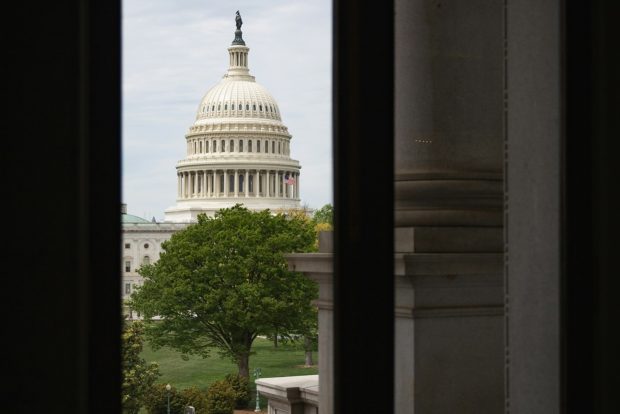
US federal agencies estimated improper payments during fiscal year 2025 rose to almost $186 billion (about £137bn) – an increase of about $24 billion (about £17.6bn) on the previous year – according to the Congressional watchdog.
The figure is the headline finding of a 20-page Government Accountability Office (GAO) report to Congressional committees that provides an overview of agencies’ improper payment estimates for the latest 12-month period.
Improper payments – defined in the report as those that should not have been made or were made in incorrect amounts – have “consistently been a government-wide issue”, the report acknowledged. The majority – about $153bn (82%) – of the 2025 total represent overpayments, with the rest comprising underpayments, unknown payments and ‘technically improper’ payments.
The increase for 2025 is “largely attributable to programs that reported estimates in fiscal year 2025 but did not report estimates in the prior fiscal year,” the GAO states. In addition, the Department of Health and Human Services (HHS) “noted an increase in Medicaid improper payments due to increased errors in eligibility redeterminations and provider screening while phasing out Covid-era flexibilities in the Medicaid program”.
The $185.8bn headline figure is almost $100bn lower than a figure of $281.4bn estimated for 2021.
Government Service Delivery will bring together global digital government leaders to explore how governments can use tech-driven innovation to deliver high-quality public services.
The event will be held at Walter E Washington Convention Center, Washington DC on 10-11 June 2026.
Find out more and register your interest here
PIIA requirements
Cumulative improper payment estimates since fiscal year 2003 have totalled about $3 trillion, and the actual amount of improper payments may be ‘significantly higher’, the GAO noted in the report.
‘Reducing improper payments is critical to safeguarding federal funds,’ it states in an introductory section titled ‘Why This Matters’.
‘The Payment Integrity Information Act of 2019 (PIIA) requires agencies to manage improper payments by identifying risks, taking corrective actions, and estimating and reporting on improper payments in programs they administer,’ the GAO points out, adding that the PIIA also requires each agency’s inspector-general (IG) to issue an annual report on compliance with applicable PIIA criteria.
The GAO has reported on improper payments in its audit reports on the government’s consolidated financial statements since 1997, and has found that these payments ‘represent a material deficiency or weakness in internal controls’. ‘Specifically, we have noted that the federal government is unable to determine the full extent of its improper payments or to reasonably assure that it takes appropriate actions to reduce them,’ it states.
US president Donald Trump signed an executive order – titled ‘Protecting America’s Bank Account Against Fraud, Waste and Abuse’ – more than a year ago (March 2025). The order directed the Treasury Department to update guidance and ‘enhance systems across the Federal Government to ensure that all payments made on behalf of agencies undergo pre-certification verification to prevent fraud and improper payments.’
Read more: Trump orders end of US government cheques in digital disbursements overhaul
Improper payment reported across 64 programs
The GAO report noted that some programmes that agencies have determined are “susceptible” to significant improper payments, such as the Department of Health and Human Services (HHS)’s Temporary Assistance for Needy Families (TANF), did not estimate improper payments. In addition, inspector-generals reported that agencies’ improper payment estimates are ‘unreliable’ for some programmes.
“Our analysis of agency data shows that 15 agencies reported improper payment estimates across 64 programs,” the GAO found.
About 73% (about $136bn) of the government-wide total of estimated improper payments that agencies reported for 2025 is concentrated in five programme areas: HHS’s Medicare; HHS’s Medicaid; the Treasury Department’s Earned Income Tax Credit; the Department of Agriculture’s (USDA) Supplemental Nutrition Assistance Program (‘SNAP’); and the Small Business Administration’s (SBA) Shuttered Venue Operators Grant programme.
Three programmes reported ‘substantial’ declines in estimated improper payments for fiscal year 2025 compared with the previous year.
HHS Medicare Fee-for-Service attributed its decline to improved internal controls.
The other two (SBA – Paycheck Protection Program Loan Guaranty Purchases and Department of Homeland Security – Federal Emergency Management Agency Public Assistance – Validate As You Go) did not provide a reason for their declines.
Read more: Trump anti-fraud taskforce to focus on US federal benefit programmes
GAO recommendations’ progress
The GAO has made recommendations to Congress and agencies to help reduce improper payments government-wide.
Just over four years ago it specified 10 “matters for congressional consideration to enhance transparency and accountability of federal spending” – and is tracking progress via a webpage linking to the matters for consideration. Here it labels eight of the matters as still ‘Open’ (it is coloured red); one of them as ‘Open – Partially Addressed’ (coloured amber); and just one as ‘Closed – Implemented’ (coloured green).
The ‘Closed – Implemented’ matter was for Congress to amend the Social Security Act to accelerate and make permanent the requirement for the Social Security Administration to share its full death data with the Treasury Department’s ‘Do Not Pay’ working system. The Ending Improper Payments to Deceased People Act (PL 119-77) was enacted in February 2026 and included language that addressed this matter, the GAO notes.
The GAO’s analysis was informed by improper payment estimates from the Office of Management and Budget (OMB)’s PaymentAccuracy.gov website.
Global Government Finance’s editorial newsletter (free): sign up here

About Ian Hall
Ian is Global Government Finance editor. He has formerly held roles including UK director of Euractiv (2011-2018), editor of Public Affairs News (2007-2011) and news editor of PR Week (2000-2007). He was shortlisted for ‘Editor of the Year’ at the British Society of Magazine Editors (BSME) Awards in 2010. He began his career in the Balkans at English-language weekly the Sofia Echo (Bulgaria: 1998-1999).



Related Posts