Women’s Network news roundup: gender parity 123 years away, and more
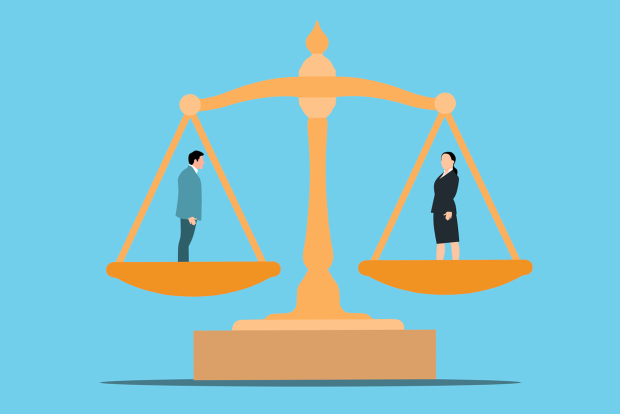
In this latest collection, we report on news that the world is 123 years from reaching gender parity by the World Economic Forum’s estimate, on why backlash against gender equality threatens multilateral efforts on climate change, on South Africa’s protocol on inclusive trade, and more.
Join: Find out more and become a member of the Global Government Women’s Network
Gender parity 123 years away, says World Economic Forum
The global gender gap has closed to 68.8%, marking the strongest annual advancement since the COVID-19 pandemic. Yet full parity remains 123 years away at current rates, according to the World Economic Forum’s latest Global Gender Gap Report, released last month.
This is an 11-year improvement on the last report’s estimate, but still falls more than a century short of the UN’s Sustainable Development Goals.
The report, which covers 148 economies, benchmarks gender-based gaps in economic participation, educational attainment, health and survival, and political empowerment.
It reveals both encouraging momentum and persistent structural barriers facing women worldwide. For example, despite women representing 41.2% of the global workforce, a stark leadership gap persists with women holding only 28.8% of top leadership positions.
“At a time of heightened global economic uncertainty and a low growth outlook combined with technological and demographic change, advancing gender parity represents a key force for economic renewal,” said Saadia Zahidi, the World Economic Forum’s managing director. “The evidence is clear. Economies that have made decisive progress towards parity are positioning themselves for stronger, more innovative and more resilient economic progress.”
Iceland leads the rankings for the 16th year running, followed by Finland, Norway, the United Kingdom and New Zealand.
UN Women’s 15 challenges and solutions for gender equality
To mark 15 years since it was founded, UN Women has launched a campaign outlining 15 actions to accelerate the empowerment of women worldwide.
While it notes that the world has seen important progress in gender equality that has improved the lives of women and girls across the globe, it says “the push for equality is losing ground”.
UN Women data released earlier this year found that nearly one in four countries is seeing a backlash against women’s rights and that gender-based violence is rising.
“This historic and precarious moment threatens to reverse hard-won gains,” the organisation said.
Its 15 actions include increasing women’s leadership and political participation, promoting women in peacekeeping, enabling women’s access to the economy, closing the gender digital gap, and increasing gender financing.
You can find the full list here
Backlash against gender equality threatening multilateral fora’s progress on climate change, ODI finds
While the G7, G20, and United Nations Framework Convention on Climate Change (UNFCCC) are working to promote gender-responsive climate policies and finance, and equal participation in climate decision-making, progress is threatened by the erosion of global human rights related to gender.
This is a key finding of the policy paper ‘Gender equality and the climate crisis: where do international commitments stand?’ released on 16 June by global affairs think tank, ODI Global.
“The G7, G20 and UNFCCC recognise that the climate crisis disproportionately impacts women and that climate action needs a gendered lens. Leaders also agree that the full, meaningful and equal participation of women in climate decision-making is vital,” the ODI said.
However, it added that “international commitments and long-term prosperity are threatened by the erosion of gender norms [by anti-gender states] and a resurgence of strategies and discourses that delay meaningful climate action”.
“Anti-gender states have pushed for the removal or dilution of references to gender, inserted sovereignty clauses and blocked consensus to weaken international agreements,” it said.
Of the three fora, it found that the G7 leads on gender, “considering women and girls in all their diversity, as well as LGBTQIA+ persons”.
The review “serves as a baseline to chart future progress and pushback on gender equality and climate action within multilateral processes”, the ODI said.
South Africa ratifies women and youth protocol for inclusive trade
South Africa has formally ratified the African Continental Free Trade Area (AfCFTA) Protocol on Women and Youth in Trade.
Deputy president Paul Mashatile announced the move – which marks a decisive policy shift towards inclusive economic reform across the continent – during his address at the High-Level G20 Intergenerational Roundtable held in Johannesburg on 27 June.
“This milestone is not just a symbolic gesture; it is a decisive policy action that signals our intent to mainstream gender and youth equity within intra-African trade policy,” Mashatile said.
The AfCFTA Protocol on Women and Youth in Trade aims to remove structural barriers that hinder participation by women- and youth-led enterprises in trade, prioritise access to finance and markets, and compel member states to develop inclusive legal and policy frameworks.
By ratifying the protocol, South Africa commits to integrating these provisions into national economic systems and trade practices.
New plaque honours Britain’s first female civil servant
A plaque honouring Britain’s first female civil servant was unveiled on the site of her house in London on 7 July.
Jeanie Senior became Britain’s first female civil servant in 1873 when she was appointed inspector of the education of girls in pauper schools and workhouses.
As well as working to improve the education of girls living in poverty throughout her career, she also supported soldiers returning from the Franco-Prussian War, which contributed to the foundation of the National Society for Aid to Sick and Wounded in War, a predecessor to the British Red Cross. In addition, she co-founded the Metropolitan Association for Befriending Young Servants, an early type of mentoring scheme.
The plaque was funded by the FDA union and the Battersea Society.
At the unveiling, FDA president Margaret Haig said: “[Senior] spoke truth unto power, championing those values which we still defend as a civil service union: integrity, honesty, objectivity, and impartiality.”
The Global Government Women’s Network is a free network for women in civil and public services around the world – a global community of women who can advise and support each other as they navigate their careers. It is underpinned by news, opinion, analysis and events on public policy for women and girls and gender equity in government and public sector workplaces. Visit the Women’s Network hub and become a member here.

About Mia Hunt
Mia has been editor of globalgovernmentforum.com since 2019. She has 15 years’ experience as a journalist and editor and specialises in writing for civil and public servants worldwide, including covering sustainability policy and related issues. She has led the Global Government Women’s Network since it launched in 2023. Previously, she covered commercial property having been market reports and supplements editor at Property Week and deputy editor at Retail Destination. She graduated from Kingston University London with a first-class honours degree in journalism and was part of the team that produced The River newspaper, which won Publication of the Year at the Guardian Student Media Awards in 2010.



Related Posts