‘A job centre in people’s pockets’: how the UK government’s app will work – and the ambitions for the future

Few things better capture the transformations that digital technology has brought into the world in the last two decades than the ubiquity of the app. From connecting with friends and ordering food to watching television and even applying for a mortgage, most areas of life can now be conducted through the mini screen in your pocket.
In some parts of the world, the same is true of government. The Digital Iceland app, for example, provides the main service channel to citizens and businesses, with services developed around users‘ needs, while Estonia’s e-government app brings nearly 50 government services directly to users’ mobile phones.
The same has not been true in the UK, where the government does not have a dedicated app, despite different administrations examining the possibility. This will change soon as the government has announced that a GOV.UK App will launch this summer.
The app is one of the major developments set out by science secretary Peter Kyle as he launched a blueprint for digital government last week.
Kyle said people now expect services to be available in apps, citing the example of a teenager who has grown up in the iPhone era. He added that people can’t be expected to use multiple web pages to get all of the experiences provided by an app, noting: “Apps can bring together a huge variety of different material.”
This is where the new app will come in. Powered by the UK government’s One Login system, which Kyle described as “an ultra-safe and secure login to online services”, the app will allow citizens to more easily access services.
Read more: Digital identity: what the UK government needs to get right in the One Login programme
Kyle said that over time, the app will harness the power of all government services from all parts of the UK, across central government, autonomous public services and local authorities. In the demonstration, Kyle showed how citizens would be able to access information about their student loans, as well as current benefits they are in receipt of, starting with Universal Credit. The app will also provide an individual payment schedule, so users can see when their payments to government for things like vehicle tax are due – and tweak them.
“If you have a bit of extra cash at the end of the month, you can pay something a little bit earlier than you would have done before,” Kyle said. And while this is “totally reminiscent of the way you shop, the way you bank and the way you travel”, it is “something that is completely on a different level than people have ever experienced before from their government”, he said.
The app’s features will also include a wallet to store government identity documents, starting with veterans’ cards and digital driving licences. Kyle said this means that the wallet will enable, over time, government services that require identity to go into the app itself. It will also speed up delivery, with applications that currently take weeks being reduced to hours.
Read more: New UK digital services plan aims to ‘transform the relationship between citizen and state’
Digitising driving licences and more
Kyle said that people are “crying out” for digital driving licences, commenting: “It is totally unsatisfactory that we don’t have a digital alternative in 2025.”
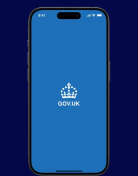
The app will allow the full driving licence to be shared for transport purposes as well as to be used for age verification – both online and offline.
Nothing is shared publicly, but Kyle demonstrated that the app can be used for age verification for an online purchase and it will jump back to the app “in a matter of seconds”.
“That means that the person buying knows that it’s been done in a safe and secure manner. The retailer knows that they are complying with the law, and we as a society can know that we are using the latest technology in order to keep people safe.”
This is a giant step forward for government, Kyle said. “The products that you’ve seen today are just the start, and it’s really important for me to say that we will move by putting information and access to services in people’s hands.”
In particular, Kyle highlighted the potential for adding Department for Work and Pensions services to the app as among the major opportunities. Work and pensions secretary Liz Kendall, who attended the event, is “driven by the aim of putting a Jobcentre in people’s pockets, in people’s hands”, Kyle said.
“Think of how liberating that is for people with multiple jobs, a complex family life – they are the ones that are burdened almost the most with having to interact with the state in a way that simply isn’t fit for the age we’re living in. So today, we’ve taken those first steps forward by putting information into people’s hands. The next stages are obvious but you won’t have to wait so long because you can see the determination, the direction of travel.
“We’re using technology to drive radical, far-reaching reform of our public sector and of public services themselves. The only route to a smaller state is via a smarter state, and what you’re seeing today are those crucial steps forward.”
Read more: Yes, civil servant: Meet Humphrey, the UK government’s AI package for officials
Chatting your way to the government service you need
The app will also include GOV.UK Chat, the chatbot under development to allow users to ask questions about government services. It is currently focused on business and professional queries, but Kyle said it would soon be opened up to a wide range of questions.
The system, which has been developed with OpenAI, is trained on the GOV.UK website. Speaking in a media briefing after the session, Kyle acknowledged when asked by Global Government Forum that the tool places a premium on the information on GOV.UK being up to date.
“It’s simply an issue, and obviously AI is only as good as the data that goes into it and of course, there are some parts of government that take longer to update information than others,” Kyle said. “Those are some of the issues that came up during testing… Particularly when there’s announcements [by government], on the day of the announcement, those changes do take a while to get through to web pages.”
However, he said that updating websites when announcements are made would become part of the policy development process: “These are things we’ve just got to adapt.”
Developers of the chat function told Global Government Forum at the event that answers can be updated on the day of major policy announcements, without the delays often seen with broader AI chat systems.
This is the third article from Global Government Forum examining the government’s blueprint for modern digital government. The next article will look at how Kyle plans to drive this transformation across government.
Read the other articles:
New UK digital services plan aims to ‘transform the relationship between citizen and state’
Yes, civil servant: Meet Humphrey, the UK government’s AI package for officials

About Richard Johnstone

Related Posts