Britain’s likely next prime minister sets out plan for ‘more streamlined state’, including new Number 10 North ‘nerve centre’
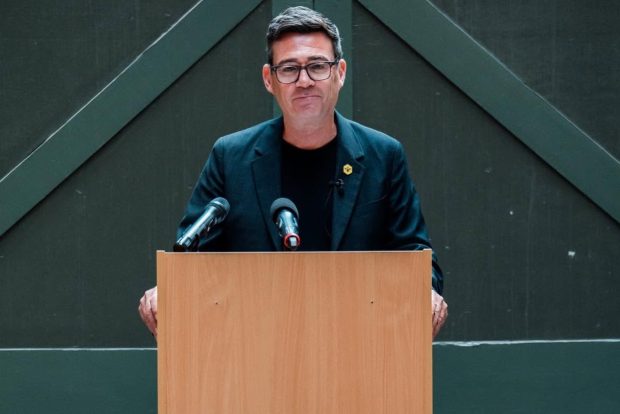
Andy Burnham pledges ‘the circuit breaker the UK needs’ to build more collaborative and localised government
Andy Burnham, the man who is likely to become the next UK prime minister, has set out details of his plan for office, with a focus on place-based cooperation as a new “operating principle” for the country.
In a speech delivered from Greater Manchester on 29 June, Burnham said he would provide the country with “the circuit breaker it needs by building a more collaborative politics in Westminster, by taking power out of the centre and putting it in the hands of the people and places who can use it best”.
Burnham was mayor of Greater Manchester from 2017 to 19 June 2026, when he won the Makerfield by-election and returned to UK parliament as a Labour MP.
In the wide-ranging speech, Burnham said he would bring the place-based approach he led in Greater Manchester to the national level, focused on geographical place: “Place first, not party first; problem solving, not point scoring; long term, not short term,” he said.
“The ‘Greater Manchester way’ is based on strong partnership between all sectors, public, private, community, voluntary, academic, faith and our trade unions. We ask everyone to face the same way and then pull in that same direction together.”
Read more: The centre cannot hold: the future of UK regional policy
To do this, Burnham said he would lead a devolution drive and establish an office in Manchester, which he referred to as “Number 10 of the North”, dedicated to steering this ambition.
“The change will be the biggest change in our lifetimes to the way the country is run… We will create a more streamlined state with a clearer purpose to power up all parts of the country and put a laser-like focus on growth and regeneration, good growth,” he said.
Number 10 North would be responsible for making power flow into the Midlands, into the South West, into the East of England, and even into London.
“It will coordinate all parts of government at national and local level, to agree a long-term economic strategy and help all places set new growth ambitions,” he said, adding that all central government departments and agencies would be required to support strategic and local authorities with staffing and resources, with the aim of making “quicker, more joined-up decisions”.
Burnham also set out three priority areas where powers would be devolved: reform of essential utilities; reindustrialisation; and regeneration of places. The government would set a 10-year mission to rewire Britain, with measures including changes to procurement rules to strengthen social value regulations, as well as what Burnham called “the biggest council house building programme since the post-war period”.
Watch: What the government’s procurement reform means
Different levels of governments ‘working together as equal partners’
Responding to Burnham, Louise Gittins, chair of the Local Government Association, said that successive devolution agreements have “demonstrated that devolving powers to local communities is the best way of unlocking the potential of people and their places, while boosting inclusive economic growth”.
She added: “It is now vital that the government steps up its ambition to deliver genuine devolution right across England, giving councils who know their communities the power to tackle long-standing local and national challenges, including driving infrastructure investment, plugging skills gaps, building more affordable housing and boosting productivity.
“By working together as equal partners across different levels of government, we can build prosperity and opportunity for our communities and businesses.”
Also responding, the Local Government Information Unit – a not-for-profit, non-partisan membership organisation for local government in the UK – said Burnham’s proposals amounted to “the most ambitious statement on devolution we have seen from a senior politician in a generation”.
But its chief executive Jonathan Carr-West said this vision requires a vehicle.
“We have seen ambitious visions before, and we have seen many governments come unstuck because of their failure to empower councils sufficiently. Local government is the operational frontline of the state, and right now it is hollowed out and close to collapse. Number 10 North, reindustrialisation, house building: none of this works without councils that have the capacity to deliver it.
“We still need an effective covenant between national and local government that addresses the systemic pressures faced by councils, that provides a sustainable financial settlement and that links “good growth” to locally-led approaches to public service reform and democratic renewal.”
Andy Burnham was MP for Leigh between 2001 and 2017, and held successive cabinet posts – as chief secretary to the Treasury, culture secretary, and health secretary – between 2007 and 2010 under prime minister Gordon Brown.

About Richard Johnstone