Draft UN resolution seeks to turn International Court of Justice decision on climate change obligations into action
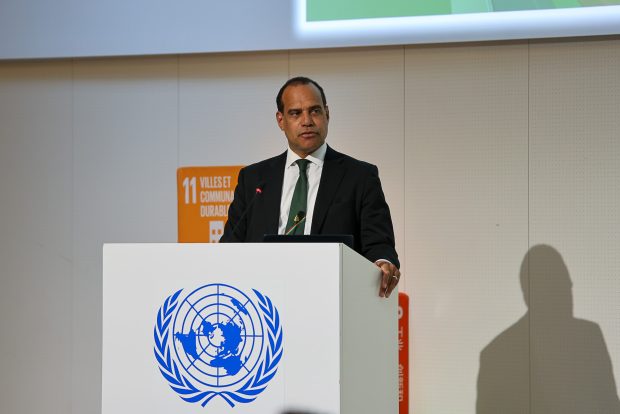
A draft UN General Assembly resolution has been introduced to formally uphold the advisory opinion of the International Court of Justice (ICJ) that countries that fail to meet their climate obligations risk violating international law.
If adopted, the resolution could open the door to the payment of reparations from high emitting countries to those hardest hit by climate change.
The draft resolution, which has been put forward by Vanuatu with input from 12 other nations, “fully and unreservedly” welcomes the ICJ’s decision. It seeks to advance climate justice through mechanisms to drive the operationalisation of the advisory opinion, and to strengthen climate action in line with the legal obligations it clarified.
The ICJ is the UN’s highest court, based in The Hague. It gave its advisory opinion in July last year after the unanimous agreement of the 15 judges, who said that violation of countries’ climate obligations may justify “the award of full reparation to the injured states”.
Though not binding, it was hailed as a ‘landmark’ by climate experts and civil society groups, who said it would put pressure on the most polluting countries to act more robustly to tackle climate change.
Read more: Court rulings order Dutch and German governments to strengthen climate plans
‘Strengthening collective action and multilateral cooperation’
Vanuatu is a tiny island nation in the South Pacific which is particularly vulnerable to climate change and is one of the most vocal countries at international fora advocating tougher, binding action on climate change.
“This initiative reflects our enduring commitment to climate justice,” ambassador Odo Tevi, permanent representative of Vanuatu to the UN, said of the resolution. “The advisory opinion provides authoritative legal clarity. Our collective responsibility now is to ensure that this clarity strengthens global climate action and multilateral cooperation.”
Ralph Regenvanu, Vanuatu’s minister for climate change, added that “upholding the court’s clarification of existing obligations is essential for the credibility of the international system and for effective collective action”.
Read more: Global warming could breach 1.5°C more than a decade earlier than predicted, scientists warn
US urges Vanuatu to withdraw proposed resolution
Regenvanu said last year that it was important to follow up the ICJ opinion with a resolution at the UN General Assembly, because countries opposed to it could prevent it moving forward in other forums, such as at COP summits.
The draft has been shared with UN member states and will be discussed during informal consultations in New York this week. A vote on the proposed resolution is expected to take place by the end of March.
However, news has emerged that the US is pressuring Vanuatu to withdraw it. A US State Department cable sent to all US embassies and consulates and seen by the Associated Press and Al Jazeera said the Trump administration “strongly objects” to the proposed resolution, which it said “could pose a major threat to US industry”.
“We are strongly urging Vanuatu to immediately withdraw its draft resolution and cease attempting to wield the court’s advisory opinion as a basis for creating an avenue to pursue any misguided claims of international legal obligations,” the cable said.
Agreements on two major UN climate treaties – on green shipping and plastics pollution – failed last year after opposition and interventions from the US, Saudi Arabia, Russia and others.
The shipping treaty sought the approval of UN member states to mandate targets to reduce the greenhouse gases emitted by the shipping industry. More than 100 countries met in October last year and were expected to approve the deal following 10 years of negotiations, but it fell through after representatives of the Trump administration threatened countries who voted for it with tariffs and other economic penalties.
The human rights organisation Amnesty International has called on governments “not to squander the opportunity” to turn the ICJ opinion into robust climate action.
“The resolution attempts to turn the ICJ’s interpretation of key legal standards into a practical roadmap for state accountability which is likely to trigger political pushback from higher income high emitting countries wary of their historical responsibility and financial liability,” said Candy Ofime, climate justice researcher and legal advisor at Amnesty International.
She added that the vote on the draft resolution was “a vital moment for states to show they stand on the side of climate justice – not delay, weaken, or turn away from their legal obligations and moral duty”.
Read more: President Trump withdraws US from UN climate treaty and 65 international bodies

About Mia Hunt
Mia has been editor of globalgovernmentforum.com since 2019. She has 15 years’ experience as a journalist and editor and specialises in writing for civil and public servants worldwide, including covering sustainability policy and related issues. She has led the Global Government Women’s Network since it launched in 2023. Previously, she covered commercial property having been market reports and supplements editor at Property Week and deputy editor at Retail Destination. She graduated from Kingston University London with a first-class honours degree in journalism and was part of the team that produced The River newspaper, which won Publication of the Year at the Guardian Student Media Awards in 2010.