First global AI treaty signed by US, UK and EU governments
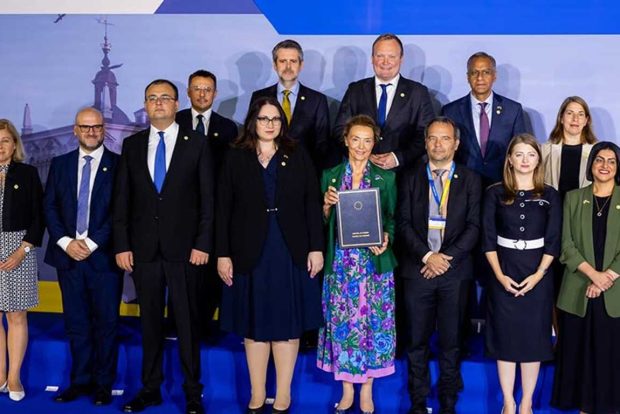
National governments including the US, UK and EU member states have signed the world’s first legally binding global AI treaty.
The treaty, known as the AI Convention, is geared towards protecting and integrating human rights into existing and new AI technologies.
The signing followed the treaty’s official adoption in May this year, before which there had been years of negotiation involving discussions between 57 countries. These discussions addressed the risks posed by AI and sought to promote responsible innovation.
In a statement, Shabana Mahmood, the UK’s justice minister, called the treaty “a major step to ensuring that these new technologies can be harnessed without eroding our oldest values”.
The Council of Europe’s secretary-general Marija Pejcinovic Buric said: “We must ensure that the rise of AI upholds our standards, rather than undermining them.”
Buric added that the Convention was an “open treaty with a potentially global reach”, while a statement from the council said it provided “a legal framework covering the entire lifecycle of AI systems”.
‘Loopholes and exemptions’
The convention is different to the EU AI Act, which came into force in August. While the AI convention focuses on human rights, the EU Act provides a comprehensive scheme of regulations on the development, deployment and operation of AI systems within the EU.
The convention has meanwhile been written to avoid conflict with the AI Act, meaning its signature and ratification are not expected to impact EU member states.
Some have criticised the convention, however. Speaking to Reuters, Francesca Fanucci, a legal expert at the European Center for Not-for-Profit Law Stichting, said that the convention had been “watered down”.
“[The convention’s] language was…turned into broad principles rather than prescriptive rights and obligations, with numerous loopholes and blanket exemptions,” she said.
“The formulation of principles and obligations in this convention is so overbroad and fraught with caveats that it raises serious questions about their legal certainty and effective enforceability.”
Fanucci also highlighted the fact that the convention does not apply to AI systems used for national security purposes, and that not all private companies are scrutinised under its provisions to the same extent as the public sector.
“This double standard is disappointing,” she said.

About Jack Aldane
Jack is a British journalist, cartoonist and podcaster. He graduated from Heythrop College London in 2009 with a BA in philosophy, before living and working in China for three years as a freelance reporter. After training in financial journalism at City University from 2013 to 2014, Jack worked at Bloomberg and Thomson Reuters before moving into editing magazines on global trade and development finance. Shortly after editing opinion writing for UnHerd, he joined the independent think tank ResPublica, where he led a media campaign to change the health and safety requirements around asbestos in UK public buildings. As host and producer of The Booking Club podcast – a conversation series featuring prominent authors and commentators at their favourite restaurants – Jack continues to engage today’s most distinguished thinkers on the biggest problems pertaining to ideology and power in the 21st century. He joined Global Government Forum as its Senior Staff Writer and Community Co-ordinator in 2021.


Related Posts