Governments take action against Grok AI tool over sexualised images
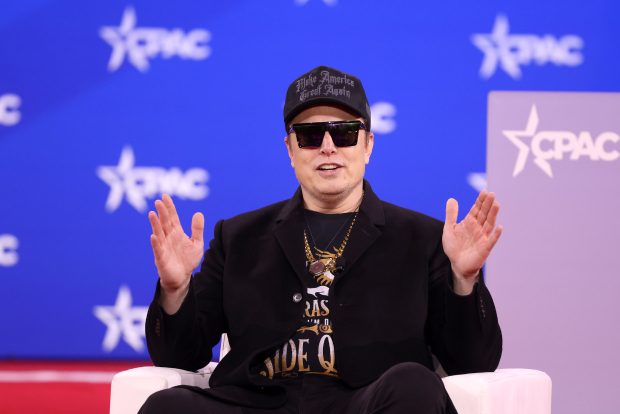
The European Commission and several countries around the world are investigating the social media platform X and its Grok AI tool for allowing users to generate sexualised images of real people.
France, the UK, Australia, India, Indonesia, Malaysia, the European Commission and others have taken action after it emerged that Elon Musk’s Grok – the AI assistant of social media platform X – was being used to generate sexualised deepfakes of women and children based on users’ prompts, including artificially ‘undressing’ them.
X announced that it had blocked users from creating related illegal content, but investigations into the scandal are continuing as countries consider legal proceedings, bans and other measures.
In France, authorities began investigating thousands of sexually explicit deepfakes generated and published by Grok after two lawmakers contacted the prosecutor’s office on 2 January. The prosecutor said that such offenses were punishable by two years’ imprisonment and a €60,000 (US$70,391) fine.
The UK regulator Ofcom is also investigating the proliferation of offensive images on X. The country’s prime minister Keir Starmer said on 8 January that he wanted “all options to be on the table,” including an outright ban of the social media platform.
“This is disgraceful, it’s disgusting and it’s not to be tolerated. X has got to get a grip of this,” Starmer said.
European Commission officials launched an investigation of their own and said it took the dissemination of sexually explicit deepfakes, particularly of children, “very seriously”.
“Grok is now offering a ‘spicy mode’ showing explicit sexual content with some output generated with childlike images. This is not spicy. This is illegal. This is appalling,” Thomas Regnier, an EU digital affairs spokesperson said.
In Australia, the e-safety commissioner has been tasked with investigating the complaints made about Grok. Prime minister Anthony Albanese said that the scandal was “an example of social media not showing social responsibility”.
Albanese added: “Australians, and indeed global citizens, deserve better.”
The country has already moved to tackle online harms, including banning under-16s from accessing platforms including Tiktok, X, Facebook, Instagram, YouTube, Snapchat and Threads.
The Indian government has demanded that X submit a detailed ‘Action Taken Report’ and said that failure to do so risked the platform’s “statutory immunity from legal liability”. It said failure to comply “may result in strict legal consequences” against X, its leaders, and offending users.
Its Ministry of Electronics and Information Technology sent a letter to X’s chief compliance officer, in which it said Grok was being misused “to create fake accounts to host, generate, publish or share obscene images or videos of women in a derogatory or vulgar manner in order to indecently denigrate them”.
The governments of Indonesia and Malaysia have temporarily blocked Grok while investigations are ongoing.
X responds – and the EU’s move to hold it accountable for other infringements
In a statement posted on X on 6 January, the platform said it has taken action “against illegal content on X, including child sexual abuse material by “removing it, permanently suspending accounts, and working with local governments and law enforcement as necessary”.
It added: “Anyone using or prompting Grok to make illegal content will suffer the same consequences as if they upload illegal content.”
In December last year, the European Commission fined the platform €120m (US$140m) for violating the EU’s digital content advertising transparency rules, and for its poor user verification methods. The penalty was the first of its kind made under the EU’s Digital Services Act (DSA).
The commission gave X 60 working days in which to explain how it intended to strengthen its user vetting processes and 90 working days in which to submit an action plan about how it would clean up its advertising repository and resolve data access-related infringements.
Henna Virkkunen, the European Commission’s executive vice-president for tech sovereignty, security and democracy, commented: “With the DSA’s first non-compliance decision, we are holding X responsible for undermining users’ rights and evading accountability.”

About Jack Aldane
Jack is a British journalist, cartoonist and podcaster. He graduated from Heythrop College London in 2009 with a BA in philosophy, before living and working in China for three years as a freelance reporter. After training in financial journalism at City University from 2013 to 2014, Jack worked at Bloomberg and Thomson Reuters before moving into editing magazines on global trade and development finance. Shortly after editing opinion writing for UnHerd, he joined the independent think tank ResPublica, where he led a media campaign to change the health and safety requirements around asbestos in UK public buildings. As host and producer of The Booking Club podcast – a conversation series featuring prominent authors and commentators at their favourite restaurants – Jack continues to engage today’s most distinguished thinkers on the biggest problems pertaining to ideology and power in the 21st century. He joined Global Government Forum as its Senior Staff Writer and Community Co-ordinator in 2021.


Related Posts