Hidden challenges and strategies for success: How governments are developing their digital bench strength

The second in a series of extracts from Global Government Forum’s new study on future-proofing digital capability examines how governments are bolstering their technical bench strength, from apprenticeships and innovation fellowships to employee value propositions
Governments need to move from reactive hiring to deliberate shaping of the technical workforce, according to a new study from Global Government Forum (GGF). This means defining what capability the state needs to retain, how it will be continuously updated, and how internal expertise will be balanced with external support.
The Future-proofing government digital capability study, led by Kevin Cunnington, executive advisor at GGF and former director general of the UK Government Digital Service, explores how government organisations can ensure they have the right capability in place to deliver on their digital visions.
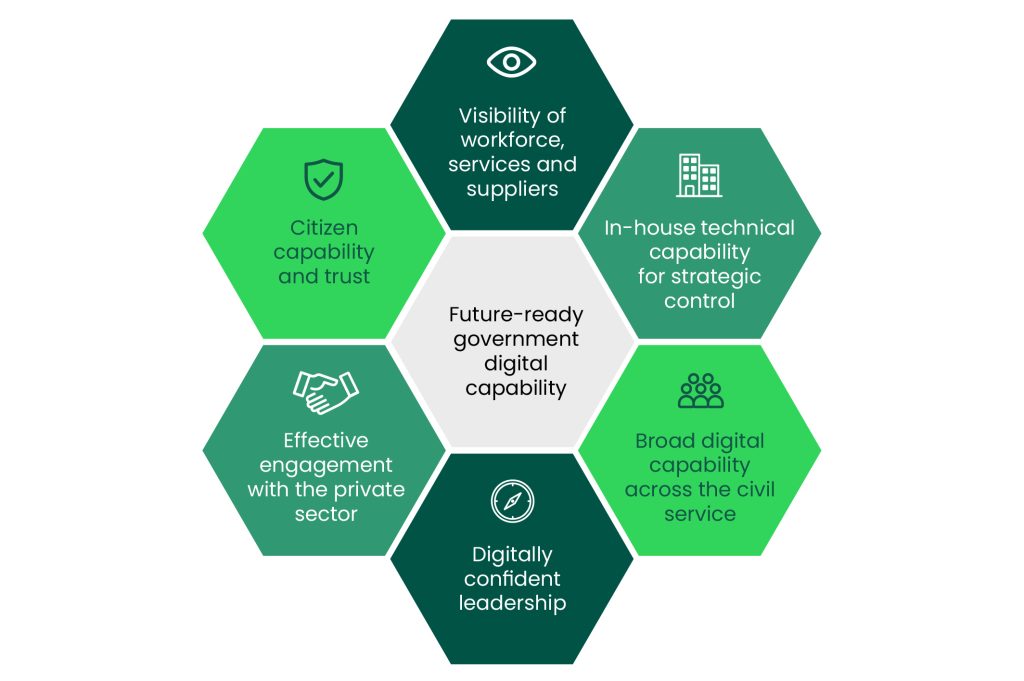
Based on interviews and a roundtable with over 20 digital leaders from around the world, including the UK, the US, Canada, Singapore, Australia and New Zealand, the report identifies six common foundations that underpin digital capability across governments, and how to make sure these foundations are resilient in a fast-changing environment.
Cunnington writes in the foreword: “The ability to meet today’s expectations and capitalise on tomorrow’s opportunities depends on capability – the right people, skills and partners to deliver. Governments need a clear understanding of their digital service priorities; strong in-house technical capability to retain control; a workforce that is confident in using digital tools and approaches; and a strategic approach to engaging and shaping the supplier ecosystem. They also need to ensure citizens are well-equipped to adopt digital services.”
This extract explores the second pillar: In-house technical capability for strategic control.
Download the report: Future-proofing government digital capability: Six foundations for success
In-house technical capability for strategic control
Many governments are increasing their in-house digital workforces, such as data scientists, developers, cloud and software engineers, and AI and cybersecurity specialists, but many still report that they lack sufficient internal capability.
At the same time, there is a growing emphasis on reducing over-reliance on external providers and ensuring governments have enough expertise to act as informed buyers, manage risk, and maintain control over critical services.
One leader described how around 85% of their government’s digital products were outsourced. “We think that number is too high and we want to bring in more in-house capability. That’s the big push in the next few years.”
Others similarly reported political mandates to reduce “over-dependency on contractors” and instead “focus on developing the digital talent within the government”.
Expanding the technical workforce
Our research suggests that digital workforces typically account for around 4% to 8% of the total civil service, with some less mature governments reporting figures as low as 1%. However, these estimates come with the caveat that definitions and measurement approaches vary significantly across systems.
What is consistent, however, is that the proportion of digital specialists in the public sector is generally lower than in the private sector.
Some governments have set explicit targets to boost their digital workforces. The UK has set an ambition for one in ten civil servants to work in digital and technology roles by 2030, while the Australian Public Service expects to need to fill more than 8,000 additional digital roles, effectively doubling its digital workforce.
Framing capability around a fixed number or percentage of the workforce was seen as too blunt an approach by some, but others see value in it. One interviewee said that a target is “really exciting” because it shows ambition and commitment. “It’s less for it to be this nominal figure, but more: does this make people change the culture? Does this change decision-making? If [a defined target] can change the narrative of what we do and how we do it, and drive subconscious changes in behaviours, then I think it will transform how the civil service works.”
They added: “For us to be able to get there, we have to be able to measure it correctly. And then if we can measure it correctly, we’re then able to really understand where the gaps are.”
Ahead of the roundtable, some of the participants completed a short survey, the results of which also informed this report. Survey responses reflect that there is no single benchmark and that context and delivery model matter. While the highest proportion of respondents suggested the specialist digital workforce should sit between 11% and 20% of the civil service, others pointed to lower (5–10%) or higher (21–30%) ranges.
Regardless of whether they have a clear metric for today’s digital workforce or a defined target in place, leaders consistently report that they remain below where they need to be. One interviewee noted that they had added roughly 2,000 technology specialists in recent years but were still not at the required level and were searching for a ‘steady-state’ number that does not yet exist. Another said they had tripled the number of software engineers over five years but “still don’t quite have all that we need”.
These experiences suggest that increasing headcount, while necessary, has not yet closed the gap – and that many governments are still unclear about what “enough” looks like in practice.
Turning strategy into delivery: Find out more about Global Government Forum’s training and advisory services
The hidden skills challenge
Alongside headcount, leaders highlighted another, more complex issue: the relevance of existing skills.
In several cases, governments reported that while they had built up technical cohorts, not all staff were equipped for current or emerging demands. One described concern that some staff possessed “legacy skills” tied to older systems and architectures, and were therefore not “ready for the next lap”.
This challenge is becoming more pronounced as technologies evolve rapidly, particularly in areas such as cybersecurity and AI.
One participant commented: “The difference in outcome between two people who, on paper, look like they have the same capabilities and competences, but one of them is really with it and the other one isn’t, is going to grow.”
They added that this creates a significant challenge for traditional workforce models: “The thing I struggle with, with all these frameworks, is: how do we operationalise that when even the teams that we built meticulously to do digital… over the last decade are already not fit for purpose anymore?”
Employment systems under strain
As governments strive to boost their specialist digital capability, existing employment systems still struggle to support technical careers effectively. These are long-standing, persistent challenges – outlined as critical to address in Global Government Forum’s Making Government Work study with heads of civil services around the world.
Pay remains one of the most persistent constraints. Civil service salary structures typically do not match private sector compensation for high-demand digital roles, particularly in areas such as AI, cloud and cybersecurity. As one interviewee noted: “We need to be salary-competitive [with the private sector]. We can’t be so far off the mark but it’s not reasonable to expect that we’re going to be able to absolutely match.”
Traditional grading systems can also create barriers to attracting and retaining specialists. As one interviewee noted, candidates moving from the private sector into government may find that salaries comparable to their previous roles are only available if they take on roles that involve managing large teams, rather than remaining in specialist technical positions.
Recruitment and mobility constraints
Recruitment processes further compound challenges. Across interviews, leaders described government hiring systems as too slow and inflexible to compete effectively in technical labour markets.
One interviewee characterised recruitment as the “Achilles heel”, noting that the “mechanics of government” often result in long delays. In some cases, it can take several months for a candidate to be offered a role and the necessary checks completed, while private sector employers may move from interview to offer within as little as a week.
Internal mobility can also be slow, with transfers between departments sometimes taking several months. These delays reduce governments’ ability to respond quickly to capability gaps and limit the attractiveness of public sector careers for in-demand specialists.
Some governments are exploring whether artificial intelligence can support improvements in recruitment, for example by accelerating the drafting of job descriptions or improving candidate sifting. However, these remain early-stage responses to a more fundamental structural issue.
Read more: Why governments must ‘grab the nettle’ on digital capability
Steps to attract and retain technical talent
Some governments have acted on the pay challenge. The UK, for example, has developed a system of additional pay allowances linked to digital roles through the Government Digital, Data and Technology pay framework. However, the government notes that it is not universally or consistently adopted. In Global Government Forum’s Rewiring the State study, based on interviews with 12 UK permanent secretaries, the pay framework was recognised as a step in the right direction but not enough to solve the issue altogether.
Such approaches also remain uneven internationally. Survey responses indicate that cross-government standardisation of digital roles, grades and pay is often in place only at a basic level, despite most participants viewing it as important or essential.
More broadly, one leader observed: “We haven’t rethought how we want to classify the digital stream in order to make sure that we have a professional workforce in the public service that is best in class and that rivals the private sector, and that we can attract the best and the brightest.”
As well as more competitive pay frameworks, there are also other efforts to improve access to talent. The US Office of Personnel Management (OPM) has set out new skills and competency standards for the federal government that aim to make it easier for those without degrees to get government jobs, starting with technical IT-related roles. The updated guidance is intended to move the federal government from relying on degree classifications to “truly evaluating the actual skills demonstrated by the applicant and determining their fitness for the task at hand”.
The US has also launched a Tech Force model where early-career technology specialists from the private sector will be hired by agencies on two-year employment contracts to work on “mission-critical projects”. In the UK, programmes such as the Number 10 Innovation Fellowship have brought external technical experts into government on a temporary basis to work on priority challenges.
These approaches allow governments to access high-demand skills while embedding knowledge within teams, rather than relying solely on traditional outsourcing or permanent recruitment.
Read more: US government launches Tech Force to bring in digital talent
Employee value proposition
Several interviewees noted that while governments cannot always compete with the private sector on pay, they can lean into their strengths such as impact, greater stability and purpose.
One interviewee noted that they had been successful in drawing some digital specialists from the private sector who are attracted to these “motivators” of the public sector, as well as greater flexibility. This includes mothers and older workers.
“It’s about how you market yourselves and targeting the right market, and it’s understanding where the opportunities are,” the leader commented.
Australia’s Digital Transformation Agency and the Australian Public Service Digital Profession launched a new Digital Employee Value Proposition (EVP) to strengthen the public sector’s digital capability and support delivery of the APS Data, Digital and Cyber Workforce Plan.
The EVP sets out a clearer, more consistent offer to attract and retain digital professionals in government, emphasising the scale, purpose and national importance of public sector digital work. It is based on direct input from digital staff and highlights what they report valuing most, such as meaningful work, opportunities to learn and grow, and a strong professional community.
Growing capability from within
Alongside external recruitment, many governments are placing greater emphasis on developing capability internally. This will become increasingly important as technology blurs technical and non-technical roles.
Some are already focusing on retraining and reskilling programmes. One interviewee described efforts to retrain staff from policy and operational backgrounds: “We’re looking heavily at retraining… we’ve had some great success in reskilling, retraining people into delivery, management or business analysis and even software development.”
Apprenticeships are also playing a role. One initiative was described as offering “a second chance for a first career”, targeting individuals who may not have followed traditional education pathways but demonstrated aptitude. Those participating have typically gone on to remain in the civil service longer than the average tech employee.
Changing skill profiles
A key trend that civil services are grappling with is the changing nature of skills requirements.
While specialist expertise remains important, many emphasised that the most critical capabilities are not purely technical: skills such as supplier management, commercial awareness and strategic oversight are becoming increasingly important.
One interviewee noted the growing importance of “the ability to problem solve, to strategise, to see things coming and to do programme development and programme leadership”.
Emerging AI tools are also changing how specialist teams work, allowing developers and engineers to prototype, automate and deliver more quickly. As one leader put it: “Tech is easy, governance is hard”, pointing to the fact this requires capability in setting direction, making trade-offs, and coordinating across systems, rather than simply building or managing technology.
From recruitment to workforce strategy
In parallel, some governments are beginning to quantify the benefits of investing in digital capability more explicitly. The UK’s Digital and Data Benefits framework, for example, emphasises that the primary value of capability lies in enabling delivery across AI, data and service transformation, rather than acting as a standalone function. It provides methodologies for making the business case for investment in digital capability and articulating benefits such as reduced contractor spend, reduced failure rate, improved effectiveness via training, and reduced reputational risk and increased trust.
It’s clear that building in-house digital capability is not simply a question of hiring more people. It is a challenge that spans workforce design, employment systems, skills development and organisational strategy. Governments are expanding digital headcount but often without a clear baseline of existing capability, without consistent visibility of workforce distribution, and without a settled view of what sufficient capability should look like over time.
These challenges are compounded by the pace of technological progress that changes roles and can make skills outdated.
Moving beyond this requires a shift from reactive hiring to deliberate workforce shaping: defining what capability the state needs to retain, how it will be continuously updated, and how internal expertise will be balanced with external support.
The study explores six common foundations that underpin digital capability across governments and outlines how they can strengthen each of them.
In-house technical capability: Building the foundations for future-ready capability
- A clear understanding of essential internal capabilities. As digital becomes core to public services, governments will need to define which capabilities or competencies are strategic and must be developed and maintained internally.
- A continuously refreshed skills base. As technologies such as cybersecurity and AI evolve rapidly, capability cannot be static. Governments will need mechanisms to regularly update skills and ensure that capability truly reflects current and emerging needs.
- Employment models that support technical careers. Traditional grading, pay and career structures will need to evolve to attract, retain and reward specialists.
- Faster, more flexible recruitment and mobility. To compete in digital labour markets, governments will need to reduce hiring timelines and enable movement of talent across departments in response to changing priorities.
- A strong pipeline of internal talent. Reskilling, apprenticeships and alternative entry routes will become increasingly important as governments look to grow capability, particularly as technology reshapes roles.
- Hybrid skill profiles. Roles will need to be redesigned to combine technical understanding with delivery, commercial and strategic skills, rather than treating these as separate career tracks.
GGF will now take the collaborative opportunities identified in this report forward – if you’d like to be involved, get in touch by emailing [email protected] so we can structure the work to be as useful as possible.

Participants in the study were as follows (job titles reflect those at the time of interview/roundtable participation):
- Dr Subho Banerjee, deputy commissioner, head of the Australian Public Service Academy and capability, Australian Public Service Commission
- Gregory Barbaccia, federal chief information officer, Office of Management and Budget, United States
- Thomas Beautyman, deputy director of government digital capability, Department of Science, Innovation and Technology, United Kingdom
- Dominic Chan, assistant chief executive, product, and chief information officer, GovTech Singapore
- Marie-Chantal Girard, president, Public Service Commission, Canada
- Shafiqa Dawood, chief digital and technology officer, Department for Education, United Kingdom
- Wolfgang Ebner, federal chief digital officer, Austria
- Richard Gevers, head of service design and delivery, Digital Services Unit, South Africa
- Luukas Ilves, former chief information officer and undersecretary for digital transformation, Government of Estonia, and advisor to the deputy prime minister and minister of digital transformation, Ukraine
- Valeriya Ionan, advisor to the deputy prime minister of Ukraine on innovation, digitalisation and global partnership and former deputy minister of digital transformation, Ukraine
- Birna Íris Jónsdóttir, CEO, Digital Iceland, Iceland
- Paul James, government chief digital officer, New Zealand
- Romina Kostani, deputy general director of the National Agency of Information Society, Albania
- Chris Leck, group chief technology officer, Public Sector Science & Technology Policy & Plans Office, Prime Minister’s Office, Singapore
- Barry Lowry, government chief information officer, Ireland
- Lauri Luht, government chief information officer, Estonia
- Dominic Rochon, government chief information officer, Canada
- Haseley Straughn, digital development policy coordinator, Ministry of Industry, Innovation, Science and Technology, Barbados
- Jaanus Vant, AI and data strategy coordinator, Ministry of Economic Affairs and Communications and Ministry of Justice, Estonia
- Paul Wagner, chief executive officer, Canadian Digital Service, Canada
- Vicky Wang, senior director, digital workforce transformation, Smart Nation, Singapore
- Claire Wraith, head of strategic workforce and transformation, Government Digital Service, United Kingdom

About Sarah Wray
Sarah has over 15 years’ experience as a journalist with a specialism in the public sector and topics such as digitalisation and climate action. Sarah was formerly the editor of Cities Today and Smart Cities World, as well as a specialist video-based publication in the aerospace sector. She has also written for publications including Smart Cities Dive, Mobile Europe, Mobile World Live and Computer Weekly.