Prioritising people and movement: Five minutes with Peter Boulton, network director highways at Transport for Greater Manchester
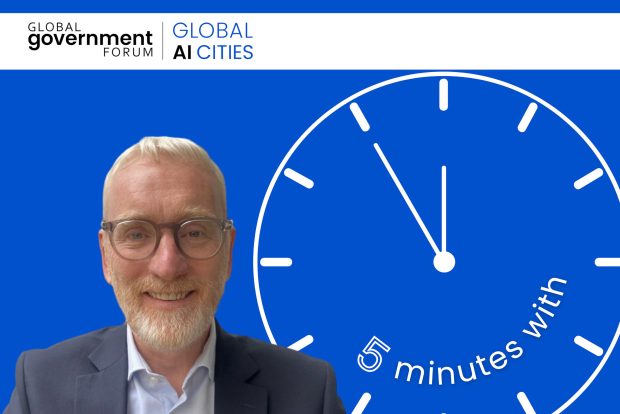
In this series of ‘Five minutes with’ interviews, we share insights from the city and local government leaders who will speak at our Global AI Cities conference, taking place in Greater Manchester, UK, on 16 and 17 June
At the event, leaders from around the world will share insights on how to unlock people-first AI transformation.
Peter Boulton, network director highways at Transport for Greater Manchester, will speak at Global AI Cities in the session ‘Using AI to improve citizen experience of local services’.
In this interview, he tells GGF about the “revolutionary” Vision Zero approach to road traffic safety, and the inspirational leadership style of the Greater Manchester Combined Authority’s former chief executive Eamonn Boylan.
What are you most interested in discussing at Global AI Cities 2026?
How technology can help us deliver safer, more resilient roads and support efficient and reliable use of the highways network to better support the residents and businesses of, and visitors to, Greater Manchester.
Find out more about the Global AI Cities conference and register to attend here
What have you achieved in your career that you’re most proud of?
I have been lucky to be involved in some major transport infrastructure projects such as guided busways, Metrolink extensions and major interchanges which have all had transformational elements to them. But my proudest moment is probably getting Greater Manchester to adopt Vision Zero and committing to eliminating deaths and life changing injuries on our roads by 2040.
What is the best piece of advice you’ve been given in your working life?
Just do it.
What do you like most about working in the public sector?
For me, it’s about impact and responsibility. In the public sector, the decisions you make affect how a whole city functions – how safely people travel, how reliable the network is, and how accessible opportunities are. That scale, combined with the ability to take a long-term, system-wide view, is what makes it different and genuinely rewarding.
Which public sector leader – past or present – do you most admire and why?
Unfortunately, we recently lost our ex-chief executive Eamonn Boylan. What I admired most about Eamonn was his ability to combine strong strategic leadership with a real focus on delivery – he was someone who genuinely got things done. Through his leadership of the Greater Manchester Combined Authority and Transport for Greater Manchester, he helped shape Greater Manchester into a more integrated, devolved system, including bringing buses back under public control. He did all of that with a very grounded, collaborative style – leading from the front but without seeking the spotlight – which I think is a great example of effective public sector leadership. He had a really well developed coaching leadership style where he provided guidance, asked insightful questions, and created a supportive environment that helped people build their skills, confidence and performance.
Which city government organisation are you most inspired by and why?
I often look towards Transport for London (TfL) for inspiration because it has been able to demonstrate what can be achieved when highways are managed as a single, integrated network with clear accountability, consistent standards, and strong political backing. TfL combines long-term strategy with operational maturity, including proactive network management, coordinated investment, and the ability to prioritise people and movement across the network.
Learning from TfL means moving towards a more unified model – strengthening regional control, standardising approaches, and aligning investment to clear outcomes – so that Greater Manchester can deliver a more reliable, safer and better performing highways network for customers.
Can you name one lesson or idea from the UK or overseas that has helped you and your colleagues?
Vision Zero, which originated in Sweden in the mid-1990s as a revolutionary approach to road traffic safety. Vision Zero recognises that while people make mistakes, deaths and serious injuries are preventable. Responsibility for safety is therefore shared across the system – placing equal emphasis on how roads are designed, managed and operated, as well as how they are used.
Which three famous people would you most like to have a dinner party with?
Pep Guardiola, Bob Mortimer, David Attenborough.
If you didn’t do your current job, what would you do for work?
I would have liked to be an architect.
What is your favourite thing to do at weekends?
My wife thinks it’s DIY; I think it’s cooking.
Find out more about Global AI Cities and register to attend here.
Read more:
New Global Government Forum event to explore AI use in cities around the world
‘Don’t let fear prevent you from working on the problems that matter most’: Five minutes with Rafael Carvalho de Fassio, São Paulo state attorney for science, technology and innovation

About GGF reporter