Semi-finalists named in Civil Service AI & Data Challenge
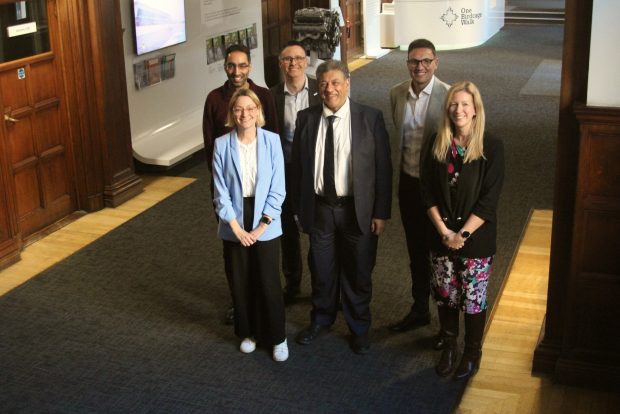
Eight civil servants who put forward ideas for how government could make better use of AI and data technologies have been invited to take those ideas forwards in dedicated project teams, with the backing of top digital leaders from across government.
The eight ideas were chosen from more than 250 submitted to the Civil Service AI & Data Challenge, an innovation programme run by the Department for Science, Innovation and Technology (DSIT), the Cabinet Office, Global Government Forum, and NTT DATA – a global provider of AI, digital business and IT services.
The programme team will now build interdisciplinary, cross-departmental teams of civil servants around the eight ideas, providing them with advice and support as they prepare for the next stage of the Challenge. On 24-25 March at Global Government Forum’s Innovation event, the teams will attend a hackathon then pitch their ideas directly to the judging panel – which includes the chief digital and information officers of four major departments, a Ministry of Defence director general, the government’s chief data officer and its chief artificial intelligence officer, and NTT DATA’s head of public sector.
Four will then be selected to move on to the challenge final in May, where the judges will award one a prize worth £50,000 of digital project development. The goal, though, is to catalyse a number of digital reforms and service improvements – accelerating progress on the government’s ambition to improve public services and save resources through the use of digital, data and AI technologies.
Minister for data and modern digital government Ian Murray said: “This challenge shows how civil servants will put AI and data to work improving public services. Last year we set out our approach to bring AI into the frontline of public services: test and learn, then scale what works. Today’s shortlist shows that in action.
“The semi‑finalists’ ideas show how AI and data can help government work smarter – cutting paperwork, reducing delays and freeing staff to focus on people – making services more innovative and efficient, and delivering the value for money that taxpayers expect.”
Innovation, taking place on 24 and 25 March 2026 in London, is a unique exhibition and conference that brings together government leaders from across the globe responsible for the transformation and acceleration of their public sector organisations and services. Co-hosted by the UK Government, UK Civil Service and the Cabinet Office, it covers innovation across a range of topics, including data, digital transformation, workforce, culture, sustainability, and more. Find out more about Innovation 2026 and register to attend here
The semi-finalists
The eight semi-finalists are as follows:
Casework compliance assistant
AI guidance and support with data analysis, verification and processing, plus guidance for Department for Work and Pensions benefits teams.
Marlon Woodley, Counter Fraud, Compliance and Debt verification assurance officer, Department for Work and Pensions
Codified digital solution assurance
Tackling duplication, fragmentation and complexity in assurance processes with a cross-government rules engine.
Kelcey Swain, data foundations for AI lead, Cabinet Office
Fraudulent document detection
AI-powered verification service to identify evidence and data that has been falsified or tampered with.
Eric Edward, trainee tax specialist, His Majesty’s Revenue and Customs
Offshore wind adaptation to protect wildlife
Using cameras and AI technologies to shut down wind turbines at the approach of protected birds, reducing collisions.
Sabrina Schalz, Nationally Significant Infrastructure Projects ecologist, Ministry of Housing, Communities and Local Government
Real-time weather event impact intelligence
Gathering data from government and open sources to track flooding and other weather events.
Robert Cowling, senior hydrometeorologist, Environment Agency
FOI request assistant
Multi-agent AI system to aid triage, costing, data gathering, and drafting of responses to Freedom of Information requests.
Matthew Pickering, stakeholder engagement lead, Department for Energy Security and Net Zero
Virtual personas for policy testing
Creation of AI personalities to explore the views and reactions of various demographics.
George Griffiths, data scientist, Foreign, Commonwealth and Development Office; and Amish Sarpotdar, economic adviser, Department for Energy Security and Net Zero
AI for capability discovery
Using AI to scale advanced analysis of complex open data for early capability insights.
Mark Brushett, Ministry of Defence
Read more: UK government roadmap outlines next steps for digital transformation
Record number of submissions
Aimee Smith, the government’s chief data officer and a champion of the programme, said: “Congratulations to everyone behind these ideas – we had more nominations than ever this year with over 60 high-quality submissions. You have already achieved something remarkable. And if your proposal was not selected by the judges, that does not mean the journey ends here. Working with civil service data and AI leaders, and with our partners NTT DATA and Global Government Forum, we will continue to explore how every strong idea can realise its potential.
“The Civil Service AI and Data Challenge has shown both the breadth and depth of opportunities to apply AI and data in government, and the remarkable level of support for action across the Civil Service. I am very much looking forward to what comes next, starting with the semi‑finals on 24 and 25 March.”
David Filmer, head of public sector at NTT DATA UK and Ireland and judging panel chair, said: “It incredibly difficult” to pick the semi-finalists. The quality of submissions was really excellent, demonstrating civil servants’ extraordinary inventiveness, expertise and commitment.
“The submissions also revealed civil servants’ enthusiasm and ambition about the potential of AI technologies: the emergence of large language models has opened up huge opportunities to improve public services, save taxpayers’ money and strengthen public servants’ tools across a wide variety of roles, activities and agendas.”
The 252 ideas, submitted last autumn following an appeal from the programme ‘champions’ – who include the permanent secretaries of the Cabinet Office and DSIT – were first reviewed by the project team and a network of ‘sponsors’, comprising senior data leaders from across government. Workshops were then held by NTT DATA and 13 civil service organisations, enabling those who’d put forward the most promising ideas to seek the advice and support of digital and data professionals and relevant policy experts. This process generated 57 submissions to the judging panel – the majority of them based on the use of AI technologies, and backed by key people within relevant departments.
The semi-finals will take place at Global Government Forum’s Innovation event.
Find out more about Innovation 2026 and register to attend here

About Sarah Wray
Sarah has over 15 years’ experience as a journalist with a specialism in the public sector and topics such as digitalisation and climate action. Sarah was formerly the editor of Cities Today and Smart Cities World, as well as a specialist video-based publication in the aerospace sector. She has also written for publications including Smart Cities Dive, Mobile Europe, Mobile World Live and Computer Weekly.

Related Posts