Wide-ranging UK government reshuffle signals ‘big change at the centre’
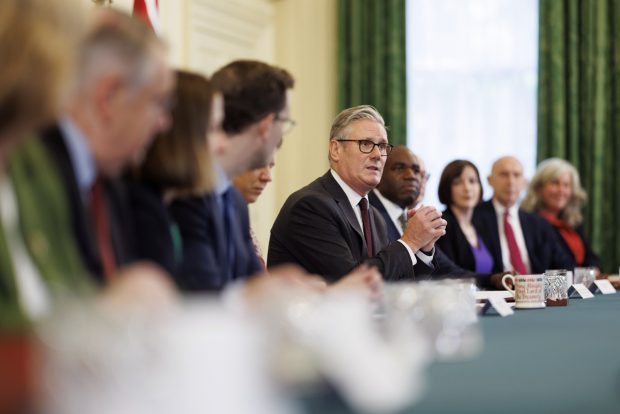
Ministers across the UK government are settling into new roles after prime minister Sir Keir Starmer conducted a broad reshuffle of departmental portfolios.
Deputy prime minister and housing secretary Angela Rayner resigned after the PM’s ethics adviser found that she had breached the ministerial code over failing to pay enough tax on her purchase of a flat in East Sussex, triggering a wide-ranging reshuffle.
Twelve of the most senior ministerial roles that form the cabinet have changed. These include the appointment of Yvette Cooper as foreign secretary, replacing David Lammy, who moved to justice secretary. Lammy will also be the UK’s deputy prime minister.
Other key appointments include Shabana Mahmood as home secretary, meaning that the three great offices of state – the Foreign Office, Home Office and the Treasury – are occupied by women for the first time.
Elsewhere, Steve Reed replaces Rayner directly as housing secretary, while Pat McFadden moves from the Cabinet Office, where he led the work on the government’s reform of Whitehall, to lead the Department for Work and Pensions.
Darren Jones, who was named as Starmer’s chief secretary to the prime minister in a new role before the reshuffle, will combine this role with McFadden’s former job of chancellor of the Duchy of Lancaster in the Cabinet Office.
Register now for Public Service Data.AI 18 September 2025 – London, UK
Brought to you by Global Government Forum and hosted by HM Government, Public Service Data.AI is the UK’s flagship annual event for civil servants working to unlock the power of data and artificial intelligence across government. Free to attend for all UK public servants, this event brings together digital leaders, policymakers, data specialists and service designers to explore how the effective use of data and AI can drive smarter, fairer, and more responsive public services.
From modernising digital infrastructure and fostering public trust to ensuring ethical AI procurement and improving data-sharing across departments, Public Service Data.AI 2025 will focus on the key enablers of successful digital transformation.
Find out more and register here
Departments including DSIT and DWP get new leadership
McFadden’s move to the Department for Work and Pensions comes as Liz Kendall moves out to the Department for Science, Innovation and Technology, replacing Peter Kyle.
Kyle led the development of a wide-ranging digital transformation plan, pledging a “giant leap forward” in the services the state provides.
Chief among these was the announcement of a new GOV.UK wallet and app. Launching the app, Kyle highlighted the potential for adding Department for Work and Pensions services to the app as among the major opportunities, and said Kendall was being “driven by the aim of putting a Jobcentre in people’s pockets”.
Kendall will now have responsibility for driving the implementation of the Blueprint for Modern Digital Government transformation plan, which is being led by the Government Digital Service as the ‘digital centre of government’ within the Department for Science, Innovation and Technology.
Kyle has been moved to lead the Department for Business and Trade, which leads the government’s industrial strategy focused on boosting growth across eight key sectors.
Other cabinet-level appointments include Emma Reynolds as environment secretary, Douglas Alexander MP as Scotland Secretary, Jonathan Reynolds as chief whip, and Sir Alan Campbell MP as leader of the House of Commons.
‘Big change at the centre’
Analysing the reshuffle, the Institute for Government said that the appointment of Jones was “a big change at the centre”.
Hannah Keenan, associate director at the think-tank, said that combining the roles of chief secretary to the prime minister with the pre-existing post of chancellor of the Duchy of Lancaster puts Jones squarely at the heart of the PM’s operation.
It amounts to “maximum clarity from the PM in what has been a confused No.10 operation”.
However, she added: “The challenge will be for Jones to go about this new role in a way that not only delivers on the plan for change but also gets to grip with the myriad other responsibilities that come with the chancellor of the Duchy of Lancaster role.
“Some of these – in particular on missions and rewiring the state – could prove a good fit for someone who has shown in the Treasury his appetite to get government to run smoothly. Others – including taking on policy areas like the national resilience portfolio – could make it harder to focus on the dual, and daunting, rewiring and delivery tasks ahead of him.”

About Richard Johnstone

Related Posts