All together now: why today’s risks demand a cross-government response
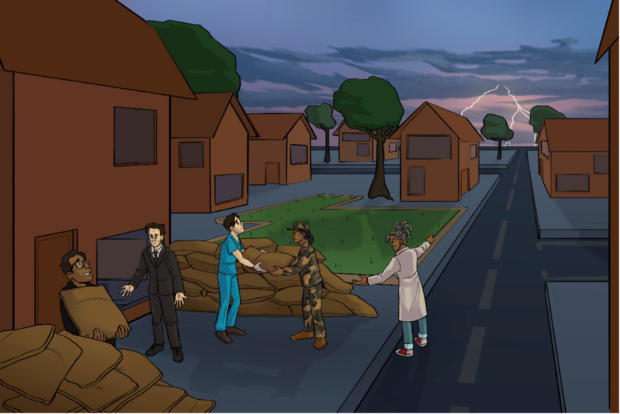
As Russia’s multi-faceted campaign against Ukraine demonstrates, security and civil threats can no longer be neatly separated. At the Global Government Summit, civil service leaders debated how to reform risk management for an interconnected world. Matt Ross reports
“The lines between peace and conflict, between civil emergencies and national security, between what is wrongful behaviour and what is not, have become very blurred,” said Taimar Peterkop. For centuries, governments have operated security and defence systems to handle hostile nation states, while maintaining a separate set of policies and agencies focused on civil threats such as pandemics, power cuts and public unrest. This division, the Estonian Secretary of State argued, is looking increasingly obsolete.
With a full-scale war raging in Europe, it would be easy to focus on traditional, military threats. But president Putin’s invasion of Ukraine represents the culmination of a long campaign waged on many different fronts. Russia has cut off Ukraine’s gas supplies, poisoned a presidential candidate, launched cyber attacks on its infrastructure, spread disinformation to divide the country’s people, built a bridge to limit its access to the sea, and covertly sent weapons, funding and troops to aid separatists.

“Modern technology and interconnectedness have… enabled the increase of state or state-sponsored hybrid attacks,” Peterkop (left) said at the 2022 Global Government Summit (GGS). “Cyber attacks, the use of disruptive technologies, the spread of disinformation are an everyday occurrence.”
It’s often noted, he added, that “the generals always fight the last war. And it’s usually considered that the civilians and civil services are an additional step behind the generals.” But governments can’t afford to get left behind, he said: civil services must be ready to “handle anything that is thrown at us.”
A rounded view of risk
At the GGS session on risk management – held two months ago, before Russia’s invasion of Ukraine – Peterkop was exploring these issues with his peers from around the world: top civil service leaders from 14 countries, gathered online for two days of discussion and debate. And while Estonia may face greater security threats than most nations, all those participating were keenly aware of the need to improve risk assessment and crisis response.
“Globalisation is inherently prone to crises,” commented Tshediso Matona, a Senior Fellow at South Africa’s National School of Government (left). And “in a situation where countries have unequal capacity to respond to these crises, that reality of unequal capacity is a risk in itself.” As long some nations lack the resources and infrastructure to fully vaccinate their populations, for example, COVID-19 will continue to circulate – creating an ongoing risk that new variants will emerge to threaten every nation.
Canada’s former Clerk to the Privy Council, Michael Wernick, pointed to another challenge: “We tend to reward the people that do wonderful jobs on crisis response, and celebrate them,” he said. “But there are people that work very hard on more slow-moving issues, and I do worry a little bit that we don’t give them enough attention and celebrate their slow, diligent investments in making systems better.”
States often struggle to address these long-term threats, said Leo Yip, the Head of Singapore’s Civil Service. Issues such as climate change “may not rear their ugly head today, but you know that down the road something is going to happen.” Governments can only act decisively when elected leaders and populations accept that “tomorrow’s risks must be combated today; and tomorrow’s risks can only be dealt with starting with today’s sacrifices.”
Through the window of opportunity
So governments need to consider risks holistically across the security and civil domains; to boost resilience among vulnerable sectors and nations; and to allocate resources and efforts according to the scale of each risk, rather than its immediacy. It’s a big ask; but as Wernick pointed out, each new crisis leaves in its wake a window of opportunity.
The government has about a year, he said, “after each incident to ‘build back better’.” Typically, during each crisis “the political opposition has chided the government for being unprepared, so they have no willingness to resist investments or legislative overhauls or changes to systems and regulation.”
The experience of dealing with a crisis, Peterkop said, can also improve elected leaders’ skills in the field – opening up a path to reform. A year into the COVID-19 pandemic, he recalled, Estonia ran a security-based emergency response exercise. “The ministers demonstrated significant understanding of the dynamics of strategic-level decision-making in a crisis,” he recalled. “The daily management of the COVID-19 pandemic had prepared ministers for other types of crisis as well.”
So this is a good time to reform cross-government risk management. What are the goals? One is resilience, said Yip, recalling how the pandemic disrupted supply chains – revealing weaknesses in the ‘just in time’ approach to logistics. A complementary framework, he suggested, may be “just in case” – with reserves and back-up plans ready in case the main system falls over.
Another aim is to foster “a whole of society” response to risks, said Yip, ensuring that planning involves and considers not only public bodies and businesses but also “what we call in Singapore the ‘people sector’: the non-commercial, non-government part of society.”
Reaching out on risk
This resonated with Richard Smith-Bingham, who’s an Executive Director at risk and insurance specialists Marsh McLennan – an event knowledge partner – and a member of the UK’s National Preparedness Commission. Addressing crises effectively demands “self-organising, adaptation, coordination and innovation across businesses, other organisations and households,” he said, with all actors “trusting not only in government, but in each other as well.”

The goal, said Smith-Bingham, is to “close two protection gaps: first, between the needs of future national resilience and the current or proposed levels of investment or coverage; and second, between the solutions available and the affordability of those solutions – for vulnerable affected communities in particular.”
Governments, he added, must think carefully about exactly how to close those gaps. “Taxpayers can’t be expected to bail out everyone in a crisis, but it’s not viable either always to sweep risks off the balance sheet onto the private sector,” he said. “Governments are becoming ever more reluctant to backstop risk – but without the right enabling frame, capital will go elsewhere or fail to deliver what’s needed.”
Civil servants charged with addressing particular risks, he suggested, should “focus not just on the capabilities and connective tissue within the civil service, but also on the broader ecosystem that will help deliver the outcomes desired.” And a good starting point is greater sharing of government data on existing and emerging threats: sometimes “we make too much of a virtue of security protocols and institutional protective instincts,” said Smith-Bingham. Involving businesses in national risk discussions and policy development at an early stage “might help to flush out some of those under-appreciated risks and cascading consequences, challenge some of the traditional stove-piping tendencies within the public sector, and prompt greater innovation and broader traction with emerging solutions.”
Following the money
Those information flows must run both ways, of course – and throughout the pandemic Mastercard has been supplying governments with vast amounts of data on consumer spending and other financial transactions, providing granular, real-time data to inform policy decisions and service design. Taking the participants through some of the company’s datasets, Andreas Spycher, Principal at Mastercard Data & Services – the event’s other knowledge partner – mapped out some of today’s global economic risks.
Many consumers spent their lockdowns paying off debt and putting money aside, he said; they’re now spending those savings: “That’s a tailwind that will help you to drive recovery,” he said. “We project about a 1.5% growth impact if a large part of those savings are released.”

Meanwhile, the pandemic has driven a major shift online – particularly in retail. “If we hadn’t had COVID, we’d have taken another 10 years to get to the levels online that we have today,” said Spycher. And during this period, older consumers “built confidence in using online facilities,” he added. “Now they’re going from everyday spending to bigger ticket items, and starting to go into the international market space. Hence that shift online is going to stay, because the pie got bigger.”
This uptick in consumer spending has helped to stoke inflation, Spycher noted, and asset prices continue to rise; though as supply chain blockages loosen and services reopen to absorb more spending, goods prices may begin to stabilise. The lingering effects of the pandemic, though, are leading to an “unbalanced and non-linear recovery” in some sectors.
In air travel, for example, demand for short-haul flights is returning fast and medium-haul is picking up – but long-haul flights are still well down: until high-paying business travellers come back in force, airlines can’t afford to restore long-distance routes abandoned during the pandemic.
In this unpredictable environment, said Spycher, governments can make use of the real-time data held by firms such as Mastercard to shape policies and services – tracking changes in specific consumer behaviours, market sectors and local economies, and carefully targeting their interventions. “You don’t have to go out and do a ‘spray and pray’ support campaign,” he said.
Evidence of threats

The use of such evidence is as crucial to realising governments’ wider economic goals – summed up by Joyce Dimech, Permanent Secretary of Malta’s Ministry for Research, Innovation and the Co-ordination of Post Covid-19 Strategy, as “the transformation of the economy to make it smarter, greener and more resilient and inclusive.” In developing Malta’s Recovery and Resilience Plan, she added, “the use of evidence to inform decision-making was an important element of success. Without any doubt, the crisis provided an opportunity for transformation and reform”.
Responding to Spycher’s presentation, Dustin Brown, Deputy Assistant Director for Management at the USA’s Office of Management and Budget (OMB), noted that the OMB has been working to improve its data on service users’ experiences. “How do we look at results and, ultimately, measures of trust between government and citizens as potentially the ultimate outcome that we should be focused on?” he asked, adding that this kind of data might provide a better proxy for performance than the amount of money spent – a metric “which I think people increasingly don’t find compelling as a measure of government effectiveness and efficiency.”
The annual survey of USA federal officials provides another great source of information, added Brown, profiling the views of 28,000 teams across the federal workforce. Using such datasets, government is better equipped to understand both the challenges it faces, and how best to address them. “We are quick, especially in the centre of government, to design solutions in search of problems,” Brown commented. “How do we avoid that trap, and make sure the efforts that we’re mobilising – often to bring multiple parts of government together – are designed to solve the real problems that people face?”
No one is safe until everyone is safe
So governments increasingly have both the data to better address risks, and a window of opportunity in which to rebuild their operations around the complex, interlinked threats of today’s world. In Estonia, Peterkop explained, he and his colleagues are seizing that “opportunity to build a holistic approach: a single framework for crisis management that incorporates both civil emergencies as well as national security crises.” For in reality, few emergencies stay on one side of that dividing line: witness the British Army’s involvement in building emergency hospitals in early 2020, or the care taken in Estonia to ensure that lockdown measures didn’t divide the country’s Russian-speaking minority from the rest.
Estonia’s reforms involve strengthening the role of the prime minister’s office in coordinating “the evaluation of risks and threats, as well as the subsequent contingency planning” – with delivery handled through a network of organisational leaders headed by the State Secretary. Reform plans had been emerging before COVID arrived, Peterkop added, “but the pandemic gave us the political will and the understanding that this is the right way to go.”
This made good sense to Leo Yip. “It’s crystal-clear by now that combating the pandemic demands a one-system response, a one-government response and, indeed, a one-society response,” he said. “And if the whole system of government is not fully aligned and working well, this disease – this formidable force, COVID-19 – will look for the weak links in this system.”
Ultimately, COVID-19 also demands a one-world response – and several of the civil service leaders expressed their regret at the lack of global leadership during the pandemic. “Mobilising across borders and bringing different governments and countries together, I think, is a major challenge,” commented Yip. “But it’s also a major imperative.”
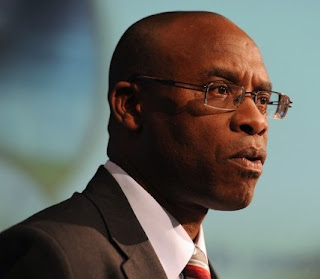
South Africa’s experience is illustrative, commented Matona. The country has “quite strong research capacity in virology and epidemiology.” But when South Africa used those capabilities to track the emergence of Omicron, “instead of the world saying: ‘Wonderful, here’s a country on the African continent that has the capacity to be part of a global response,’ the world closed its borders,” he recalled. “That came with massive economic damage.”
“That really shows you the lack of global governance of these risks,” he said. “If globalisation is a system, then how do we make sure that we make it work as an integrated system? Because we have seen the vulnerabilities that are inherent in its interdependencies.”
The Global Government Summit was held online in late January; this is the second of four reports on its sessions, covering the discussion on risk management. The first covered Singapore civil service head Leo Yip’s introductory remarks; the third explored how to promote environmental sustainability, and the fourth examined the challenges of contemporary civil service leadership.
To ensure that people can speak freely at the event, we give those quoted the right to anonymise or edit their remarks before publication.

About Matt Ross
Matt is Global Government Forum's Contributing Editor, providing direction and support on topics, products and audience interests across GGF’s editorial, events and research operations. He has been a journalist and editor since 1995, beginning in motoring and travel journalism – and combining the two in a 30-month, 30-country 4x4 expedition funded by magazine photo-journalism. Between 2002 and 2008 he was Features Editor of Haymarket news magazine Regeneration & Renewal, covering urban regeneration, economic growth and community development; and from 2008 to 2014 he was the Editor of UK magazine and website Civil Service World, then Editorial Director for Public Sector – both at political publishing house Dods. He has also worked as Director of Communications at think tank the Institute for Government.



Related Posts