Building a joined-up state: UK government leaders share Innovation 2026 insights

As we approach this year’s Innovation conference and exhibition, taking place on 24 and 25 March 2026 in London, we asked the event’s speakers to tell us what innovation-related topics they’re most looking forward to discussing – and the insights that will help drive their priorities forward in the months ahead.
Here, we pull together responses from two UK civil service leaders, Emran Mian, chief of the Department for Science, Innovation and Technology, and Christine Bellamy of the Digital Products Group. They tell GGF about efforts to join-up government services – including through the new GOV.UK app; why governments need to be prepared for the expectations of Generation Alpha; and the importance of sharing practical examples of what works both with colleagues across government and with peers overseas.
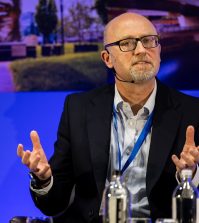
Emran Mian, permanent secretary at the UK’s Department for Science, Innovation and Technology (DSIT), said he’s looking forward to the conference because it gives he and colleagues “time to talk about where our work on digital government is taking us”.
He provided some context around the UK government’s work to join-up services and improve the citizen experience of government, the opportunity presented by digital ID, and how Innovation can help focus minds on what’s working and what’s emerging in the sphere of digital transformation.
“Over recent years, we’ve built a lot. Some of it is very visible – GOV.UK in particular – and some of it sits underneath, making it easier for services to work together and for teams to improve things over time. What matters above all is how those pieces fit together in the experience of the citizen,” he said.
“Interactions with government should feel straightforward and predictable, with services connecting in ways that make sense. Many government digital services are accessed by people when they are vulnerable or in need; it is all the more important that government turns up for them at these moments with simple services that are easy to use.”
He added: “GOV.UK matters here because it already plays a central role in how people find information and access services, increasingly through the app as well as the website. The opportunity ahead is to keep building on that foundation, with digital identity allowing more of the pieces to sit together properly; so it becomes easier for people to manage their relationship with the state in one place, across different moments in their lives, without needing to understand how government is organised behind the scenes.”
Innovation 2026 “is a place where we can be practical with each other. We can talk about what’s working, what’s emerging, and how we make good things routine rather than exceptional; that’s the discussion I’m most looking forward to”.
More about Innovation 2026
Innovation is a unique exhibition and conference that brings together government leaders from across the globe responsible for the transformation and acceleration of their public sector organisations and services.
Held on 24 and 25 March 2026 at Excel in London, the event is co-hosted by the UK Government, UK Civil Service and the Cabinet Office. It covers innovation across a range of topics, including data, digital transformation, workforce, culture, sustainability, and much more. This year for the first time, as well as the central government agenda, Innovation will include a dedicated programme for the defence, security, cyber and resilience industries, the health sector, and local government.
Find out more about Innovation 2026 and register to attend here
Mian said there is a great deal of work underway across government and highlighted that ministers have been clear about the direction of travel towards a more digital state. He outlined DSIT’s priorities, and explained that the practical examples shared at the Innovation event are particularly valuable.
One priority, he said, is to continue strengthening the shared foundations of government: “the common platforms, standards and ways of working that make it easier to build and run good services. When these foundations are in place, teams can focus more of their effort on improving outcomes for users, rather than repeatedly solving the same problems in isolation”.
Another priority, he said, is making better use of the tools already available to government, particularly artificial intelligence.
“Through the Incubator for AI in DSIT, we have learned where these tools can genuinely support day-to-day work. The next step is to move from experimentation to routine use, so that what works becomes something teams can rely on.”
The third priority, “and in many ways the most crucial one”, he said, “is our people”.
“A more digital and joined-up state depends on clear responsibility, skills sitting with the teams that run services, and trust in those teams to keep improving what they own.”
“What would be most valuable from colleagues and peers at Innovation 2026 are practical examples. Where has something moved quickly from a good idea into everyday practice? What helped it take hold? And which choices turned out to matter most?”
Christine Bellamy is interim director general of the Digital Products Group, at the UK’s Government Digital Service.
“I always look forward to Innovation as it’s a great example of the convening power of digital, and giving us the opportunity to come together as international partners to collaborate, share, and learn,” she said. “It allows us to step away from our individual contexts (and desks!) to think big, be ambitious and consider users not just locally, but globally, as we share many of the same opportunities and challenges.”
She added that it is also a “learning moment for teams, with great inputs from different departments, functions and countries, to expand people’s horizons and inspire them about what we can all achieve”.
Like Mian, she highlighted the launch of the GOV.UK app last year.
“Things are changing rapidly – last year, we were learning from other leading digital nations about their insights, and here we are in 2026 having released the GOV.UK app which had more than 300,000 downloads in six months.”
She said, too, that welcoming and hosting international guests is “always a pleasure” and that “spending time with our peers from around the world is so important”.
She expanded on the government’s efforts to create more seamless, and more personal, services for citizens.
“At the Government Digital Service, a great deal of our thinking is focused on how we’ll enable UK citizens to shift from anonymous, largely web-based interactions when they’re seeking information or looking to access a service, to a signed-in, personalised experience that remembers your context for the first time.
“We’re exploring new patterns of interactions, like AI conversations, and thinking about the needs of future generations. It won’t be long before Generation Alpha will start to need things from government – the oldest of this group were born in 2010. We need to be ready to support them, while at the same time not leaving anyone behind. Many countries, such as Estonia, Singapore and Denmark, are already leaders in this space, so there is lots to learn, and existing partnerships to deepen.”
Mian and Bellamy will feature in the following sessions at Innovation:
Emran Mian, permanent secretary, Department for Science, Innovation and Technology, UK, will give a keynote address and is on the panel for ‘Moving from innovation to implementation: Speeding up government transformation’.
Christine Bellamy, interim director general, Digital Products Group, Government Digital Service (GDS), UK, will have a fireside chat with Emily Middleton, interim director general for digital transformation, GDS, and is on the panel for ‘Accelerating government delivery with technology: Lessons from the frontline’.
Find out more about the agenda and register for Innovation 2026 here
Read the first four articles from this series:
Aligning digital innovation with the needs of public administration: Innovation 2026 Bitesize Insights
Rising to challenges by exploiting technological advance: Innovation 2026 Bitesize Insights
‘Sharing, learning and getting inspired’: Innovation 2026 Bitesize Insights
‘Tolerating risk, being brave’: Innovation 2026 Bitesize Insights
We have also published interviews with the Ministry of Defence’s Tim Ketton-Locke, Annette Southgate of the UK Home Office’s Accelerated Capability Environment, NHS England’s Matt Philpott, and Hatim Abdulhussein of Health Innovation Kent Surrey Sussex – all of whom will speak at Innovation 2026. Read them below:
‘It’s important to bring people with you’: the UK Ministry of Defence’s Tim Ketton-Locke on making the government’s defence reforms happen
Helping to solve your most complex problems: Five minutes with Annette Southgate, deputy director of the UK Home Office’s Accelerated Capability Environment
‘The impact on patient experience will be profound’: Five minutes with Matt Philpott, executive director of technology, NHS England
Turning digital ambition into measurable outcomes: Five minutes with Hatim Abdulhussein, chief executive officer, Health Innovation Kent Surrey Sussex

About Mia Hunt
Mia has been editor of globalgovernmentforum.com since 2019. She has 15 years’ experience as a journalist and editor and specialises in writing for civil and public servants worldwide, including covering sustainability policy and related issues. She has led the Global Government Women’s Network since it launched in 2023. Previously, she covered commercial property having been market reports and supplements editor at Property Week and deputy editor at Retail Destination. She graduated from Kingston University London with a first-class honours degree in journalism and was part of the team that produced The River newspaper, which won Publication of the Year at the Guardian Student Media Awards in 2010.



Related Posts