GAO highlights 97 new recommendations to cut US federal government costs or boost revenues
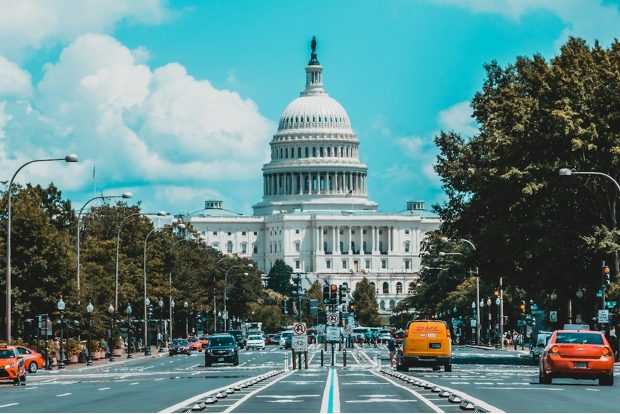
The US Government Accountability Office (GAO) has highlighted 97 new recommendations to cut federal government costs – potentially delivering hundreds of billions of dollars in savings – or to boost revenues.
The GAO is an independent agency that exists to support Congress in meeting its constitutional responsibilities. It makes recommendations to Congress and federal agencies and maintains an online log of recommendations that are yet to be implemented.
Its 16th annual report on federal programmes, agencies, offices and initiatives that have “duplicative, overlapping, or fragmented goals or actions” serves to “underscore the urgent need for congressional and agency action”, according to the GAO. Implementing its ‘open’ recommendations – recommendations that are yet to be fully addressed – could deliver US$132bn to US$251bn in future savings, it states.
GAO finds “meaningful strides the federal government has taken in reducing waste and improving efficiency – but also reveals hundreds of billions of dollars in savings and critical policy reforms that remain on the table”.
Its open recommendations span topics including federal financial management, alongside areas such as defence, economic development, energy, health, and IT.
Government Service Delivery will bring together global digital government leaders to explore how governments can use tech-driven innovation to deliver high-quality public services. The event will be held at Walter E Washington Convention Center, Washington DC on 10-11 June 2026. Find out more and register your interest here.
Anti-scam efforts in focus
The report includes a focus on the development and enaction of a US government-wide anti-scam strategy, and links to a report titled ‘Consumer Protection: Actions Needed to Improve Complaint Reporting, Consumer Education, and Federal Coordination to Counter Scams’, published in April.
“The 13 federal agencies GAO spoke with engage in a range of efforts to counter scams. However, none were aware of a government-wide strategy to guide those efforts,” a GAO webpage summarising this report states. “Existing strategies did not focus on countering scams and did not apply across agencies.”
“The Federal Bureau of Investigation (FBI) is developing a cyber-enabled fraud strategy. The overlap in issues relating to scams and cyber-enabled fraud could provide FBI with the expertise to develop a government-wide strategy. Developing a government-wide strategy would better position agencies to coordinate and strategically target their efforts to counter scams,” the GAO says.
US president Donald Trump signed the executive order ‘Protecting America’s Bank Account Against Fraud, Waste and Abuse’ in March 2025. The order directed the Treasury department to update guidance and “enhance systems across the federal government to ensure that all payments made on behalf of agencies undergo pre-certification verification to prevent fraud and improper payments”.
Read more from our sister title Global Government Finance: Trump anti-fraud taskforce to focus on US federal benefit programmes
Shared services spotlight
Shared services are also mentioned in the new report.
“The federal government can increase efficiency and reduce duplicative efforts by consolidating mission support services – such as payroll or travel – within a smaller number of providers so these services can be shared among agencies,” the GAO states.
“In February 2026, we found that relevant federal agencies had not filled key leadership roles vital to making strategic decisions about the future growth of shared services,” it continues, referencing the report ‘Federal Shared Services: Adoption Challenges Underscore the Need for Consistent Leadership’.
“We also found that coordinating entities do not have comprehensive data on how well shared services are meeting agencies’ needs, including intended cost avoidances,” it continues. “By helping to fill key leadership positions and collecting data to inform strategic decision-making, as we recommended, the Office of Management & Budget and the General Services Administration, as the shared service oversight and coordinating entities, could ensure that agencies are not unnecessarily duplicating services and potentially save tens of millions of dollars over three years.”
The overall US$132bn to US$251bn in potential future savings is a higher figure than estimated by the GAO in 2024. In July that year it issued a report titled ‘Open GAO Recommendations: Financial Benefits Could Be Between $106 Billion and $208 Billion’.
Typically, federal agencies implement more than 75% of GAO recommendations.
Read more: US federal agencies’ estimated improper payments rose to $186bn in 2025
This article was first published on Global Government Forum’s sister title Global Government Finance. Sign up to Global Government Finance’s editorial newsletter here.

About Ian Hall
Ian is Global Government Finance editor. He has formerly held roles including UK director of Euractiv (2011-2018), editor of Public Affairs News (2007-2011) and news editor of PR Week (2000-2007). He was shortlisted for ‘Editor of the Year’ at the British Society of Magazine Editors (BSME) Awards in 2010. He began his career in the Balkans at English-language weekly the Sofia Echo (Bulgaria: 1998-1999).