Letter from Ottawa: Cold winds and shorter days coincide with a seasonal change for the public sector
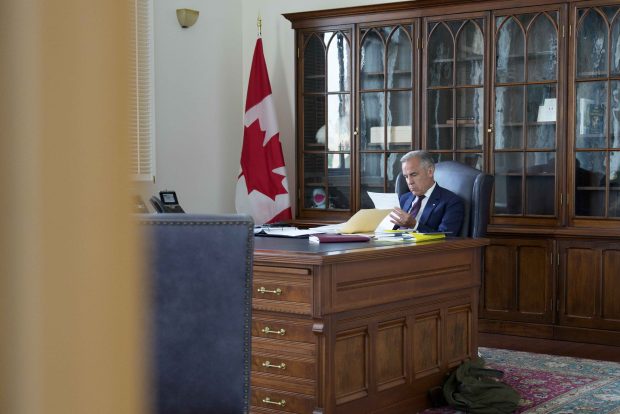
After an eventful year, the Canadian government led by prime minister Mark Carney will now have some time to press on with its agenda of government transformation, says Michael Wernick. But reform isn’t for the faint hearted, and there are currently more questions than answers on how change will ripple through the public service
So far 2025 has been a turbulent and eventful year in Canada, as it has in most places. For the federal public service, it has been a year to support democratic governance as we went through the passage of power from Justin Trudeau to Mark Carney and an election at the end of April.
The Carney government has been off to a brisk start, stretching many public service teams. As well as hosting a G7 Summit in June there has been extensive international travel and engagement. In support of its main priorities, the government announced the launch of new government entities in the fields of housing, defence procurement and screening of major energy and infrastructure projects. Over the summer there were sprints to review spending and regulation. More than a dozen government bills are moving forward.
All of this has been against the background of the mercurial and erratic president of the United States and his use of coercive language and tools to unsettle and uproot long standing trade and security ties. Canada’s political leaders, like others, are caught in the dilemma of how to deal with him. For us, the stakes couldn’t be higher. Trump unsettled and angered Canadians by musing about ending our existence as an independent country.
The Carney government, with support from most provincial leaders, has tried to stay on course to arrive at some sort of “deal”, but it isn’t easy to find an acceptable landing zone, nor to be confident that any agreement would hold. At the same time the government is scrambling to strengthen and diversify the economy for what promises to be a permanent shift into a new set of risks and opportunities. There is no going back, only forward.
This year’s AccelerateGOV conference, co-hosted by the Government of Canada, will take place on December 9th, sharing insights from governments around the world on how to deliver better, more efficient and resilient digitally-enabled public services with public servants from Canada and beyond.
This event is an opportunity to learn from government innovators, and will explore real-world transformation use cases in an increasingly complex and fast-changing world.
Find out more about the event and register to attend here
Budget sets government’s priorities
The centerpiece of the new domestic agenda was the Budget tabled on November 4. After some brinksmanship the Budget survived the confidence votes in Parliament that might have plunged us into a very early election. For the public service the Budget creates a long to-do list of policy and legislation.
The Carney government now has some time to press on with its agenda, while the two main opposition parties wrestle with leadership reviews. Canadians have shown remarkable forbearance and patience to date, but that could collapse. There will be mounting pressure to show proof points that progress is being made on the aspirations to “build, baby, build”, a slogan which encompasses major energy and mining projects, transportation infrastructure and housing. Affordability and cost of living issues remain a top level concern for most voters.
The Budget emphatically reframes fiscal constraints, ending a long period of growth in program and operating budgets and bending the curve toward a smaller personnel count. The downsizing is roughly comparable in magnitude to 2012 when the Conservative Harper government tapped the brakes as it unwound the stimulus that had followed the global financial crisis. This round of downsizing for fiscal reasons compounds the uncertainty around how artificial intelligence and other digital technologies will disrupt professions and functions.
There are currently more questions than answers as to how change will ripple through the public service in the coming year. We know the general magnitude of reduction targets for most organizations, but very little about how these will be translated into decisions about people. The government has expressed a desire to be “compassionate” and to lean heavily on attrition through voluntary departures. It has added a limited early retirement window. Involuntary departures through layoffs seem inevitable, but we don’t yet know where and when.
The Carney government made “government transformation” one of its signature themes and so far, talks a good game, creating a Cabinet Committee on the theme. The announcement of new organisations for its top policy priorities, and the recruitment of some people with serious private sector experience to run them, shows some seriousness of intent. Their pervasive language around simplifying processes and encouraging risk taking points in the right direction.
It remains to be seen how the government will implement budget and personnel reductions and whether it will make commensurate investments in training and technology to increase agility and productivity.
State reform isn’t for the faint hearted or those in search of quick wins and easy fixes. With the best of intentions, the government may lose momentum or be blown off course by new Trump-driven crises or old issues returning to the fore, such as housing affordability and health care. It may lose the confidence of the House next spring and be forced to go back to voters. We may be back into another energy and attention draining bout of very old issues of national unity if the separatist Parti Quebecois holds its current lead in the polls and wins the provincial election in Quebec next autumn.
Nevertheless, there are reasons to be guardedly hopeful. The next year will turn out to be an important one in Canada, not just in the general sense, but in the domain of statecraft and public sector capabilities. Whether the starting point for a conversation is costs, productivity, efficiency, effectiveness – perhaps the implications of AI or retaining trust in the face of a rising tide of disinformation – “keep calm and carry on” won’t be enough of a guiding motto. Perhaps something from canoeing such as “paddle hard and stay off the rocks”.
Read more: G7 AI challenge launches to transform public services

About Michael Wernick
Michael Wernick’s distinguished 38-year career as one of the key leaders of Canada’s world-class federal public service culminated in serving from 2016 to 2019 as the 23rd clerk of the Privy Council and secretary to Cabinet. With 28 years as an executive in the federal public service, including 17 years in the community of deputy ministers, and three as clerk, Wernick is one of Canada’s most experienced and influential public sector leaders. He appeared frequently at parliamentary committees, participated in dozens of intergovernmental and international meetings, and spoke at many conferences. Wernick worked closely with three prime ministers and seven ministers and attended close to 300 meetings of Cabinet and its committees. He was the key public servant at the Privy Council Office during three changes of prime minister. In October 2021, UBC Press released Wernick’s book Governing Canada: A Guide to the Tradecraft of Politics and Wernick undertook an extensive series of media interviews, podcasts and webinars to discuss this well-received practical handbook for Canada’s political leaders and those who aspire to understand them. As a senior strategic advisor to MNP Inc and the Jarislowsky Chair at University of Ottawa, Wernick now provides advisory services and mentorship to emerging leaders and to new generations of students.

Related Posts