Canada opens consultation on next national AI strategy

The Government of Canada has launched an AI Strategy Task Force and a 30-day public consultation to shape the way AI is used in government and across the economy.
Ideas gathered from members of the task force and feedback from stakeholders and citizens will inform a renewed national AI strategy that the government said it would set out “in the coming months”.
It said its consultative approach was “especially important to help meet this pivotal moment in history”, noting that “technological capabilities” in AI were “emerging alongside profound geopolitical shifts”.
“A collective commitment to reimagining how we harness innovation, achieve our artificial intelligence ambition and secure our digital sovereignty,” was required, it said, adding that the updated strategy would “position Canada at the forefront of the [AI] revolution”.
The government is seeking advice on “a broad range of AI-related themes”, including investment, infrastructure, adoption, commercialisation, skills, and building safe AI systems and public trust in AI.
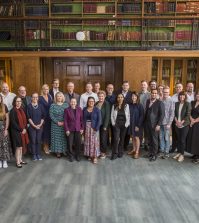
The new task force comprises 27 leaders from industry, academia and civil society, with each member chosen for their expertise in one of eight priority areas.
This year’s AccelerateGOV conference, co-hosted by the Government of Canada, will take place on December 9th, sharing insights from governments around the world on how to deliver better, more efficient and resilient digitally enabled public services with public servants from Canada and beyond.
This event is an opportunity to learn from government innovators, and will explore real-world transformation use cases in an increasingly complex and fast-changing world.
Find out more about the event and register to attend here
Evan Solomon, minister of artificial intelligence and digital innovation, said in a LinkedIn post on the public engagement element of the campaign, that: “AI is for all. That’s why this sprint is open to everyone: founders, researchers, workers, creators, students, public servants, and community voices.”
He added in an official government statement on 26 September that the government was “moving quickly” to achieve its AI vision, and that the advice of task force members and feedback gathered as part of the public consultation would generate “bold, pragmatic and actionable” recommendations to guide the country’s next AI strategy.
“This strategy will accelerate the development of nation-building AI and data infrastructure, drive economy-wide adoption and help build the strongest economy in the G7,” he said.
The consultation began on 1 October and will close at the end of the month.
Canada’s national and public service AI strategies
Canada launched its first national AI strategy – the Pan-Canadian AI Strategy (PCAIS) – in 2017. The strategy, which aims to drive adoption of artificial intelligence across the country’s economy and society, focuses on three pillars: commercialisation, standards, and talent and research.
The government also launched an AI strategy for the federal public service on 4 March 2025, with the intention of boosting the productivity of its workforce and delivering enhanced digital services to citizens.
The strategy comprises four priorities: the establishment of an AI Centre of Expertise to coordinate government-wide AI efforts; efforts to ensure AI systems are safe and used responsibly; the provision of skills training and paths to advance talent; and the drive to build public trust in AI through openness and transparency.
The strategy was launched by Ginette Petitpas Taylor, president of the Canadian Treasury Board, and developed in consultation with experts from a range of disciplines, as well as Canadian citizens. In its announcement of the strategy, the government said that inclusion of Canadian citizens’ views on AI in government preserved its “democratic values”.
Read more: Canada launches first AI strategy for federal public service

About Jack Aldane
Jack is a British journalist, cartoonist and podcaster. He graduated from Heythrop College London in 2009 with a BA in philosophy, before living and working in China for three years as a freelance reporter. After training in financial journalism at City University from 2013 to 2014, Jack worked at Bloomberg and Thomson Reuters before moving into editing magazines on global trade and development finance. Shortly after editing opinion writing for UnHerd, he joined the independent think tank ResPublica, where he led a media campaign to change the health and safety requirements around asbestos in UK public buildings. As host and producer of The Booking Club podcast – a conversation series featuring prominent authors and commentators at their favourite restaurants – Jack continues to engage today’s most distinguished thinkers on the biggest problems pertaining to ideology and power in the 21st century. He joined Global Government Forum as its Senior Staff Writer and Community Co-ordinator in 2021.


Related Posts