Lessons from the rise and fall of the UK’s Department for International Development
The UK’s Department for International Development both tackled poverty around the world and strengthened Britain’s global reputation – but then it was closed and international aid merged with the Foreign Office. Last week, veterans of the period gathered to reflect on the rise and fall of the UK’s overseas aid operations
In 2020, shortly after securing a big majority on his pledge to “get Brexit done”, UK prime minister Boris Johnson announced that the Department for International Development (DfID) would be merged with the Foreign and Commonwealth Office. Looking back at those events last week, Mark Lowcock, the department’s permanent secretary from 2011 to 2017, recalled the government’s claim that the change would “improve the effectiveness both of diplomacy and our development effort”.
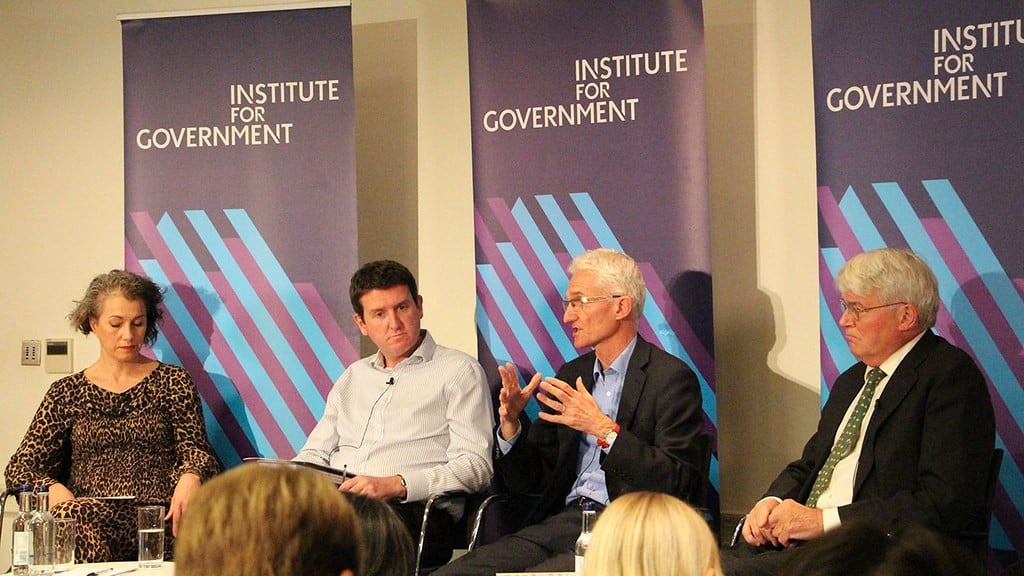
“That was what we call, in technical terms, a lie,” said Lowcock, speaking at an event hosted by the Institute for Government in London to discuss lessons from the rise and fall of DfID. “Boris Johnson vandalised the Department for International Development. He destroyed it.”
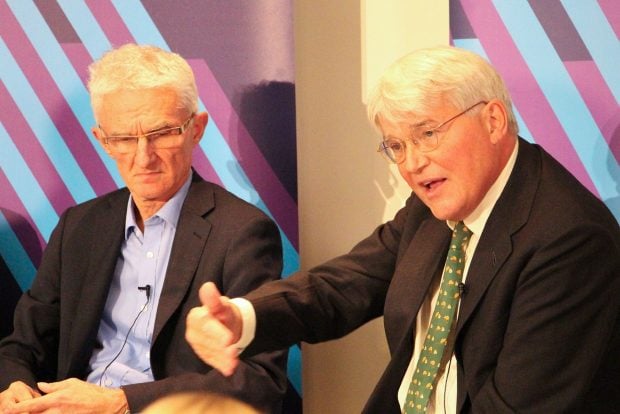
DfID had been established by Tony Blair’s new administration in 1997. Over the next 23 years, the department – surviving the 2010 transition to a Conservative-led government – had built a strong global reputation for its expertise and impact. At the Institute for Government, Lowcock discussed its track record – and its abolition – with two other key players in the department’s story, exchanging war stories on a dramatic period in Whitehall’s history.
A transformative impact
“DfID transformed Britain’s position in the world,” said Andrew Mitchell, a Conservative MP – and former Johnson ally – who served as the department’s secretary of state from 2010 and 2012, and is now shadow foreign secretary. “Through a mixture of prejudice and lack of knowledge, Johnson vaporised it.”
“DfID was blown apart,” added Labour MP Sarah Champion, chair of the International Development Select Committee since 2020. “It wasn’t dismantled, because that requires a degree of organisation. It was nuclearised, it was pulverised – and really for no good reason.”
At the time, the reason Johnson gave for merging the departments was to “unite our aid with our diplomacy and bring them together in our international effort”. DfID was viewed, he argued, as a “giant cashpoint in the sky that arrives without any reference to UK interest”.
Indeed, Blair’s goal in establishing DfID had been to separate foreign policy and aid spending. Previous Conservative governments had seen a series of scandals over links between aid spending and arms sales, and the new administration wanted to focus its aid spending solely on promoting development.
The logic behind DfID
As Lowcock pointed out, this represented a form of enlightened self-interest. “If the UK wants to be safe in the wider world, then we need to care about what’s going on in very, very poor countries, because they are the places where problems originate and from where they spread,” he said, arguing that basing aid spending around other foreign policy goals generated very poor value for money on both fronts.
Creating a separate international development department also improved UK overseas policymaking, the speakers argued. “Big departments don’t work,” said Mitchell, who served as minister of state for development and Africa in the newly merged Foreign, Commonwealth and Development Office (FCDO) between 2022 and 2024. “What you want is departments which are specialists, and the way you join them together is through the National Security Council” – where the various perspectives can be heard and debated.
A specialist department is required, Lowcock argued, because diplomacy requires a “completely different set of skills and processes and culture” from aid work. “What you need is functions which cooperate with each other, but are each charged with delivering their objectives in an effective way,” he commented.
DfID developed a strong reputation for effective delivery – built, said Lowcock, on expertise in investment appraisal, deep local knowledge, close partnerships and careful monitoring.
Making the case for altruism
When Mitchell became international development secretary in 2010, he worked to build up public support for international aid spending in general – and for the government’s goal of spending 0.7% of GDP on overseas aid in particular. “We would never be able to sustain British support for the 0.7% unless we could show Mrs Smith in Acacia Drive, Sutton Coldfield, why every penny of her hard-earned money was delivering,” he argued. Mitchell set up the Independent Commission on Aid Impact (ICAI) as an autonomous watchdog tracking the efficacy of aid spending, and directed the department’s attention towards supporting women and girls in the developing world.
“In the austerity years, we got support for the department up from 46% to 50% – much more among women and young people,” he recalled. “It was an example of what you could do if you get a prime minister and development minister who really care and evangelise about this.”
The 0.7% target may have “ended up being counterproductive”, Lowcock suggested. A “large slug of that additional money was sprayed around government” rather than going through DfID, being spent – ICAI found – with mixed results. But much of the spending made a real difference – not just for those receiving support, but also for the UK’s soft power and reputation overseas.
DfID was an “example of genuine British leadership making an impact – respected around the world, and very effective”, said Mitchell, calling the department an “extraordinary machine for the alleviation of poverty”. Recognising its capabilities, global institutions constantly nabbed its staff: “They were going to the development institutions, the IMF, the World Bank, Geneva, New York, Washington – all around the world; and when they went there, DfID was never forgotten,” Mitchell commented.
Read more: Aid, abetted: how UK spending watchdog has improved value in aid budgets
DfID’s decline and fall
Then came the departments’ merger. After that, “we hemorrhaged our expertise”, said Champion.
International development workers are, she added, “a very specific breed of passionate people, and we lost their faith and we lost their trust – and therefore we lost their skills”. When Mitchell returned to the FCDO in 2022, he recalled that encountering former DfID staff “was like meeting people who had emerged from the rubble of a nuclear explosion. The standards had been hollowed out; the capacity for delivery had been very, very badly damaged.”
UK leadership has also suffered from the loss of DfID’s ability to act independently and its voice at the Cabinet table, said Mitchell. Gaza has seen a “hodgepodge of intervention”, he commented – much of it ineffective. “But had DfID been in its heyday, the secretary of state would have called together the most senior officials,” he argued. “A strong plan which everyone could buy into, probably fronted by the UN, would have been put together… It would have been expert, and it would have been effective – and that’s not what happened.”
Indeed, said Champion, DfID’s abolition badly undermined the UK’s reputation. Shortly after the merger, she recalled, her select committee went to Geneva to meet global partners such as the World Health Organization and the Red Cross, “and I cannot tell you the hostility and anger that we were faced with because of this act of vandalism”. People felt that the UK was “choosing to leave the world stage”, said Champion, while abandoning its status as “a country that did the right thing for the right reason” – giving aid without seeking any direct benefit in exchange.
Read more: UK to merge aid and diplomacy departments
Building back international aid capacity
Back behind a ministerial desk at FCDO, Mitchell began trying to rebuild the UK’s capabilities and reputation in 2022. Some form of revival has also continued under the new Labour government, with international development minister Annaliese Dodds securing control of the aid budget and her own permanent secretary, Nick Dyer, who had also served as acting permanent secretary of DfID for five months in 2020. However, much of the UK’s international development funding has been “raided by the Home Office” to fund immigrant accommodation, noted Champion. Lowcock put the UK’s real current overseas aid spending at about 0.3% of GDP.
What’s more, it’s not clear that Labour is committed to ring-fencing aid spending for international development goals. “The current government seems to be leaning into the idea that you can use your development budget to leverage some of your other objectives,” commented Lowcock. “That way lies ruin.”
“One of the challenges the government face now, if they want to rebuild Britain’s role is rebuilding the capability,” Lowcock continued. Currently, “it’s almost impossible, because of the hemorrhaging of expertise and the destruction of systems, to do even a decent job of turning the money into real-world outcomes”.
And recreating those skills and systems will only be the first step to recovering the UK’s lost reputation. It is “going to be incredibly hard – if not, I’m sorry to say, impossible – to rebuild that trust, that reputation and that seat at the table, because of what’s happened”, commented Champion.
Looking forward, she added, politicians and officials face the task of explaining again to the public why and how the UK should contribute to international development work. “Most people, when they think about development, they think about humanitarian crises, conflicts, where we are absolutely fantastic – but that’s a small percentage of what the department does,” she said. “Actually, the bread-and-butter is giving people more decent life opportunities, safe homes. How do we rebuild the department? We need to be a bit more front-footed about saying: ‘This is actually what we’re spending the money on, and this is why it’s a really, really good investment’.”
- The Lessons from the rise and fall of the Department for International Development event was held at the Institute for Government on Tuesday 22 October.

About Matt Ross
Matt is Global Government Forum's Contributing Editor, providing direction and support on topics, products and audience interests across GGF’s editorial, events and research operations. He has been a journalist and editor since 1995, beginning in motoring and travel journalism – and combining the two in a 30-month, 30-country 4x4 expedition funded by magazine photo-journalism. Between 2002 and 2008 he was Features Editor of Haymarket news magazine Regeneration & Renewal, covering urban regeneration, economic growth and community development; and from 2008 to 2014 he was the Editor of UK magazine and website Civil Service World, then Editorial Director for Public Sector – both at political publishing house Dods. He has also worked as Director of Communications at think tank the Institute for Government.



Related Posts