Opinion: Fixing Labour’s communications missteps
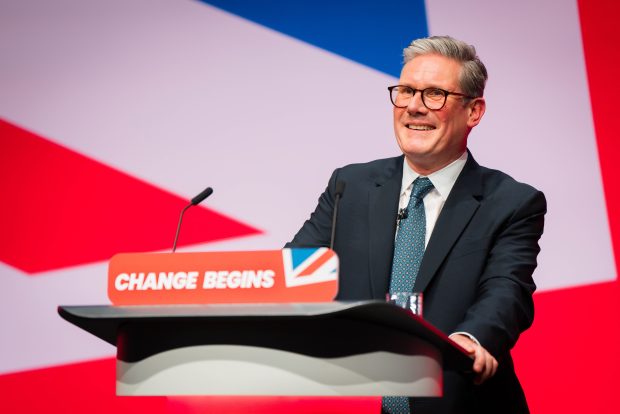
Since winning the general election in July, the Labour party has faced challenges in transitioning from opposition to government. Alastair McCapra, chief executive of the Chartered Institute of Public Relations, sets out why some minor public relations hiccups have become full-blown rows – and how to fix it
By the end of the recent Labour party conference, its first since coming to power, Labour’s brand score had fallen from a positive one of +5% during the election campaign to minus 16%. The new government swept to power with a massive majority and a compelling pre-election promise of change, yet had, in a few short weeks, lost the public mood. As veteran political commentator Peter Kellner summarised, their first 100 days in power could best be described as a “false start”.
It gets worse. The market research and polling company Opinium also noted that the government had experienced notable declines in public perception, not on policy matters but on having a clear sense of purpose, competence, knowing what it stands for, and being trusted to make big decisions. If a government is not trusted, it has little mandate to make big decisions.
Central to these criticisms has been a series of communication missteps that, by failing to control the narrative, allowed controversies to gather momentum and damage the government’s standing. Boris Johnson’s premiership never recovered from the three Ps: Pincher, Patterson and Partygate. Can Starmer recover from his three Ss: suits, sunglasses, and Swift?
New governments always face teething problems as they shift communication from campaigning to governing mode. So much focus and effort go into trying to win an election that less thought is given to how and what to communicate when in power. New parties will often find themselves managing expectations early on as pre-election commitments to “change” must be dampened as the reality of public finances becomes apparent.
But the Labour party’s difficulties in dealing with these issues reflect more than just a routine adjustment to power. In this case, their inability to predict how receiving gifts and placing allies into senior civil service roles would be perceived and reported can best be described as naive. Together with their inability to address and limit the fallout from these scandals, questions have been raised about their communication strategy, or the apparent lack thereof.
Read more: The heart of the problem: reviving the centre of UK government
Communications shift
Labour may argue that gifts and hospitality of this kind are not uncommon in British politics, but for a party that campaigned so vehemently on promises of transparency, integrity, and a break from the past, it has been particularly damaging. They may have assumed that not being the Conservatives was enough to guarantee public trust, but after years of scandals – from David Cameron’s lobbying for Lex Greensill to dodgy PPE contracts – the public’s tolerance for this sort of behaviour was low in general but particularly low for Labour.
Initial dismissal of these stories by some within Labour as minor distractions provided the media with an opportunity to amplify the issue. As a result, what might have been a minor public relations hiccup became a full-blown ‘sleaze’ row. Political scandals thrive in the gaps between information and silence, and Labour’s hesitation created a vacuum that was quickly filled with accusations of dishonesty and impropriety — allegations that are now becoming difficult to shake off. As many before them have discovered, having your credibility undermined can be lethal. For Labour, this happened before it was able to define its identity as a new government. As is often said about reputation, it is hard won and easily lost.
It was clear to many that the Number 10 operation was not working as effectively as it needed to with Sue Gray ultimately paying the price as her involvement became the story. Brought in for her vast experience of working at the top of the civil service, she was tasked with preparing Labour for power – making it all the more ironic that the blame for Labour’s chaotic start to government landed with her.
There have been suggestions that it was her responsibility as chief of staff to manage the government’s comms grid of announcements, rather than the responsibility of the communications team. Her deep policy and operational knowledge, it has been argued, did not offer the required skill set to make this a success with her strengths in policy, not politics. The appointment of former journalist James Lyons to head the strategic communications unit is a good indication that the message has been received and a sign that the government now recognises the need to integrate communications into the day-to-day running of the country, not address it as an afterthought.
Read more: Ahead of the UK Budget, report highlights the price of civil service pay cuts
Critical juncture
Labour’s new government is at a critical juncture. If it wants minds to refocus on its political agenda – starting with this week’s Budget – it must fix its communication failures directly and decisively and do so by proactively addressing the lack of trust the public have long felt towards politicians. This means being transparent and unflinchingly honest, even when the truth is uncomfortable.
Having been swept into office with a huge majority, a series of communication missteps has blown the party’s once colossal poll lead. And if the party wants to restore public confidence it needs to get on the front foot and ensure the three Ss – suits, sunglasses and Swift – don’t hang round Starmer’s neck for the rest of 2024.
Upcoming Global Government Forum training:
The Complete Communications Professional Tuesday 25 February 2025
Visualising Data to Influence Public Sector Stakeholders Friday 28 March 2025

About Alastair McCapra
Alastair McCapra has been Chief Executive of the Chartered Institute of Public Relations (CIPR) since 2013 after working for several other professional membership associations. Among his CIPR highlights are achieving the National Equality Standards in 2023, introducing corporate affiliate membership, a new chartership assessment process, and taking the organisation virtual in 2020. Nearly tripling the number of members who complete CPD each year is the achievement he rates as his most important. When not working for the CIPR he edits Wikipedia, sings in a local choir, and spends time with a young French bulldog.

Related Posts