UN resumes Climate Weeks to accelerate action
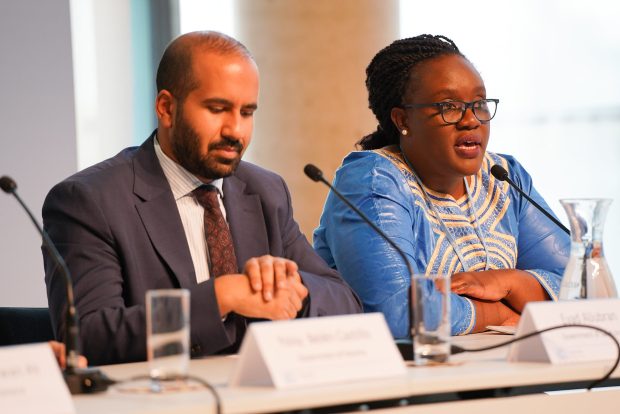
The UN is to hold two ‘Climate Weeks’ events this year, bringing together governments and other stakeholders in a bid to boost political ambition and accelerate climate action on the ground.
The Climate Weeks will convene government negotiators, technical experts and representatives from civil society and business for talks about climate finance, the ‘just transition’ away from fossil fuels, and to support countries to commit to more ambitious targets.
Such targets include Nationally-Determined Contributions (NDCs) – the commitments Paris Agreement signees make to reduce their greenhouse gas emissions.
The United Nations Framework Convention on Climate Change (UNFCCC) also hopes to use the forum to accelerate submissions of National Adaptation Plans and Biennial Transparency Reports, to support the development of carbon markets under Article 6 of the Paris Agreement, and to promote climate-related gender and inclusivity issues.
Dates for the events have yet to be announced but the UNFCCC said it expected to hold one prior to the UN June Climate meetings and one prior to COP30, which will take place in Belém, Brazil, in November.
Read more: World breaches 1.5C warming limit as climate deadline looms for governments
A new approach
In 2023, the UNFCCC held four Regional Climate Weeks but cancelled events in 2024 due to a lack of funding.
While the 2025 Climate Weeks will not have a tight regional focus like in previous years, they have been designed to allow local perspectives to feed into global discussions. They will be held on a rotational basis in different regions.
The UNFCCC said this consolidated approach would reduce the need for multiple, dispersed events, streamlining participation and minimising scheduling conflicts across the climate calendar. It also said the new approach would improve cost effectiveness, and lessen operational complexity and travel needs.
Simon Stiell, UN Climate Change executive secretary, said the new strategy would “help bridge the gap between technical dialogues and stakeholder engagement focused on real-economy solutions, and real-world implementation.
“Ultimately, this approach aims to help the government-led process to deliver faster progress and concrete outcomes that benefit all economies and people’s daily lives, while also delivering cost-savings in the process.”
Each event will have a structured programme consisting of several mandated events, as well as training and capacity-building sessions, solutions-focused exchanges, and curated policy discussions.
Read more: UN hails leap forward in global climate action transparency
UN’s ‘severe financial challenges’
Environmental groups and charities such as WaterAid voiced concern when the UNFCCC scrapped the Regional Climate Weeks – which were seen as an important platform for communities worst-hit by the impacts of climate change – last year.
Stiell said at the time that the organisation was facing “severe financial challenges” caused by a burgeoning workload and “governments’ failure to provide enough money”.
Countries like Japan and Germany made significant voluntary contributions to the UNFCCC in 2024, relieving financial pressure. However, it was dealt a big blow in January, when president Donald Trump signed an executive order instructing US officials to “immediately cease or revoke” any financial commitment to the organisation. The US annual contributions typically cover 22% of the body’s core budget.
American billionaire Michael Bloomberg has since said he and other climate funders would step in and cover the United States’ financial obligations to the UNFCCC.
Read more: US Treasury leaves major climate risk mitigation network

About Mia Hunt
Mia has been editor of globalgovernmentforum.com since 2019. She has 15 years’ experience as a journalist and editor and specialises in writing for civil and public servants worldwide, including covering sustainability policy and related issues. She has led the Global Government Women’s Network since it launched in 2023. Previously, she covered commercial property having been market reports and supplements editor at Property Week and deputy editor at Retail Destination. She graduated from Kingston University London with a first-class honours degree in journalism and was part of the team that produced The River newspaper, which won Publication of the Year at the Guardian Student Media Awards in 2010.



Related Posts