We must drive the value out of digital investments, NHS chief Jim Mackey tells Newcastle conference
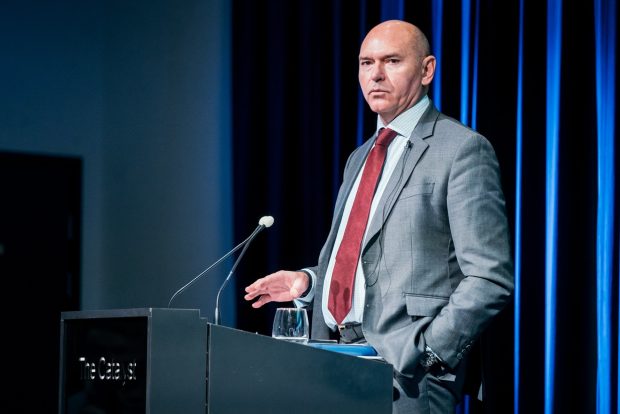
“We’ve got to move the NHS into a different era,” Sir Jim Mackey, chief executive of NHS England, told delegates gathered at Global Government Forum’s ‘Analogue to Digital: Delivering the NHS 10 Year Plan’ conference in Newcastle-upon-Tyne on 17 October.
In his keynote speech to 200 delegates including local and national technologists, clinical staff and NHS suppliers, he said a ‘digital-first’ approach is key to improving productivity and financial sustainability and to meeting patient expectations.
“None of us would use a bank that expects us to turn up physically all the time,” he said. “We’re trapped in an old system.”
He cautioned that even with recent digital advances, the NHS is still not getting the most out of its investments.
“We’ve spent the last few years doing a lot of very rational things, like EPR [electronic patient record] developments and installations,” he said. “We’ve poured a huge amount of money into them, and sadly still we aren’t getting the results that we need”.
He referenced instances of hospitals implementing EPRs but waiting lists still being too high and performance remaining negatively impacted months after deployment.
This and many of Mackey’s points echoed the findings of a new Global Government Forum report launched at the event titled A Fresh Mandate for Digital Leadership in the NHS. The study, based on interviews with NHS digital leaders, pinpoints four key reasons why digital progress stalls and four corresponding practical steps that could help move the system ahead: update financial mechanisms for the digital era; prioritise digital as a strategic profession; tackle fragmentation through standards, procurement and co-design; and reset the digital centre.
Mackey welcomed the report, calling it “grounded”, “straightforward” and “very honest”.
“There’s a lot of good reflections there from colleagues in the service about where we need to go next,” he said.
The next steps must be focused on getting value for money, he told the conference: “We’ve had huge investment; we’ve got to go back and get value for it.”
This means a clear focus on how tools make things better for patients and how they make clinical staff’s jobs easier so they can get better results.
“There’s going to be quite a big shift in direction and approach as part of all that,” he said.
Read more: New Global Government Forum study calls for a ‘step-change’ to unlock NHS digital transformation
Upping the pace
In a fireside chat that followed, Mackey acknowledged that it still feels like the NHS is deploying lots of “big, heavy” technology, warning that by the time it is implemented, “the world will have changed so much we’ll potentially have to rip it all out and do something different again”.
Part of the reason for this is that decision-making has been so slow, he said.
The 10 Year Health Plan for England articulates a vision for a new “NHS operating model”, where more power is devolved to NHS providers through earned autonomy.
“We have to move at a pace that we haven’t moved at for years,” said Mackey, adding that since spring, NHS England has been working on building a “rules-based system” that allows people to understand “the principles, spirit, rules and frameworks, without having to check everything, without having to get permission for everything”.
For technology this means NHS England’s central role will shift towards market management, accreditation, frameworks and pricing mechanisms, rather than approvals, and with less money held centrally and more devolved over time.
Digital capability is also an important area and Mackey said a workforce plan will be published that will encompass all staff and how the NHS develops and retains the right skills. This will include looking at what should be done centrally and what should be done by standalone institutions or in collaboration.
Mackey commented: “We do have to really think about for things like cyber, for example, what you can reasonably expect single institutions to do versus collaborations across multiple institutions” to retain the right skills, resilience and quality.
Read more: 10-year health plan for England bets big on digital
All about the impact
Asked about his message for NHS colleagues gathered at the event, Mackey urged them to: “Think about impact.”
“We have gone beyond technology for technology’s sake,” he said. “If we can’t demonstrate this is going to make something better for our patients and population or our staff, we will not be doing it.”
For those supplying NHS bodies, he pledged that the NHS “will become easier to work with” but told vendors they must be honest about what they’re selling and its capabilities.
He added: “If you’re working on something and it’s not aligned to the core priorities in the 10 Year Plan, the delivery objectives that we’ve got to make an impact on, you’re not going to get any time.”
Mackey welcomed that the event was held in Newcastle. “It’s great to see this sort of thing here, embedded in the North East, embedded in the local economy,” he said, stressing the importance of local and national collaboration around jobs, growth and skills development.

About Sarah Wray
Sarah has over 15 years’ experience as a journalist with a specialism in the public sector and topics such as digitalisation and climate action. Sarah was formerly the editor of Cities Today and Smart Cities World, as well as a specialist video-based publication in the aerospace sector. She has also written for publications including Smart Cities Dive, Mobile Europe, Mobile World Live and Computer Weekly.

Related Posts